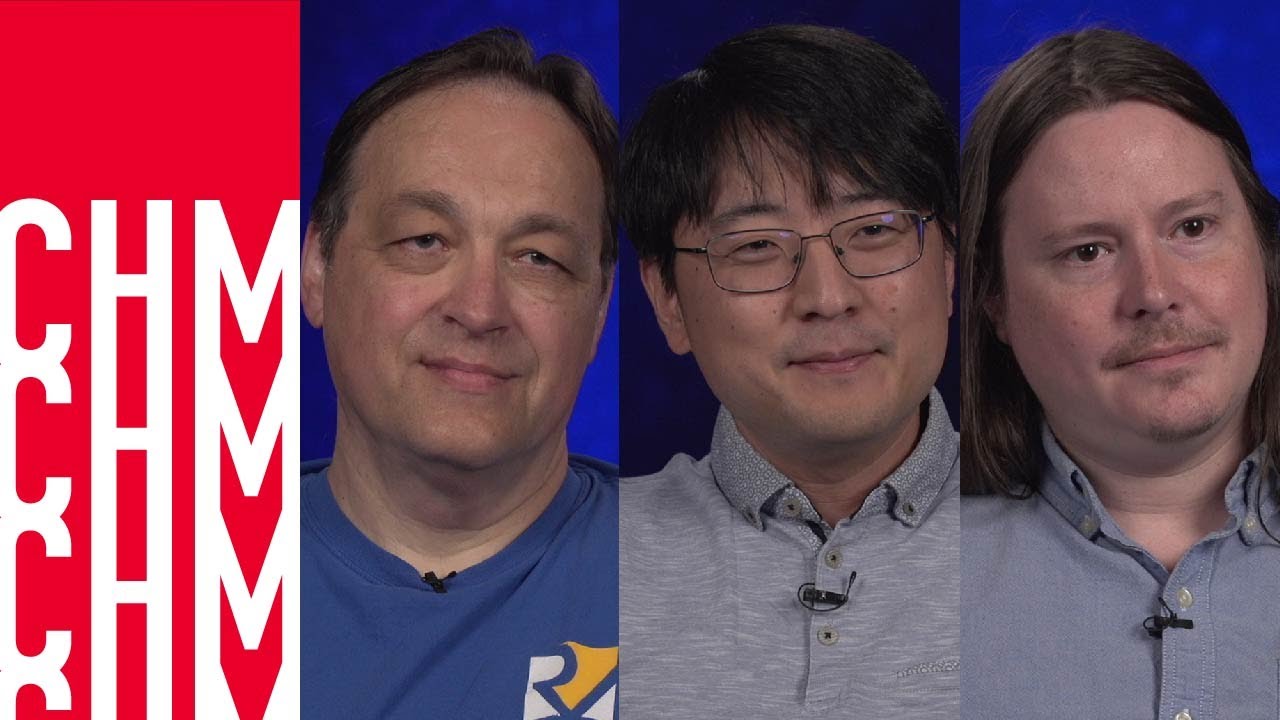
RISC-V Oral History Panel
Keywords
Summary
156 words
Critical Evaluation
The interview provides a valuable first-hand account of the origins and development of RISC-V, offering unique insights into the motivations and decisions of its creators. The credibility of the speakers is beyond doubt, as they are the principal architects of the ISA. The discussion is rich in technical detail, covering topics such as FPGA-based simulation, vector processing, and the challenges of designing an open standard. The historical context provided, linking RISC-V to earlier RISC designs, is well-informed and adds depth to the narrative. However, as an oral history, the account is inherently subjective and may be influenced by memory biases or retrospective framing. The interview does not delve into potential criticisms or challenges faced by RISC-V, such as competition from proprietary architectures or the complexities of governance in open-source projects. The technical level is accessible to a general audience but may not satisfy experts seeking deep technical specifications. The sources cited are limited to the transcript link, which is appropriate for an oral history. The title accurately reflects the content, and the discussion stays on topic throughout. Overall, the interview is a valuable historical record and a compelling narrative of innovation, but it should be complemented with more critical analyses for a balanced understanding.
204 words
Title / Content Match
The title accurately reflects the content, which is an oral history panel discussion about RISC-V.
Quality & Reliability
8/10
The information comes directly from the principal designers of RISC-V, providing first-hand accounts of its creation and development. Their expertise is unquestionable, and the interview is conducted by the Computer History Museum, a reputable institution. However, as an oral history, it relies on memory and personal perspectives, which may introduce some subjectivity.
Key Moments
Markers derived by PSI from the transcript: the creator did not define chapters.
- Introduction of the panel and the interview context.
- Krste Asanović discusses his early life, growing up in England, and his first exposure to computers through arcade games.
- Asanović describes his path to Cambridge and the influence of a dedicated math teacher.
- Discussion of Asanović's work at GEC on transputer-based systems and his introduction to RISC concepts.
- The panel begins to discuss the origins of RISC-V at UC Berkeley, including the convergence of their research interests.
- Detailed discussion of the design principles behind RISC-V, emphasizing simplicity and extensibility.
- The panel reflects on the historical lineage of RISC design, referencing Patterson and Hennessy.
- Discussion of RISC-V's adaptability to AI workloads and its growing global influence.
- The panel concludes with thoughts on RISC-V's future and its role as a durable computing standard.
Cited Sources
- Computer History Museum Catalog Entry — The official transcript of the interview, referenced in the video description.
Concurring Sources
- RISC-V International — The official RISC-V organization, providing documentation and news about the ISA's development and adoption.
Contribution & Novelties
This oral history provides a unique first-hand account of the creation of RISC-V, offering insights into the personal motivations and collaborative dynamics of its principal designers. It situates RISC-V within the broader historical context of RISC architecture, highlighting its intellectual roots and the practical needs that drove its development. The interview also sheds light on the early technical decisions, such as the use of FPGA simulation and the focus on extensibility, which have contributed to RISC-V’s success.
Pour aller plus loin :
- RISC-V Architecture — Provides a comprehensive overview of the RISC-V ISA and its ecosystem.
- David Patterson’s RISC Research — Context on the pioneering RISC research that influenced RISC-V.
- Open Source Hardware Association — Organization promoting open-source hardware, relevant to RISC-V’s open standard model.
125 words
Radar Profile
The radar profile shows high scores in quality of information and reliability, reflecting the authoritative first-hand accounts. The quantity of information is also substantial, though the technical depth is moderate, making it accessible to a broad audience. The overall balance indicates a valuable historical record with strong credibility.
💬 No comments were provided for analysis.