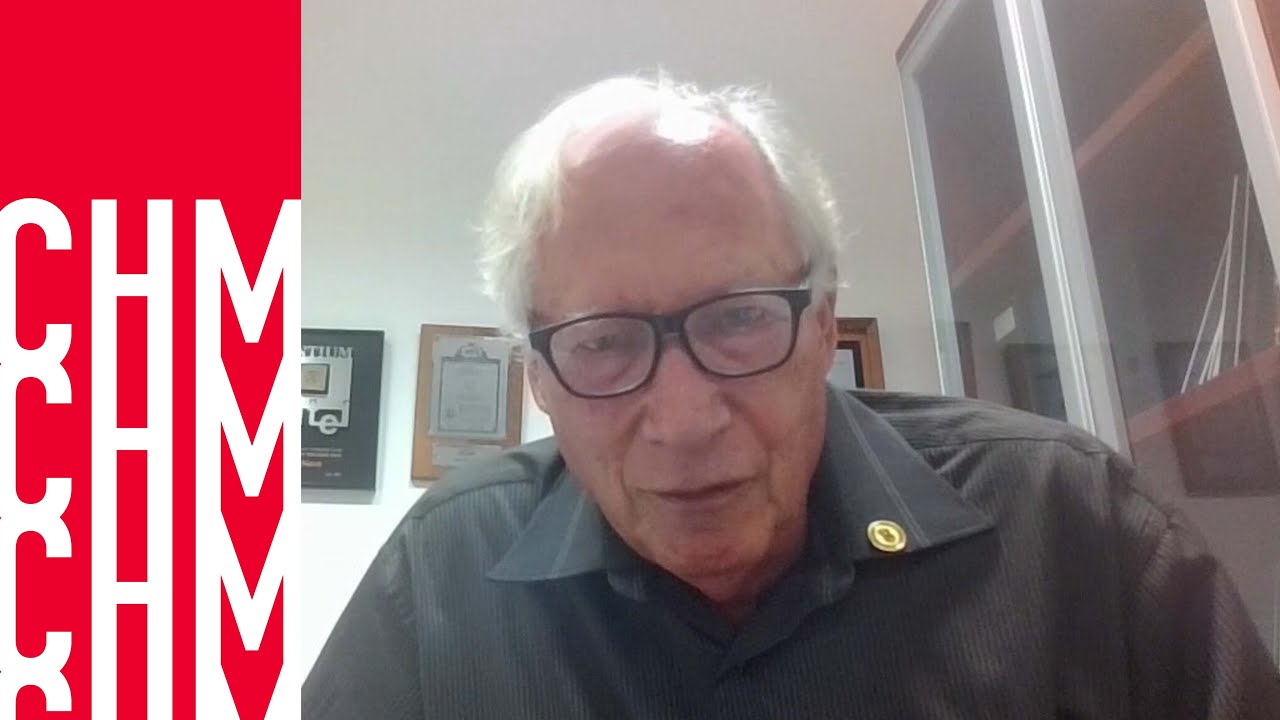
Oral History of Rafi Nave
Keywords
Summary
183 words
Critical Evaluation
This oral history interview provides a valuable first-hand account of the design of the Intel 8087 math coprocessor, a significant milestone in computing history. The value lies in the detailed technical narrative from a key engineer, Rafi Nave, who led the design team. He explains complex topics such as the need for a fast shifter, the patent for doubling ROM density, and the rigorous verification of transcendental functions, offering insights not typically found in textbooks. The argumentation is coherent and credible, as Nave’s story aligns with known historical facts about the 8087 and Intel’s operations in Israel. However, as an oral history, it is inherently subjective, relying on memory and personal perspective. The transcript has been edited by the interviewee, which may introduce bias or omissions. The technical depth is moderate; while it explains concepts, it does not delve into the mathematical details of the algorithms, which might be a limitation for experts. The sources are limited to the Computer History Museum’s catalog entry, but the interview itself is a primary source. The title accurately reflects the content, and the interview is well-structured, covering personal background, technical challenges, and the broader impact. Overall, it is a reliable and informative account, though it should be complemented with other sources for a fully objective view.
213 words
Title / Content Match
The title accurately reflects the content, which is a comprehensive oral history interview with Rafi Nave.
Quality & Reliability
8/10
The interview is conducted by the Computer History Museum, a reputable institution, and features a primary source (Rafi Nave) discussing his direct involvement in the design of the Intel 8087. The narrative is detailed and consistent, with technical specifics that align with known history. However, as an oral history, it relies on memory and personal perspective, and the transcript has been edited by the interviewee, which may introduce bias.
Key Moments
Markers derived by PSI from the transcript: the creator did not define chapters.
- Introduction and early family history
- Childhood and education in Israel
- Early career and arrival at Intel Israel
- Start of the 8087 project and initial challenges
- Technical design details: shifter, ROM, and algorithms
- Verification and testing of the 8087
- Impact of the 8087 and legacy
- Reflections on Intel Israel and semiconductor industry
- Closing thoughts and advice
Cited Sources
- Computer History Museum Catalog Entry — Official catalog entry for the oral history interview, providing context and archival information.
Concurring Sources
- Intel 8087 — Wikipedia article on the 8087, which corroborates the technical details and historical impact.
Contribution & Novelties
This oral history provides a unique first-person perspective on the design of the Intel 8087, offering insights into the engineering culture, technical challenges, and decision-making processes that are not widely documented. It highlights the role of the Haifa team and the innovative techniques they developed, such as the ROM density doubling method.
Pour aller plus loin :
- Intel 8087 — Overview of the 8087 and its significance.
- Floating-point arithmetic — Background on the numerical methods used.
- IEEE 754 — The standard that the 8087 influenced.
85 words
Radar Profile
The radar profile shows high scores in quantity of information and reliability, reflecting the detailed and credible account. The technical level is moderate, indicating accessibility to a broad audience. The overall quality is strong, with minor limitations due to the subjective nature of oral history.