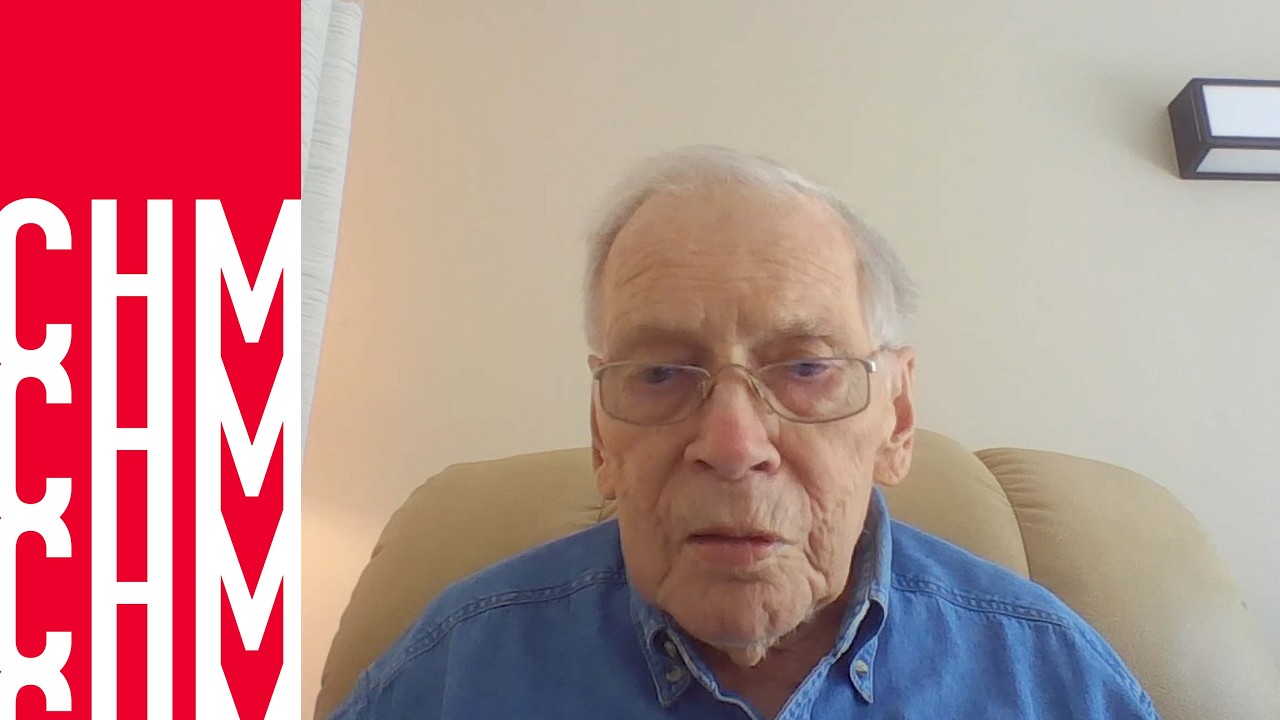
Oral History of Herschel Loomis
Keywords
Summary
160 words
Critical Evaluation
The interview is a valuable primary source for the history of computing, offering a personal perspective on key developments and institutions. Loomis’s recollections are detailed and provide context for the evolution of computer engineering. The interviewer, David Laws, is knowledgeable and guides the conversation effectively. The content is reliable as it is based on the subject’s own experiences, though memory can be fallible. The interview does not delve deeply into technical details, making it accessible to a general audience, but it may lack depth for experts. The sources cited are limited to the museum’s catalog entry, which is appropriate for an oral history. The title accurately reflects the content. Overall, the interview is a valuable contribution to the historical record, but it is not without minor inaccuracies, such as the exact model of the computer at Lincoln Lab. The lack of critical analysis or external verification is typical for oral histories. The interview’s strength lies in its personal anecdotes and the breadth of Loomis’s career, which spans academia, government, and the military. It would be enhanced by more technical details or references to specific projects. The pacing is steady, and the interview covers a long career in a coherent manner. The video is well-produced, with clear audio and video. The absence of visual aids or archival footage is a minor drawback. Overall, this is a solid oral history that will be of interest to historians and enthusiasts of computing history.
240 words
Title / Content Match
The title accurately reflects the content: a comprehensive oral history interview with Herschel Loomis.
Quality & Reliability
8/10
The interview is conducted by a reputable institution (Computer History Museum) with a professional interviewer. The subject is a distinguished professor with a long career, and the content is based on personal recollections, which are generally reliable but may contain minor inaccuracies. The transcript is available and has been reviewed by the interviewee.
Key Moments
Markers derived by PSI from the transcript: the creator did not define chapters.
- Introduction by David Laws and overview of Herschel Loomis's career.
- Loomis discusses his early life in Wilmington, Delaware, and Quaker upbringing.
- His education at Cornell and decision to pursue electrical engineering.
- Work at the National Security Agency on early computers, including a SEAC descendant.
- Graduate studies at MIT, including work at Lincoln Laboratory on the TX-2.
- Joining UC Davis and his academic career there.
- Move to the Naval Postgraduate School and research in signal processing and space systems.
- Reflections on his military service and the impact of Quaker values.
- Discussion of key figures in computing history he encountered.
- Retirement and legacy.
Cited Sources
- Computer History Museum catalog entry for Herschel Loomis oral history — The official catalog entry for the interview, providing additional context and access to the transcript.
Concurring Sources
- Computer History Museum catalog entry — The official record of the interview, confirming its existence and details.
Contribution & Novelties
This oral history provides a unique first-person account of a career spanning key developments in computing, from early NSA computers to academic research. It offers insights into the culture of institutions like MIT and the Naval Postgraduate School. The interview highlights the intersection of military, academic, and industrial computing.
Pour aller plus loin :
- SEAC (Standards Eastern Automatic Computer) — Background on the early computer Loomis worked on.
- TX-2 — Details on the computer at Lincoln Laboratory.
- Ivan Sutherland — Pioneer of computer graphics, mentioned in the interview.
88 words
Radar Profile
The radar profile shows high scores in quantity and quality of information, reflecting the detailed personal narrative. The technical level is moderate, suitable for a general audience. Overall reliability is high due to the authoritative source and the subject's expertise.
💬 No comments were provided for analysis.