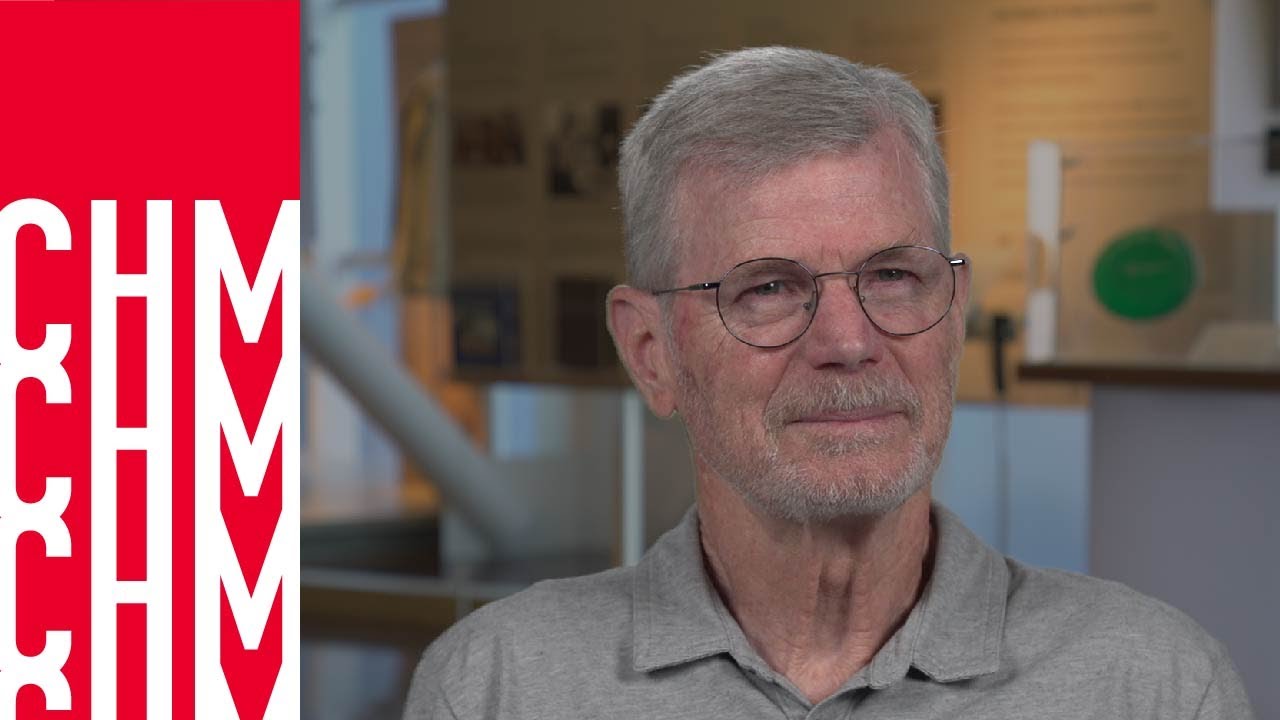
Tom Howell on IBM, Quantum, and the Evolution of Hard Disk Drive Signal Processing (Oral History)
Keywords
Summary
115 words
Critical Evaluation
The interview offers valuable first-hand insights into the development of PRML and other signal processing techniques. Howell’s technical explanations are clear and detailed, and he provides context on the challenges of technology transfer and industry competition. The account is subjective and relies on memory, but it is consistent with known historical developments. The discussion of specific events, such as the 1989 demo and the Loma Prieta earthquake, adds authenticity. The sources cited are limited to the oral history transcript, but the narrative is internally coherent and technically plausible.
88 words
Title / Content Match
The title accurately reflects the content, which focuses on Tom Howell's career and contributions to signal processing in hard disk drives.
Quality & Reliability
8/10
First-hand account by a key engineer, corroborated by historical context and technical details; however, relies on memory and lacks external verification.
Key Moments
Markers derived by PSI from the transcript: the creator did not define chapters.
- Introduction to Tom Howell's background and early career.
- Discussion of the task force that led to the creation of the signal processing group.
- Details on the development of PRML and decision feedback equalization.
- The 1 Gb/in² demonstration and its significance.
- Transition to Quantum and work on adaptive equalization.
- Reflections on the industry's evolution and teaching career.
Cited Sources
- Computer History Museum Oral History Transcript — Official transcript of this oral history interview.
Concurring Sources
- Computer History Museum Oral History Transcript — Primary source for this interview.
Contribution & Novelties
This oral history provides a personal account of the development of PRML and other signal processing techniques, offering insights into the challenges of technology transfer and the collaborative efforts between research and product divisions. It highlights the importance of the 1 Gb/in² demonstration and the role of university research centers.
Pour aller plus loin :
- Partial response maximum likelihood — Overview of PRML and its applications.
- Viterbi algorithm — The algorithm used for maximum likelihood sequence estimation.
- Magnetoresistive head — Technology that enabled higher densities.
- Run-length limited — Coding schemes used in disk drives.
94 words
Radar Profile
The radar profile shows high scores in quantity and quality of information, reflecting the detailed technical narrative. The technical level is moderately high, suitable for an informed audience. Reliability is good but not perfect due to reliance on memory.
💬 No comments were provided for analysis.