A Closer Look at…Genetic Medicine and Artificial Intelligence
Keywords
Summary
131 words
Critical Evaluation
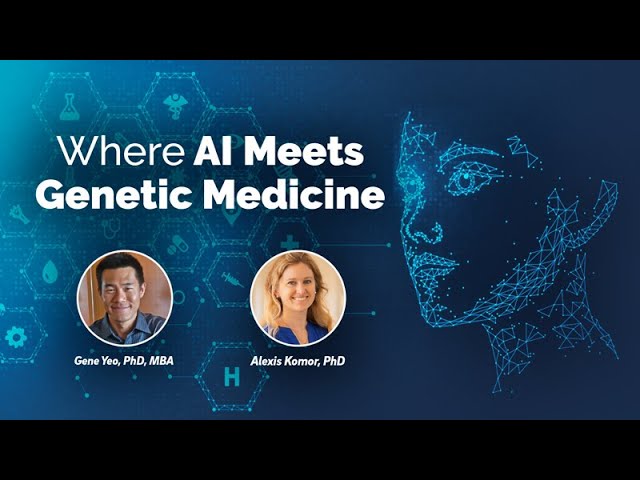
The video provides a solid overview of the intersection between genetic medicine and artificial intelligence, featuring two experts who are actively contributing to the field. Gene Yeo’s segment effectively explains the complexity of RNA biology and how AI can be leveraged to interpret large datasets, such as those from enhanced CLIP experiments. He clearly articulates the concept of alternative splicing and the role of RNA-binding proteins, making the content accessible without oversimplifying. Alexis Komor’s presentation on DNA and CRISPR is equally informative, covering the basics of single-nucleotide variants and the potential of genome editing. The scientific accuracy is high, with references to established technologies like antisense oligonucleotides and CRISPR. However, the video is more of a high-level overview than a deep dive, and some technical details are glossed over. The argumentation is coherent, and the speakers provide concrete examples, such as the treatment of spinal muscular atrophy. The sources cited are primarily the speakers’ own research and general references to published studies, but specific citations are not provided in the video. The adéquation between title and content is strong, as the video indeed focuses on the convergence of genetic medicine and AI. The production quality is professional, typical of UCTV. Overall, the video is a valuable resource for those seeking an introduction to this emerging field, though it may not satisfy viewers looking for in-depth technical details.
227 words
Title / Content Match
The title accurately reflects the content, which explores the intersection of genetic medicine and AI.
Quality & Reliability
8/10
The video features two established researchers (Gene Yeo and Alexis Komor) presenting their work in a university setting, with references to published studies and established technologies. The content is accurate and well-explained, though it is a general overview rather than a detailed technical exposition.
Key Moments
Markers derived by PSI from the transcript: the creator did not define chapters.
- Introduction by Robert Signer, setting the stage for the discussion on AI and genetic medicine.
- Gene Yeo begins his talk, highlighting the cost reduction in genome sequencing and the challenge of interpretation.
- Yeo explains the central dogma and the role of RNA in generating protein diversity through alternative splicing.
- Yeo discusses RNA-binding proteins and the importance of high-quality datasets for AI, mentioning enhanced CLIP.
- Yeo presents examples of RNA-targeting therapeutics and the potential of AI in drug discovery.
- Alexis Komor begins her talk on DNA, introducing single-nucleotide variants and their impact.
- Komor discusses CRISPR-based genome editing and strategies to correct harmful mutations.
- Conclusion and final remarks on the future of personalized medicine.
Cited Sources
- UCTV — Main platform hosting the video and related content.
- A Closer Look series — Series page for the video.
- Stem Cell Channel — Channel featuring related content.
- Health & Medicine on UCTV — Health and medicine content.
- Science & Technology on UCTV — Science and technology content.
Concurring Sources
- UCTV — The video is hosted on UCTV, a reputable academic platform.
Dissenting Sources
- No discordant sources found — No conflicting sources were mentioned in the video.
Contribution & Novelties
The video provides a clear synthesis of how AI is being applied to genetic medicine, with specific examples from RNA biology and genome editing. It emphasizes the importance of high-quality data for AI and highlights the potential for personalized therapeutics. The speakers bring their own research perspectives, offering insights into current challenges and future directions.
Pour aller plus loin :
- Enhanced CLIP (eCLIP) method — A key technique for mapping RNA-binding protein sites.
- CRISPR-Cas9 genome editing — Foundational paper on CRISPR.
- Antisense oligonucleotide therapy for spinal muscular atrophy — Example of RNA-targeting drug.
93 words
Radar Profile
The radar profile shows high scores in information quantity and quality, with a slightly lower technical level, indicating a well-balanced presentation suitable for a general audience. The reliability is strong, reflecting the academic background of the speakers.
💬 No comments were provided for analysis.