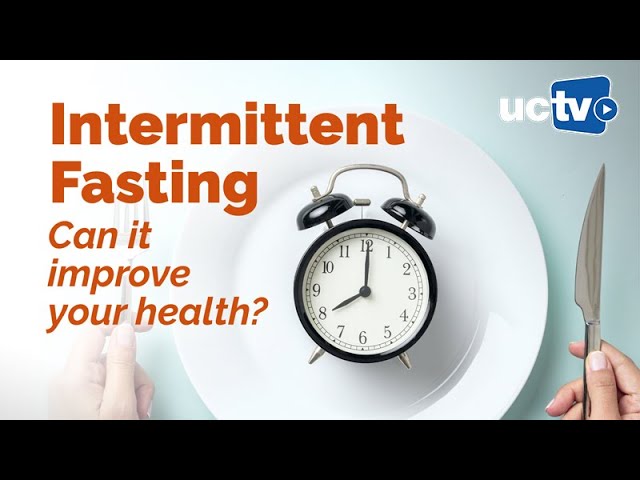
Intermittent Fasting: A Strategy To Prevent Cardiometabolic Diseases And Promote Healthy Aging
Keywords
Summary
165 words
Critical Evaluation
The presentation is a well-structured and informative overview of intermittent fasting, specifically time-restricted eating, as a potential strategy for improving cardiometabolic health. Dr. Wilkinson, a cardiologist and researcher, provides a balanced perspective, acknowledging both the promise and the limitations of current evidence. He grounds his talk in the biological framework of circadian rhythms, explaining how our internal clocks regulate metabolism and how modern eating patterns disrupt these rhythms. This mechanistic foundation adds scientific credibility and helps the audience understand why meal timing matters beyond calorie content.
The talk references several key studies, including the CALERIE trial on caloric restriction and primate studies on longevity, as well as ongoing work at UCSD and the Salk Institute on time-restricted eating. While specific citations are not provided in the video, the description links to UCTV and the Stein Institute, which may offer further resources. The speaker is transparent about the need for more research, particularly long-term human trials, and emphasizes that intermittent fasting is not a one-size-fits-all solution.
One strength is the practical advice offered for those interested in trying time-restricted eating, such as starting with a 12-hour eating window and gradually reducing it, and the importance of maintaining a healthy diet. This makes the information actionable for a general audience.
However, the talk is primarily an expert opinion rather than a systematic review or meta-analysis. While the speaker cites studies, he does not provide detailed methodology or critical appraisal of the evidence. The presentation also does not delve into potential risks or contraindications for certain populations, such as pregnant women or those with eating disorders, which is a notable omission. Additionally, the video is a lecture, so it lacks interactive elements and may not engage viewers as effectively as other formats.
The title accurately reflects the content, and the talk is well-aligned with its stated purpose. Overall, this is a valuable resource for those seeking a credible introduction to intermittent fasting, but it should be complemented with more rigorous scientific literature for a comprehensive understanding.
333 words
Title / Content Match
The title accurately reflects the content, which focuses on intermittent fasting as a strategy for preventing cardiometabolic diseases and promoting healthy aging.
Quality & Reliability
8/10
The talk is delivered by a medical doctor and researcher with expertise in cardiology and nutrition, referencing specific studies (e.g., CALERIE, primate studies) and collaborations with UCSD and Salk Institute. The content is consistent with current scientific understanding of circadian rhythms and intermittent fasting, though it presents a balanced view acknowledging the need for more research. The presentation is educational and aimed at a general audience, with no apparent commercial bias.
Key Moments
Markers derived by PSI from the transcript: the creator did not define chapters.
- Introduction: Dr. Wilkinson introduces the topic and the theme of life adapted to Earth's rotation.
- Discussion of modern lifestyle changes and their impact on circadian rhythms and cardiometabolic risk.
- Overview of caloric restriction studies, including animal and human data, and challenges with adherence.
- Introduction to time-restricted eating and its potential benefits beyond weight loss.
- Explanation of circadian clocks and clock genes, and how meal timing affects metabolism.
- Review of studies from UCSD and Salk Institute on time-restricted eating and metabolic markers.
- Practical tips for adopting time-restricted eating safely.
- Discussion of potential mechanisms linking intermittent fasting to cardiometabolic health.
- Emphasis on the importance of ongoing research and individualized approaches.
- Conclusion and Q&A session begins.
Cited Sources
- UCTV — General platform hosting the video and related content.
- Stein Institute for Research on Aging — Organizer of the talk and source of related aging research content.
- UCTV Health & Medicine — Section of UCTV featuring health and medicine programs.
Concurring Sources
- American Heart Association Scientific Statement on Meal Timing and Frequency — Cited in the talk as a call for considering meal timing and frequency in lifestyle interventions.
Dissenting Sources
- Potential risks of intermittent fasting — The talk does not discuss potential risks or contraindications for certain populations, such as pregnant women, individuals with eating disorders, or those on certain medications.
Contribution & Novelties
This talk provides a comprehensive overview of intermittent fasting, particularly time-restricted eating, as a strategy for cardiometabolic health, emphasizing the circadian rhythm framework. It synthesizes evidence from caloric restriction and TRE studies, highlighting potential benefits beyond weight loss. The speaker offers practical guidance for implementation, making it accessible to a general audience.
Pour aller plus loin :
- Circadian rhythm — Overview of circadian rhythms and their biological basis.
- Time-restricted eating — Summary of TRE research and potential health effects.
- Caloric restriction — Discussion of caloric restriction and its effects on longevity and health.
93 words
Radar Profile
The radar profile shows high scores in information quantity, quality, and reliability, with a slightly lower but still solid technical level. This indicates a well-balanced presentation that is both informative and credible, suitable for a general audience interested in evidence-based health strategies.
💬 Sur les 0 commentaires analysés, aucune tendance n'est disponible.