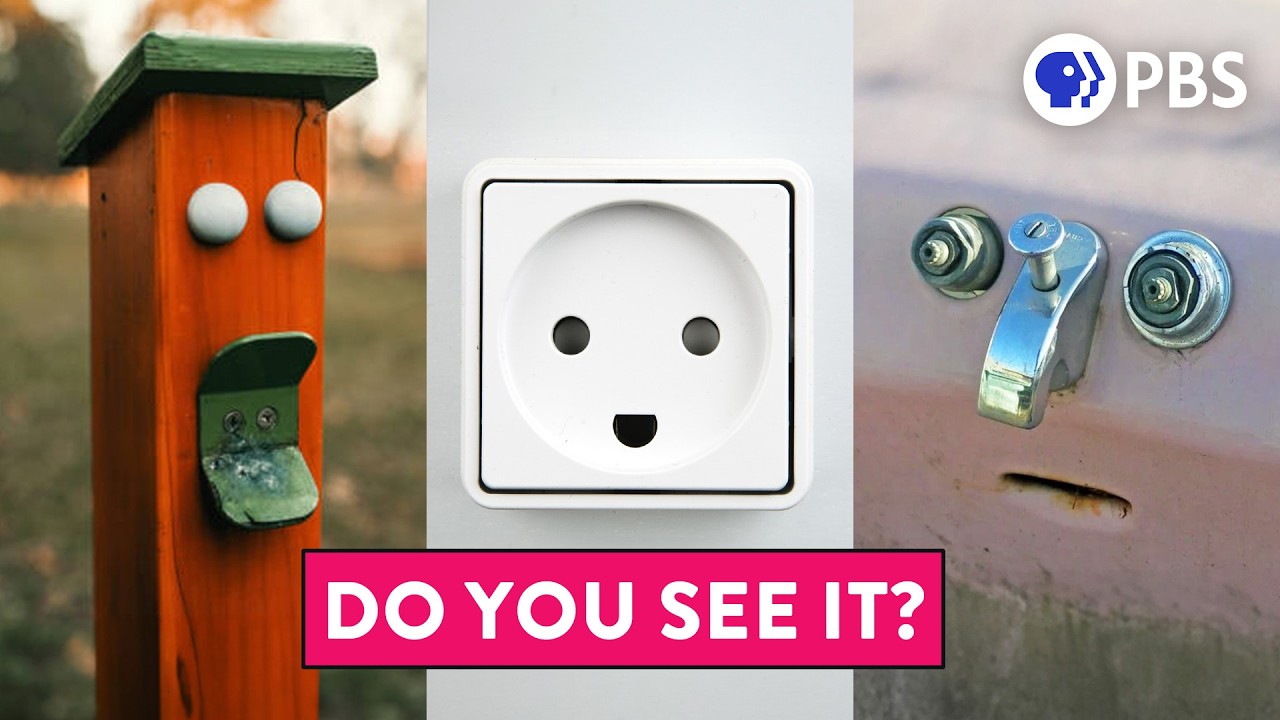
Why You See Faces in Things
Keywords
Summary
154 words
Critical Evaluation
Value of the Information & Strength of the Argument
The video provides valuable information about facial pareidolia, synthesizing research from neuroscience and psychology. It presents a balanced view on the nature vs. nurture debate regarding face perception, citing studies on infant brain activity and animal learning. The argumentation is clear and logical, building from basic visual processing to evolutionary explanations. The host effectively uses examples and analogies to make complex concepts accessible. The inclusion of clinical applications adds practical value, showing the relevance of the research.
Scientific Rigor, Source Quality, Title Accuracy
The video demonstrates scientific rigor by referencing a dedicated page with sources, which likely includes peer-reviewed studies. The content aligns with current scientific understanding of face perception. The title accurately reflects the content, and the video stays on topic throughout. The host distinguishes between established findings and ongoing debates, such as the learned vs. innate aspects. The video does not overstate claims and acknowledges uncertainties. The production quality is high, with clear visuals and examples that support the explanations.
171 words
Title / Content Match
The title accurately reflects the content, which explains the phenomenon of seeing faces in inanimate objects.
Quality & Reliability
8/10
The video presents a well-structured explanation of facial pareidolia, citing scientific studies and referencing a dedicated references page. It distinguishes between learned and innate aspects, and mentions clinical applications (prosopagnosia, Alzheimer's, autism). The content is accurate and up-to-date, though it simplifies some neuroscience details for a general audience.
Chapters
Cited Sources
- Facial Pareidolia References — The video's description provides a link to a page with references for the scientific studies mentioned.
Concurring Sources
- Facial Pareidolia References — The video's description provides a link to a page with references for the scientific studies mentioned.
Contribution & Novelties
The video offers a comprehensive and engaging overview of facial pareidolia, synthesizing research from multiple disciplines. It provides a clear explanation of the neural mechanisms and evolutionary significance, and highlights practical implications for understanding conditions like prosopagnosia and autism.
Pour aller plus loin :
- Facial pareidolia - Wikipedia — A general overview of pareidolia, including its history and examples.
- Prosopagnosia - Wikipedia — Information on face blindness, a condition mentioned in the video.
- Visual cortex - Wikipedia — Details on the brain region responsible for visual processing, as discussed in the video.
92 words
Radar Profile
The radar profile shows high scores in information quantity, quality, and reliability, with a moderate technical level. This indicates a well-researched and informative video that is accessible to a general audience while maintaining scientific accuracy.
💬 Positive. Sur les 30 commentaires analysés, la majorité exprime de l'appréciation pour le contenu, partage des expériences personnelles liées à la pareidolie, et montre de l'empathie pour le deuil de l'animal de l'animateur. Quelques commentaires apportent des anecdotes ou des questions supplémentaires, mais aucun ne contient de critique négative substantielle.