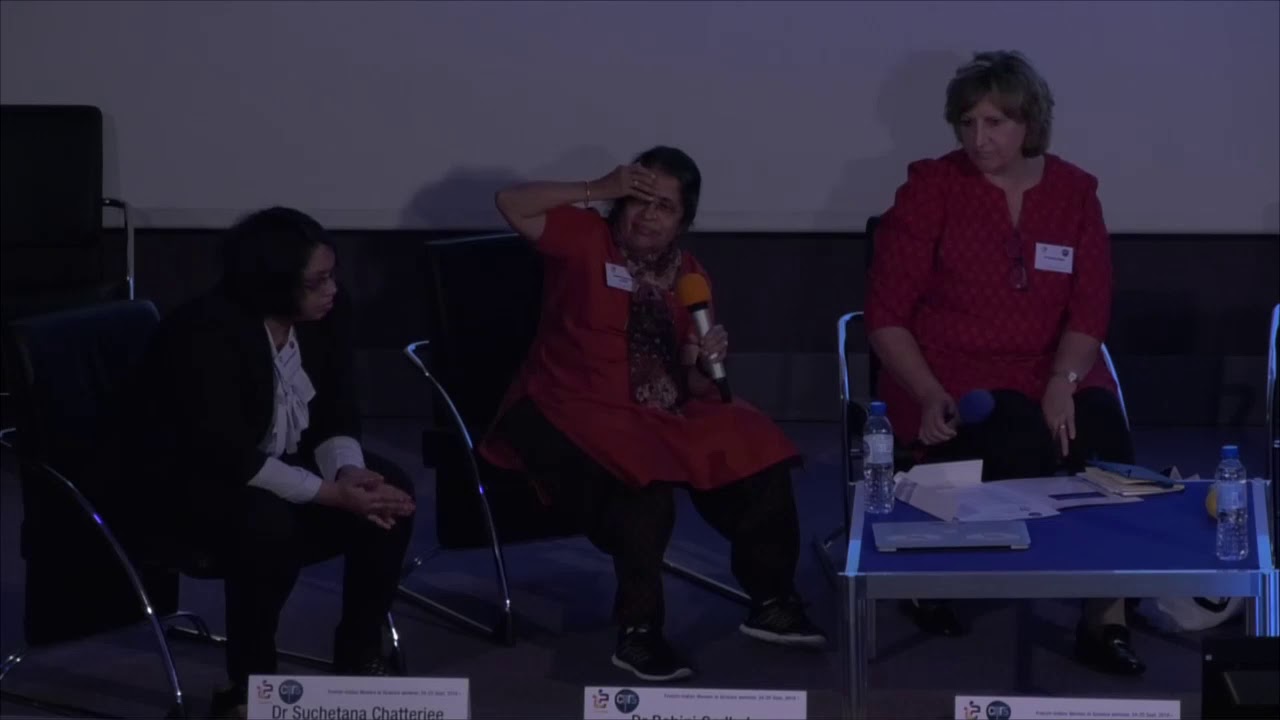
Panel 1: Nature and extent of gender inequality in the scientific profession. Discussion
Keywords
Summary
147 words
Critical Evaluation
Value of the Information & Strength of the Argument
The video provides valuable insights from experienced scientists and policymakers, offering a nuanced view of gender inequality in science. The arguments are well-structured, with panelists building on each other’s points. They present concrete suggestions, such as maintaining gender ratios in selection committees and making postdoctoral positions flexible. The discussion is balanced, acknowledging both progress and persistent challenges. However, some arguments rely on anecdotal evidence rather than robust data, and the lack of specific citations weakens the overall rigor.
Scientific Rigor, Source Quality, Title Accuracy
The discussion references various sources, including Eurostat, UNESCO, and national reports, but does not provide specific citations or URLs. The title accurately reflects the content, which is a panel discussion on gender inequality in science. The scientific rigor is moderate, as the panelists are experts but the discussion is largely qualitative. The lack of detailed data and references limits the ability to verify claims. The title is appropriate and does not mislead.
165 words
Title / Content Match
The title accurately reflects the content, which is a panel discussion on gender inequality in science.
Quality & Reliability
7/10
Discussion among experts from various institutions, providing qualitative insights and some statistical references, but lacking detailed citations and rigorous data verification.
Key Moments
Markers derived by PSI from the transcript: the creator did not define chapters.
- Introduction to the discussion part of the panel.
- Discussion on the availability of statistics and data transparency.
- Debate on quotas and positive discrimination in recruitment.
- Critique of childcare leave policies and their unintended consequences.
- Proposal for flexible postdoctoral positions to support career continuity.
- Discussion on the role of selection committees and the need for real-time data.
- Emphasis on changing attitudes and the importance of diversity for science.
- Summary of key points and closing remarks.
Cited Sources
Concurring Sources
- UNESCO Science Report — Provides global data on gender disparities in science.
- National Science Foundation report on women in STEM — Offers statistics on women's representation in STEM fields.
Dissenting Sources
- Some studies suggest quotas may not be effective — While the panel discusses quotas positively, some research indicates they may not address underlying biases.
Contribution & Novelties
The video offers a cross-cultural perspective on gender inequality in science, highlighting both commonalities and differences between India and France. It brings forward practical suggestions, such as real-time data monitoring in selection committees and flexible postdoc positions. The discussion also critiques well-intentioned policies that may backfire, emphasizing the need for attitude change.
Pour aller plus loin :
- Leaky pipeline in STEM — Explains the phenomenon of women dropping out of science careers.
- Unconscious bias in academia — Discusses how implicit biases affect decision-making.
- Gender equality policies in research — EU initiatives for gender equality in research.
96 words
Radar Profile
The radar profile shows moderate scores across all dimensions, with slightly higher scores in information quantity and quality, reflecting the rich discussion but limited technical depth and source rigor.