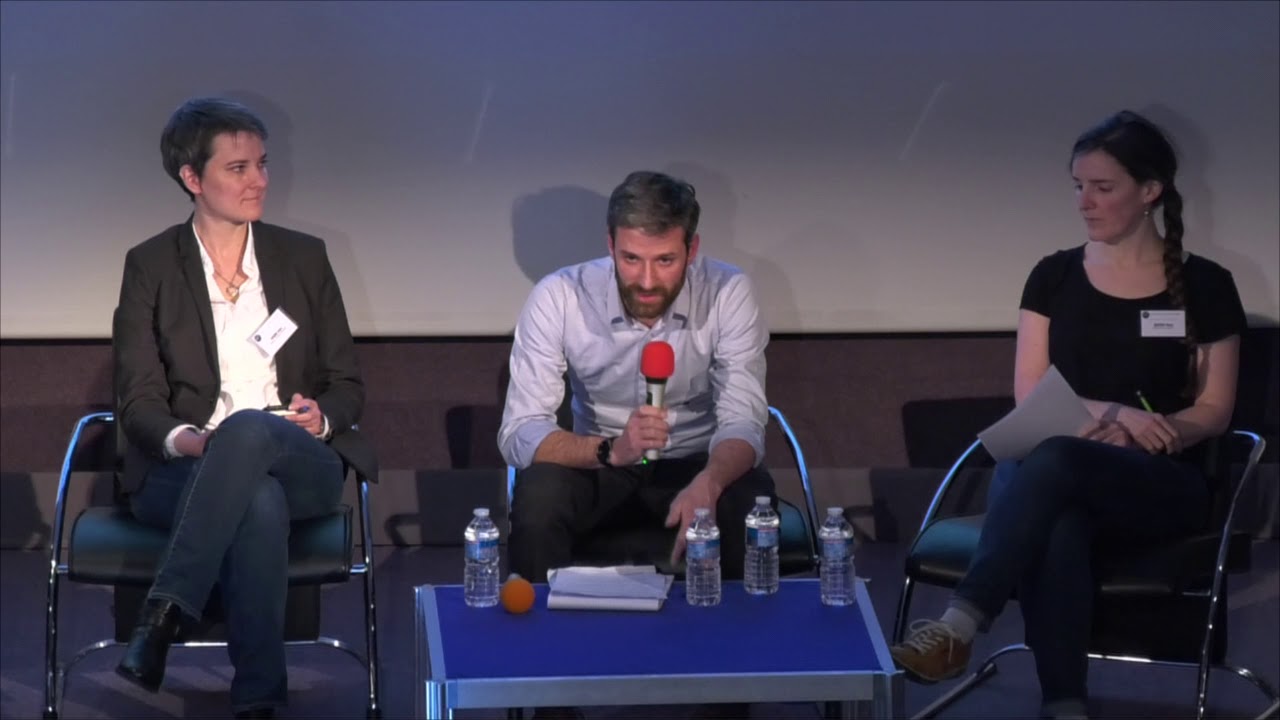
CNRS, 8 mars 2018 : "Les chercheuses de demain". Pascal Barbier, Université Paris1
Keywords
Summary
174 words
Critical Evaluation
Value of the Information & Strength of the Argument
The presentation offers valuable insights into the often-overlooked role of work-life balance in academic careers. The typology of four career orientations provides a nuanced framework for understanding different experiences. The argumentation is based on qualitative data (interviews) and references established sociological concepts, lending credibility. However, the presentation is limited by its focus on a specific national context (Belgium) and the lack of detailed methodological explanation. The speaker acknowledges the complexity and does not overgeneralize, but the argument would be strengthened by more concrete examples and quantitative data.
Scientific Rigor, Source Quality, Title Accuracy
The speaker references his own research and mentions the GARCIA project and the work of Catherine Marry, but does not provide specific citations or URLs. The title accurately reflects the content, which is a talk within a larger conference on women in science. The presentation is scientifically rigorous in its use of sociological concepts, but the lack of explicit references to published studies limits its verifiability. The speaker’s affiliation and the context of the CNRS conference add to the credibility.
182 words
Title / Content Match
The title accurately reflects the content, which focuses on the career paths of doctoral and post-doctoral researchers, with a specific presentation on work-life balance during postdoc.
Quality & Reliability
7/10
The presentation is based on original qualitative research (46 interviews) and references established sociological concepts (greedy institutions, leaky pipeline, glass ceiling). However, it is a conference talk with limited methodological detail and no peer-reviewed publication cited.
Key Moments
Markers derived by PSI from the transcript: the creator did not define chapters.
- Introduction: Pascal Barbier introduces his research on postdocs and work-life balance.
- Presents the 'leaky pipeline' and 'glass ceiling' concepts as background.
- Explains the 'greedy institution' concept and the hypothesis of work-life balance as a hidden filter.
- Describes the research methodology: 46 interviews with FNRS postdocs.
- Presents the first two types of career orientations: 'fully engaged' and 'optimists'.
- Presents the 'ambivalent' and 'distant' types.
- Discusses the role of material and relational supports, and social origin.
- Highlights gender differences: optimists are mostly men, ambivalent are mostly mothers.
- Concludes that work-life balance is a key factor in women's attrition in science.
Cited Sources
- GARCIA project (EU-funded) — Mentioned as the framework for the research.
- Catherine Marry's work on gender and science — Referenced in the context of gender inequalities in academia.
Concurring Sources
- GARCIA project (EU-funded) — The research was part of this project, which addresses gender and career regulation in science.
Contribution & Novelties
The talk provides original qualitative insights into the work-life balance of postdoctoral researchers, a group often overlooked in studies of academic careers. The typology of four career orientations offers a nuanced understanding of how individuals navigate the demands of academia and family life. The emphasis on material and relational supports, as well as social origin, adds depth to the analysis.
Pour aller plus loin :
- Leaky pipeline phenomenon — Relevant to the background of gender disparities in STEM.
- Greedy institutions concept — Central to the theoretical framework.
- Work–family balance in academia — Discusses challenges and solutions in academic careers.
99 words
Radar Profile
The radar profile shows moderate to high scores across all dimensions, with slightly lower technical level due to the qualitative nature and accessible presentation. The overall balance indicates a reliable and informative talk, though not highly technical.
💬 No comments were provided for analysis.