Martes de Divulgación Científica - 27 de mayo 2025 - Artículo Científico
Keywords
Summary
170 words
Critical Evaluation
Value of the Information & Strength of the Argument
The video provides valuable insights into the application of clinical genome sequencing in a resource-limited setting, highlighting the real-world impact on patients and families. The speaker’s firsthand experience adds authenticity, and the discussion of diagnostic yield and patient outcomes is informative. However, the argumentation is largely anecdotal, with limited presentation of specific data or statistical analysis. The speaker does not delve into the methodological details or limitations of the study, which weakens the scientific rigor. The value lies in the practical perspective and the emphasis on the benefits of genetic testing, but the lack of critical evaluation and comparative context limits its depth.
Scientific Rigor, Source Quality, Title Accuracy
The speaker is a qualified geneticist with relevant experience, and the study appears to be published, lending credibility. However, the video does not provide specific citations or references to the article, and the description only mentions the presenter’s name. The title accurately reflects the content, but the video lacks a structured presentation of the scientific evidence. The informal tone and lack of detailed methodology reduce the scientific rigor. The adequacy between title and content is good, but the overall scientific quality is moderate due to the absence of concrete data and references.
210 words
Title / Content Match
The title accurately reflects the content: a scientific outreach session presenting a scientific article.
Quality & Reliability
7/10
The video presents a firsthand account of a clinical genomics study in Peru, with the speaker being a co-author. The content is based on real patient data and published research, but the presentation is informal and lacks detailed methodological transparency. The speaker's expertise is evident, but the video is primarily a summary rather than a rigorous scientific exposition.
Key Moments
Markers derived by PSI from the transcript: the creator did not define chapters.
- Introduction of the speaker and her background.
- Presentation of the article title and overview of the study.
- Explanation of clinical genome sequencing and the iHope program.
- Description of the genetic material and chromosomes.
- Details on the participating hospitals and patient demographics.
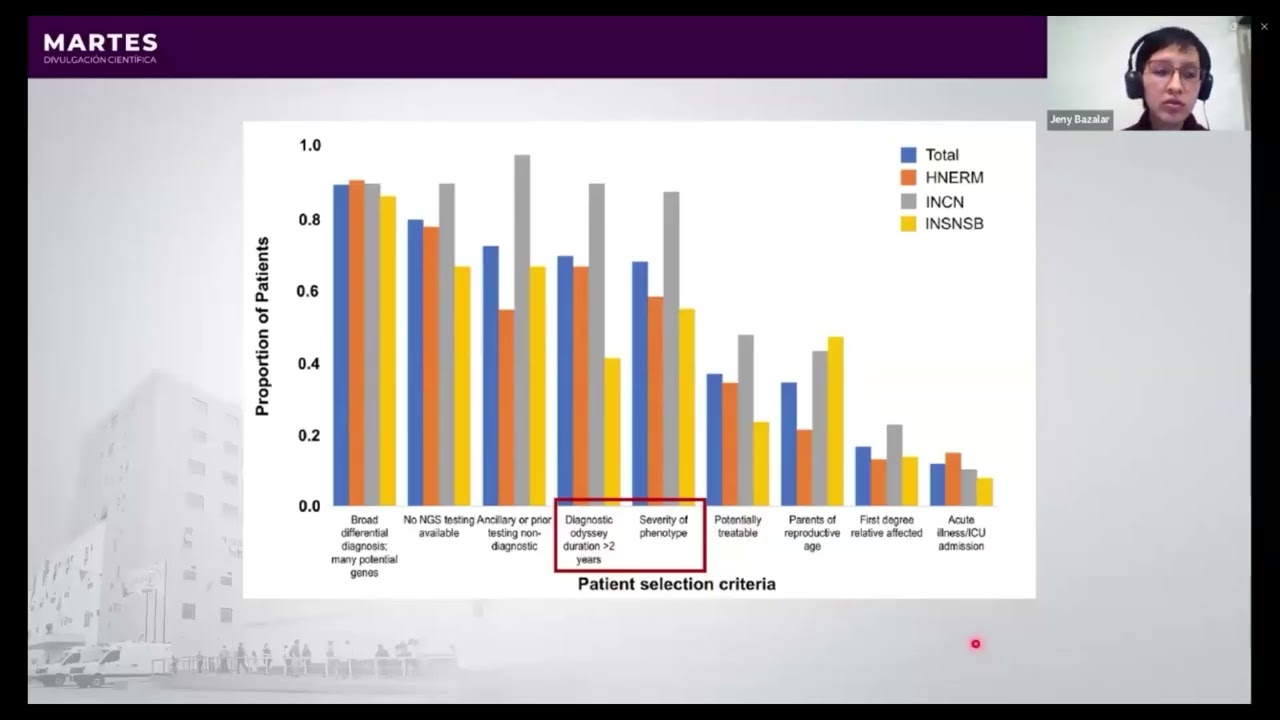
- Discussion of patient inclusion criteria and prior genetic tests.
- Presentation of results: diagnostic yield and variant interpretation.
- Impact on patient management and referrals.
- Genetic counseling and its effect on families.
- Conclusion and call for continued support for rare disease research.
Cited Sources
- Article scientifique présenté (non spécifié) — The speaker presents her own published article, but the exact title and link are not provided in the video or description.
Concurring Sources
- iHope Program — The iHope program is mentioned as the philanthropic initiative providing genome sequencing.
Contribution & Novelties
The video offers a unique perspective on the implementation of clinical genome sequencing in Peru, a low- and middle-income country, highlighting the challenges and benefits. It underscores the importance of genetic testing for rare diseases and the impact on patient care and family counseling. The speaker’s personal involvement adds a human element often missing in scientific presentations.
Pour aller plus loin :
- Clinical Genome Sequencing — Provides background on the technology and its applications.
- Rare Diseases — Overview of rare diseases and their global impact.
- Genetic Counseling — Explains the role of genetic counseling in healthcare.
96 words
Radar Profile
The radar profile shows moderate scores across all dimensions, with slightly higher scores in information quantity and quality, reflecting the informative yet informal nature of the presentation. The technical level is moderate, indicating accessibility to a general audience, while reliability is supported by the speaker's expertise but limited by the lack of detailed references.