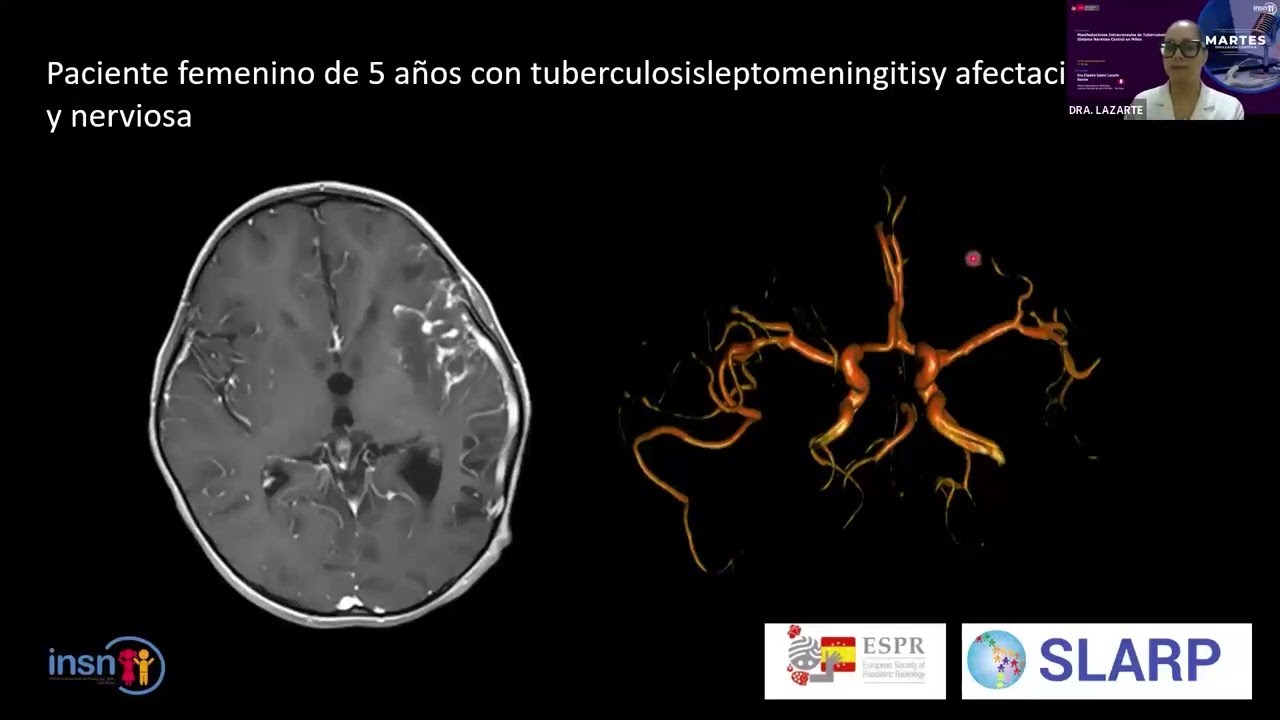
Martes de Divulgación Científica - 16 de diciembre 2025 - Tuberculosis cerebral
Keywords
Summary
161 words
Critical Evaluation
Value of the Information & Strength of the Argument
The presentation provides valuable information on the imaging features of cerebral tuberculosis, supported by multiple clinical cases and MRI images. The argumentation is solid, as it is based on a published article in Pediatric Radiology and the speaker’s expertise. The talk systematically covers the main manifestations, complications, and differential diagnoses, with clear explanations of imaging findings. The use of real cases enhances the educational value, and the speaker effectively highlights key points for diagnosis.
Scientific Rigor, Source Quality, Title Accuracy
The scientific rigor is high, as the content is derived from a peer-reviewed publication and presented by a specialist. The sources are not explicitly cited in the video, but the reference to the article in Pediatric Radiology provides credibility. The title accurately reflects the content, which is a focused review of cerebral tuberculosis. The presentation is well-structured and evidence-based, with appropriate use of imaging examples.
154 words
Title / Content Match
The title accurately reflects the content, which is a scientific dissemination talk on cerebral tuberculosis.
Quality & Reliability
8/10
The content is presented by a medical professional, likely a radiologist, and is based on a published article in Pediatric Radiology. The presentation is structured, covers key aspects of cerebral tuberculosis with imaging examples, and includes a review of complications and differential diagnoses. The information is consistent with established medical knowledge, though it is a lecture rather than a peer-reviewed presentation.
Key Moments
Markers derived by PSI from the transcript: the creator did not define chapters.
- Introduction and objectives of the talk.
- Global burden of tuberculosis and clinical presentation in children.
- Main manifestations: meningitis and tuberculomas.
- Imaging findings of tuberculous meningitis: basal enhancement, hydrocephalus.
- Complications: vasculitis, infarcts, and cranial nerve involvement.
- Tuberculous abscesses: imaging features and differentiation.
- Tuberculomas: non-caseating vs caseating, and differential diagnosis.
- Miliary tuberculosis and differential diagnoses.
- Summary and key takeaways.
Cited Sources
- Pediatric Radiology — The article on cerebral tuberculosis published in this journal in January 2025.
Concurring Sources
- Pediatric Radiology — The article is the primary source for the talk.
Contribution & Novelties
The talk provides a comprehensive review of cerebral tuberculosis imaging, emphasizing the role of MRI in diagnosis and management. It highlights the importance of recognizing characteristic findings to avoid misdiagnosis with tumors. The presentation is particularly useful for radiologists and clinicians dealing with pediatric cases.
Pour aller plus loin :
- Tuberculous meningitis - Radiopaedia — Overview of imaging features.
- Central nervous system tuberculosis - WHO — Global burden and guidelines.
- Tuberculoma - StatPearls — Detailed description of tuberculomas.
78 words
Radar Profile
The radar profile shows high scores in quantity and quality of information, with a moderate technical level, indicating a well-balanced presentation suitable for a professional audience. The reliability is high, reflecting the evidence-based nature of the content.