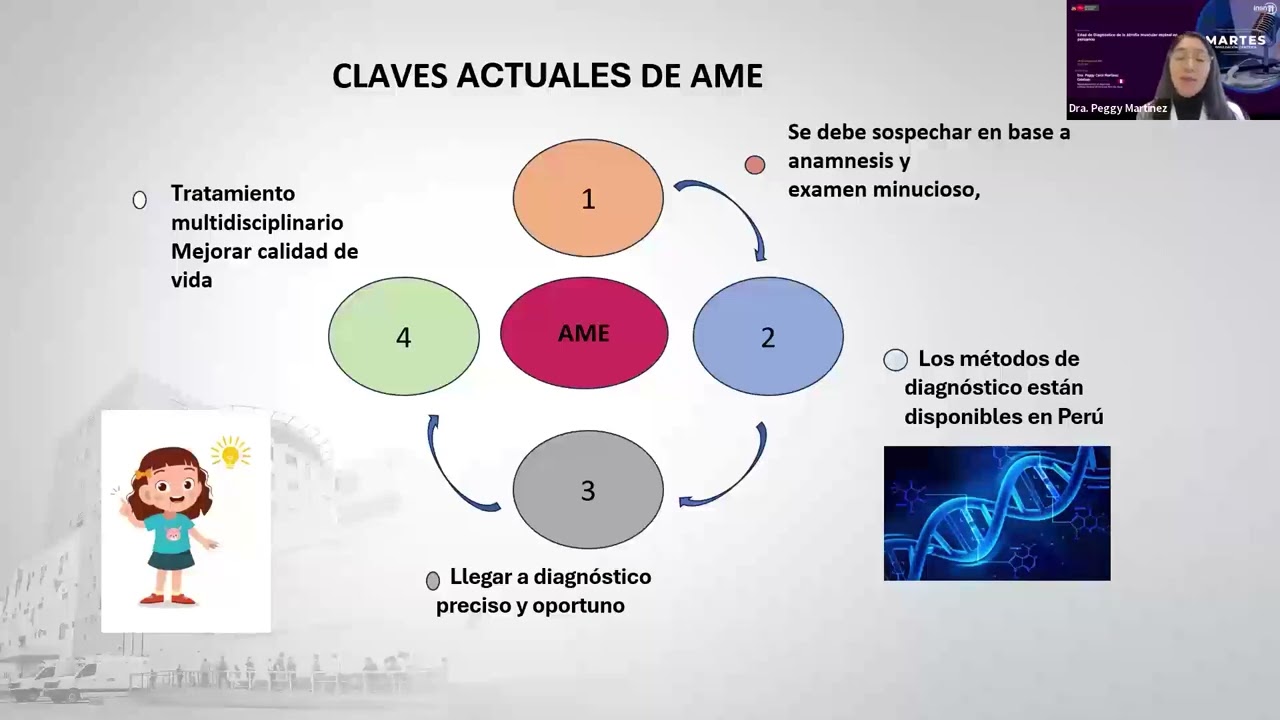
🎥✨ Martes de Divulgación Científica - 14 de octubre 2025 - Atrofia muscular espinal
Keywords
Summary
250 words
Critical Evaluation
Value of the Information & Strength of the Argument
The value of the information is high, as it provides original data on diagnostic delays for SMA in Peru, a topic with limited published data. The study’s methodology is sound for a cross-sectional design, using a structured survey and including both hospital and association patients. The argumentation is logical, starting with disease background, then presenting the study’s objectives, methods, results, and conclusions. The speaker effectively uses comparative data from other countries to contextualize the findings. However, the study’s reliance on self-reported data may introduce recall bias, and the sample size is relatively small. The speaker also acknowledges limitations such as the lack of genetic confirmation for some patients and the potential underdiagnosis of type 1. Overall, the argumentation is persuasive and clinically relevant.
Scientific Rigor, Source Quality, Title Accuracy
The scientific rigor is good: the study is clearly described, with data analysis using SPSS, and the speaker cites historical references (Werdnig, Hoffman, Kugelberg, Welander, Melki) for the disease’s discovery and genetic basis. The title accurately reflects the content, which is a scientific dissemination session. The sources are not explicitly cited in the video, but the speaker mentions the availability of genetic testing at the Instituto de Salud del Niño de Breña and the patient association. The adequacy between title and content is excellent. No comments were provided, so no analysis of public trends is included.
234 words
Title / Content Match
The title accurately reflects the content: a scientific dissemination session on spinal muscular atrophy, focusing on diagnostic age in Peru.
Quality & Reliability
8/10
The presentation is based on a cross-sectional study with clear methodology, data from 51 patients, and comparisons with international data. The speaker is a neurologist with relevant credentials. Limitations include potential selection bias and reliance on self-reported data, but the study is transparent and clinically relevant.
Key Moments
Markers derived by PSI from the transcript: the creator did not define chapters.
- Introduction of the speaker and topic.
- Explanation of SMA genetics and pathophysiology.
- Description of SMA types 1-4 and their clinical features.
- Presentation of the study objectives and methodology.
- Results: median ages of symptom onset and diagnosis for each type.
- Analysis of first consultation and referral patterns, highlighting delays.
- Comparison with international data from Italy and Argentina.
- Conclusions and recommendations for early diagnosis.
- Q&A session on red flags in primary care.
Cited Sources
- Instituto de Salud del Niño de Breña — Mentioned as the center where genetic testing for SMA is available in Peru.
- Asociación de Pacientes con AME Perú — Collaborated in the study by providing access to patients.
Concurring Sources
- Diagnostic delay in spinal muscular atrophy: a systematic review — The study's findings align with global evidence of diagnostic delays in SMA.
Dissenting Sources
- Potential underdiagnosis of SMA type 1 — The study suggests that type 1 SMA may be underdiagnosed, as some patients may die from respiratory complications without a confirmed diagnosis.
Contribution & Novelties
This video provides original data on the diagnostic delay for SMA in Peru, which is scarce in the literature. It highlights the specific barriers in the Peruvian healthcare system, such as low clinical suspicion and limited access to genetic testing. The study’s findings are compared with international data, offering a regional perspective. The presentation also emphasizes the importance of early diagnosis for timely treatment and better outcomes.
Pour aller plus loin :
- Spinal muscular atrophy - Wikipedia — Overview of SMA, including genetics and clinical types.
- SMN1 gene - Genetics Home Reference — Detailed information on the SMN1 gene and its role in SMA.
- SMN2 gene - Genetics Home Reference — Information on the SMN2 gene and its modifier effect.
- Newborn screening for SMA - ACMG — Relevant to early diagnosis and screening programs.
134 words
Radar Profile
The radar profile shows high scores in information quantity, quality, and reliability, with a slightly lower technical level, indicating a presentation that is both informative and accessible. The balance suggests a strong scientific foundation with practical clinical relevance.