MARTES_14 ABRIL
Keywords
Summary
146 words
Critical Evaluation
Value of the Information & Strength of the Argument
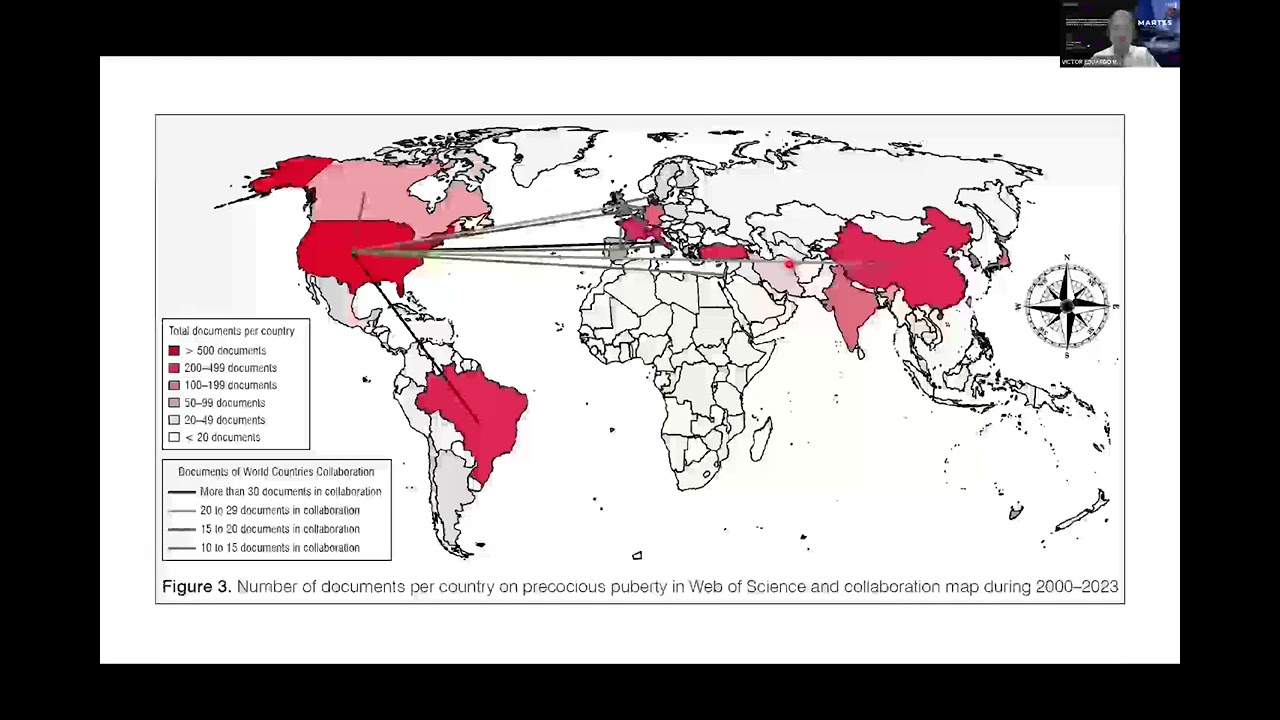
The presentation provides valuable insights into the utility of bibliometric studies in health research, particularly for identifying research trends and gaps. Dr. Román effectively argues for the importance of conducting bibliometric analyses before embarking on primary research, using the example of precocious puberty and phytoestrogens. He explains the methodology in a clear, accessible manner, highlighting key metrics such as publication growth, country collaboration, and journal selection. The argumentation is logical and well-structured, though it lacks detailed statistical evidence from the study itself. The speaker’s expertise adds credibility, but the presentation would benefit from more concrete examples and data from the bibliometric analysis.
Scientific Rigor, Source Quality, Title Accuracy
The presentation demonstrates scientific rigor by referencing the Web of Science database and mentioning the study’s methodology. However, specific sources, such as the published paper or detailed data, are not provided. The title ‘MARTES_14 ABRIL’ is not descriptive and fails to convey the content about bibliometric analysis of precocious puberty. The speaker’s credentials and institutional affiliation lend credibility, but the lack of cited references limits the ability to verify the claims. No comments were provided, so public reception cannot be assessed.
198 words
Title / Content Match
The title is generic and does not reflect the specific content about bibliometric analysis of precocious puberty.
Quality & Reliability
7/10
The presentation is given by a medical doctor with postgraduate training in statistics, bioepidemiology, and public health, and experience as a research advisor. The content is based on a bibliometric study using Web of Science, a recognized database. However, the talk is a summary of the study's findings without detailed methodology or peer-reviewed publication details, limiting full verification.
Key Moments
Markers derived by PSI from the transcript: the creator did not define chapters.
- Introduction and welcome of Dr. Víctor Román Laarte
- Explanation of the motivation behind the bibliometric study on precocious puberty
- Overview of bibliometric studies and their purpose in health sciences
- Discussion of publication trends and the law of scientific growth
- Analysis of country collaboration and leading research nations
- Identification of key journals and highly cited papers
- Conclusion and mention of future research directions
Contribution & Novelties
The presentation offers a practical perspective on using bibliometric analysis as a foundation for further research, specifically in the field of precocious puberty. It highlights the importance of understanding global research trends and collaborations to inform local studies. The speaker’s experience in conducting such studies provides a valuable roadmap for researchers.
Pour aller plus loin :
- Bibliometrics — Overview of bibliometric methods and applications.
- Web of Science — Description of the database used in the study.
- Precocious puberty — Medical background on the condition.
- Phytoestrogens — Plant-derived compounds with estrogenic activity, relevant to the study’s motivation.
96 words
Radar Profile
The radar profile shows moderate scores across all dimensions, with slightly higher reliability and information quality, indicating a balanced but not exceptional presentation. The low technical level suggests it is accessible to a general scientific audience.