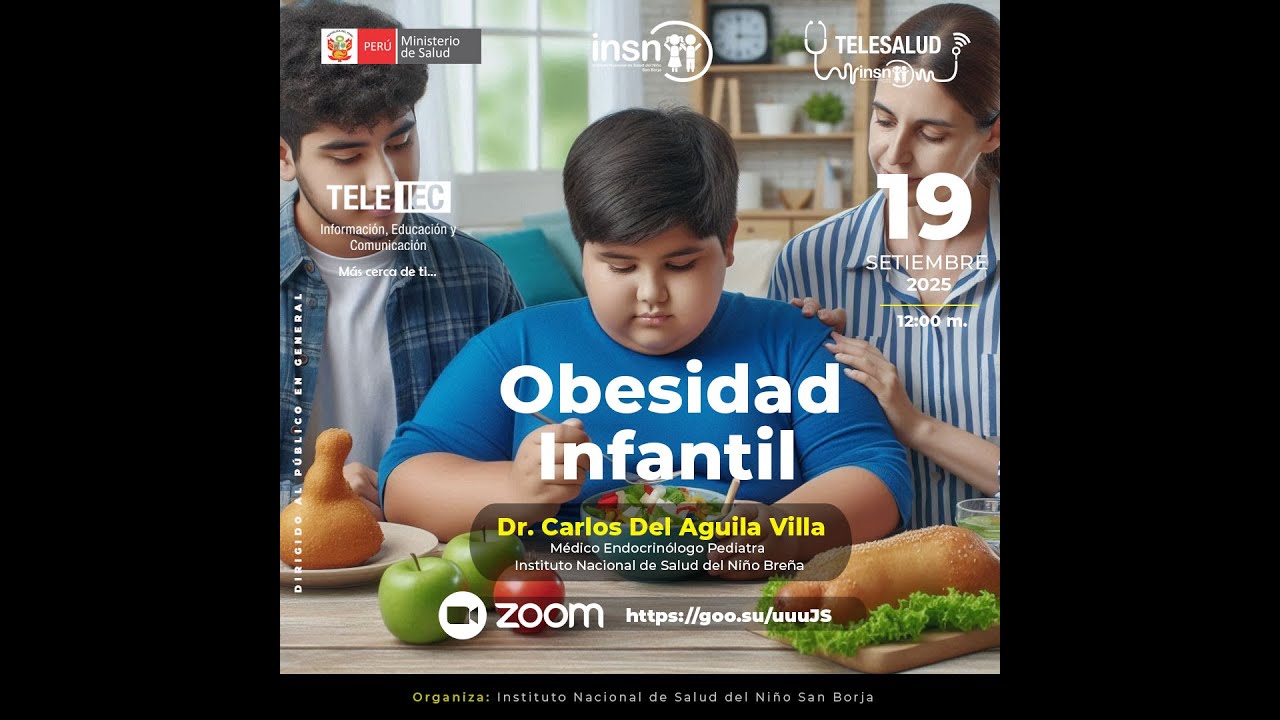
📺 TeleIEC – Obesidad Infantil
Keywords
Summary
216 words
Critical Evaluation
Value of the Information & Strength of the Argument
The lecture provides valuable, up-to-date information on childhood obesity, covering definitions, epidemiology, pathophysiology, diagnosis, and management. The argumentation is solid, based on established medical knowledge and the speaker’s clinical experience. He effectively explains complex concepts like insulin resistance and the role of adipokines in a clear manner. The emphasis on early intervention and the importance of family history is well-argued. However, some statements lack specific citations, and the discussion of the recent Lancet classification of preclinical and clinical obesity is presented from a personal perspective, which may not fully represent the scientific consensus.
102 words
Title / Content Match
The title accurately reflects the content, which is a lecture on childhood obesity.
Quality & Reliability
7/10
The presentation is given by a pediatric endocrinologist with relevant credentials, and it aligns with WHO and other institutional guidelines. However, it is largely based on personal experience and general knowledge, with limited specific citations to recent studies.
Key Moments
Markers derived by PSI from the transcript: the creator did not define chapters.
- Introduction of the speaker and topic.
- Definition of obesity according to WHO.
- Discussion on the causes of obesity, including nutritional, endocrine, and genetic factors.
- Global statistics on childhood obesity and its persistence into adulthood.
- Metabolic implications: insulin resistance and the role of adiponectin.
- Importance of family history and risk factors.
- Diagnostic criteria: BMI, growth charts, and waist circumference.
- Clinical signs of insulin resistance, including acanthosis nigricans.
- Laboratory tests and interpretation, including TSH elevation in obesity.
- Treatment strategies: lifestyle modifications, nutrition, and physical activity.
Cited Sources
- WHO fact sheet on obesity and overweight — Referenced for the definition and global statistics on obesity.
- MedlinePlus: Obesity in children — Provided as a resource for further information on childhood obesity.
- UN News: Childhood obesity — Referenced for recent news on childhood obesity.
- UNICEF Peru: Childhood obesity — Provided as a resource on childhood obesity in Peru.
- Instituto Nacional de Salud (Peru): Healthy eating — Provided as a resource for healthy eating guidelines.
Concurring Sources
- WHO fact sheet on obesity and overweight — Aligns with the speaker's definition and global statistics.
- MedlinePlus: Obesity in children — Provides consistent information on causes and health risks.
Dissenting Sources
- Lancet: Definition and diagnostic criteria of clinical obesity — The speaker expresses disagreement with applying the Lancet's classification of preclinical and clinical obesity to children, arguing that early intervention is necessary.
Contribution & Novelties
The lecture provides a comprehensive and practical overview of childhood obesity, emphasizing early detection and lifestyle interventions. It highlights the importance of measuring waist circumference and recognizing signs of insulin resistance. The speaker also discusses the impact of the COVID-19 pandemic on obesity rates and early puberty.
Pour aller plus loin :
- WHO: Obesity and overweight — Official WHO fact sheet with global data and definitions.
- MedlinePlus: Childhood obesity — Patient-focused information on causes, risks, and treatment.
- UNICEF: Childhood obesity — UNICEF’s perspective on childhood obesity in Peru.
- Lancet: Definition and diagnostic criteria of clinical obesity — Recent Lancet publication on clinical obesity definitions, discussed in the video.
- Endocrine disruptors and obesity — Endocrine Society’s page on endocrine disruptors, relevant to the discussion of environmental factors.
126 words
Radar Profile
The radar profile shows high scores in quantity of information and quality, with moderate technical level and reliability. This indicates a comprehensive and informative lecture, but with room for more rigorous scientific citations and technical depth.
💬 Sur les 0 commentaires analysés, aucune tendance n'a pu être dégagée.