🎥✨ Martes de Divulgación Científica - 17 de marzo 2026 - Catéter venoso central
Keywords
Summary
228 words
Critical Evaluation
Value of the Information & Strength of the Argument
The presentation provides valuable practical information for healthcare professionals, especially those in pediatric intensive care. It offers a comprehensive overview of CVC indications, contraindications, insertion techniques, and infection prevention strategies. The argumentation is based on clinical experience and established protocols, though it lacks explicit references to scientific studies. The speaker effectively communicates the importance of each step in the prevention bundle and supports his points with logical reasoning and practical examples. However, the absence of citations to specific research or guidelines weakens the scientific foundation, making it more of an expert opinion than an evidence-based review.
Scientific Rigor, Source Quality, Title Accuracy
The scientific rigor is moderate: the content aligns with standard clinical guidelines, but no specific sources are cited within the talk. The description provides no links to references. The title accurately reflects the content, which is a focused discussion on CVC placement and bacteremia prevention. The adequacy between title and content is high. No comments were provided for analysis.
170 words
Title / Content Match
The title accurately reflects the content, which focuses on the indication and placement of central venous catheters and prevention of bacteremia.
Quality & Reliability
7/10
The presentation is based on clinical expertise and institutional protocols, but lacks explicit citations to scientific literature. The content aligns with established guidelines for central venous catheter insertion and infection prevention, but the absence of specific references and the informal setting limit its scientific rigor.
Key Moments
Markers derived by PSI from the transcript: the creator did not define chapters.
- Introduction and speaker presentation
- Indications for central venous catheter placement
- Contraindications and risk factors
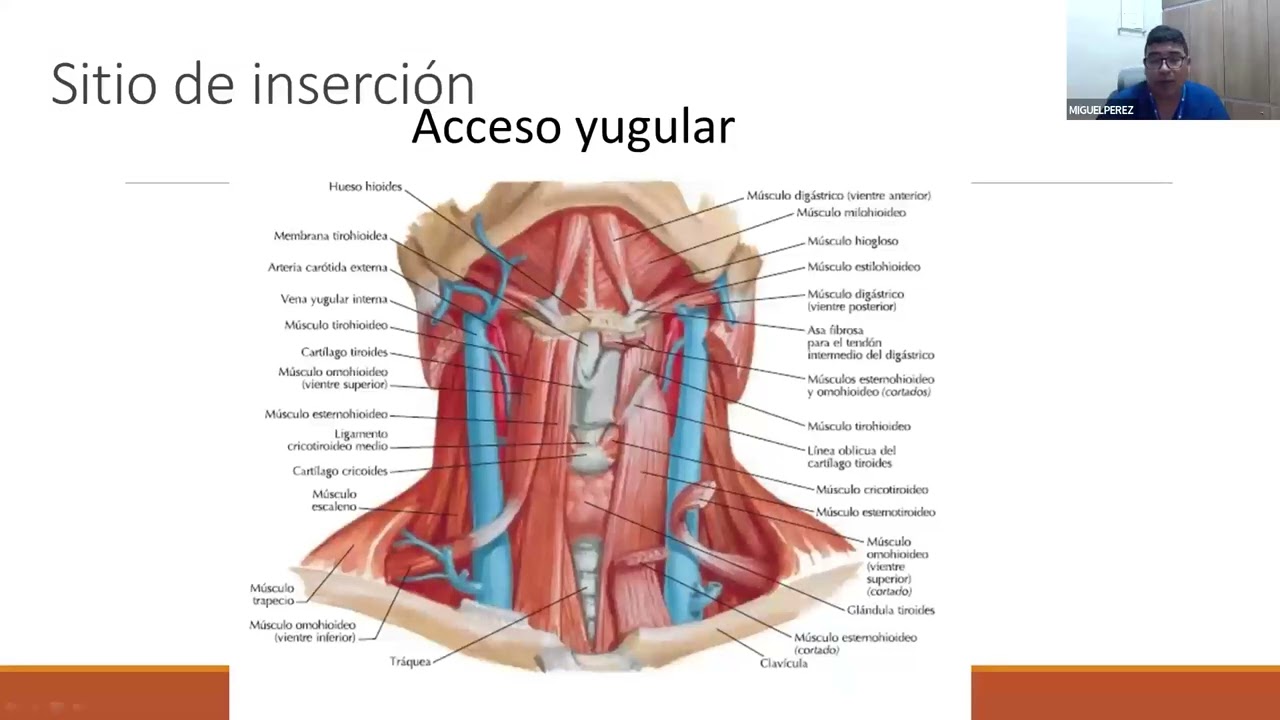
- Insertion sites: jugular, subclavian, femoral
- Catheter size selection and insertion depth
- Seldinger technique and ultrasound guidance
- Complications of CVC placement
- Six-step prevention bundle: hand hygiene and skin disinfection
- Maximal barrier precautions and site preference
- Catheter maintenance and removal criteria
Contribution & Novelties
The video provides a practical, experience-based overview of central venous catheter management in a pediatric setting, emphasizing infection prevention. It reinforces established guidelines but does not introduce novel research. The ‘Pour aller plus loin’ section suggests further exploration of evidence-based practices.
Pour aller plus loin :
- Central venous catheter - Wikipedia — Overview of types, indications, and complications.
- Prevention of Central Line-Associated Bloodstream Infections - CDC — Evidence-based guidelines for prevention.
- Chlorhexidine - Wikipedia — Information on the antiseptic used for skin disinfection.
83 words
Radar Profile
The radar profile shows high scores in quantity of information and technical level, indicating a detailed and specialized presentation. Quality and reliability are slightly lower due to the lack of cited sources, but the content is consistent with clinical best practices.