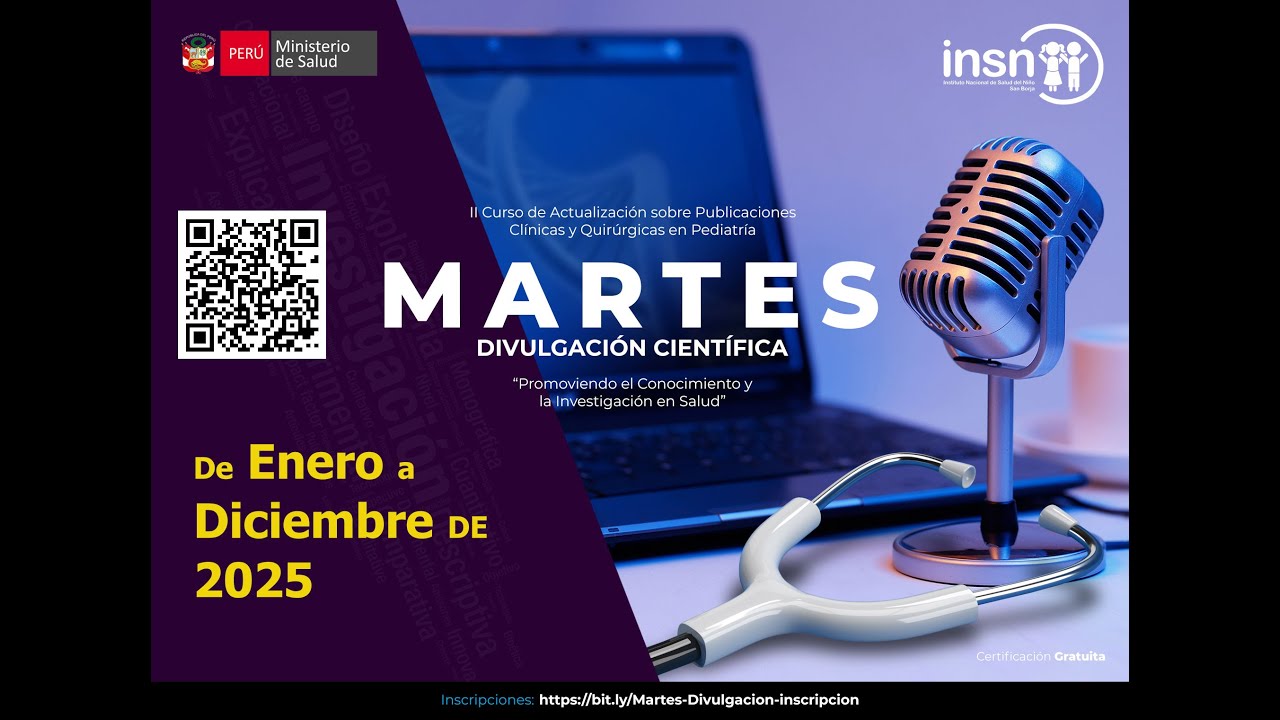
Martes de Divulgación Científica - 13 de mayo 2025 - Síndrome de Pai
Keywords
Summary
172 words
Critical Evaluation
Value of the Information & Strength of the Argument
The video provides valuable insights into the process of publishing a medical case report, particularly for rare diseases. The speakers share practical tips on navigating journal requirements, handling rejection, and structuring the manuscript. The argumentation is based on their personal experience, which adds credibility but is not supported by external evidence. They emphasize the importance of teamwork and mentorship, which is a valuable perspective for early-career researchers. However, the discussion is largely anecdotal and lacks a systematic approach to research methodology.
Scientific Rigor, Source Quality, Title Accuracy
The scientific rigor is moderate; the speakers are experienced clinicians, but they do not cite specific sources during the video. The title accurately reflects the content, which is a scientific dissemination session. The description provides minimal information, but the video itself is coherent and focused. The lack of formal citations limits the verifiability of the claims, but the practical advice is consistent with common publication practices.
162 words
Title / Content Match
The title accurately reflects the content, which is a scientific dissemination session focused on the Pai syndrome case.
Quality & Reliability
7/10
The video is a presentation by medical professionals sharing their experience with a rare case report. It provides practical advice on publishing case reports, but it is largely anecdotal and lacks formal citations or peer-reviewed references. The information is credible given the speakers' expertise, but it is not a systematic review or original study.
Key Moments
Markers derived by PSI from the transcript: the creator did not define chapters.
- Introduction and context of the session
- Discussion on the importance of patient-centered research
- Presentation of the Pai syndrome case and its rarity
- Dr. Vania Cuno shares her experience with the publication process
- Advice on handling rejection and choosing journals
- Discussion on ethical considerations and informed consent
- Q&A session with audience questions
- Closing remarks and encouragement
Contribution & Novelties
The video offers a unique perspective on the publication of a rare case report, emphasizing the collaborative process and the importance of mentorship. It provides practical, step-by-step advice that is often not covered in formal research training. The discussion on the rarity of Pai syndrome and its association with arteriovenous malformation adds to the existing literature, though the case itself is not presented in detail.
Pour aller plus loin :
- Pai syndrome - Orphanet — Overview of Pai syndrome, a rare genetic condition.
- Case report guidelines - CARE — International guidelines for writing case reports.
- Arteriovenous malformation - Wikipedia — General information on arteriovenous malformations.
105 words
Radar Profile
The radar profile shows moderate scores across all dimensions, with slightly higher scores in quality of information and reliability, reflecting the expert opinions shared. The lower score in quantity of information indicates that the video is not dense with facts but rather focuses on practical advice.