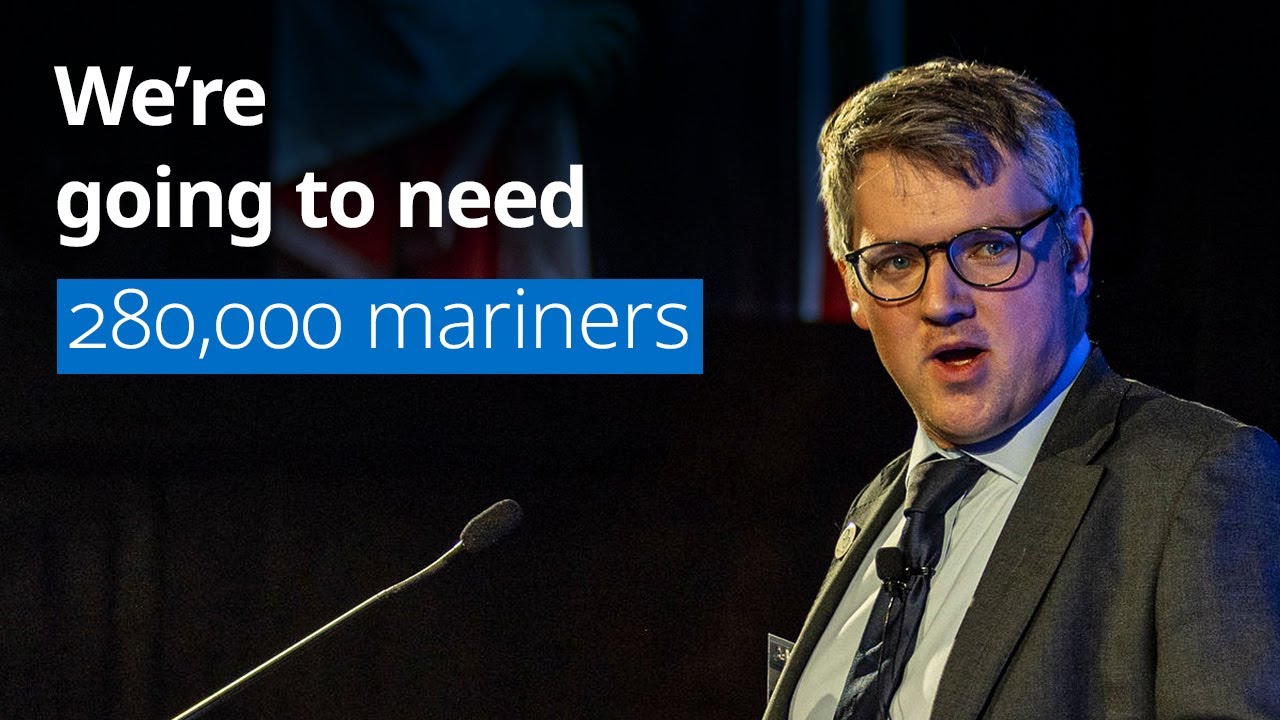
Developing the future workforce
Keywords
Summary
169 words
Critical Evaluation
Value of the Information & Strength of the Argument
The video provides valuable insights into the workforce challenges and opportunities for nuclear maritime. The argumentation is solid, supported by data on workforce shortages and the need for regulatory updates. The panelists bring diverse perspectives, enhancing the credibility of the discussion. However, some claims, such as the projected number of nuclear-qualified crew by 2060, are based on CORE POWER’s modeling and not independently verified. The discussion is forward-looking and emphasizes the importance of culture and training, but it lacks detailed technical specifics on curriculum development.
Scientific Rigor, Source Quality, Title Accuracy
The video demonstrates scientific rigor through the expertise of the panelists and references to IMO regulations and industry reports. However, specific sources are not cited in the video, and the description provides no links to external references. The title accurately reflects the content, focusing on workforce development. The discussion is well-structured, but the lack of cited sources limits the ability to verify claims independently.
164 words
Title / Content Match
The title accurately reflects the content, which focuses on developing the future workforce for nuclear-powered shipping.
Quality & Reliability
7/10
The video features expert speakers from academia, industry, and regulatory bodies, providing credible insights into workforce development for nuclear maritime. However, it is a panel discussion with limited peer-reviewed sources and some promotional content for CORE POWER's initiatives.
Key Moments
Markers derived by PSI from the transcript: the creator did not define chapters.
- Dr. Rory Megginson introduces the topic of workforce development for nuclear maritime.
- Discussion of current maritime workforce statistics and projected shortage of deck officers by 2030.
- Analysis of the aging nuclear workforce and the need for new talent.
- Introduction of the panelists and their backgrounds.
- Jerry Paul discusses the importance of culture and excellence in nuclear training.
- Nathaniel Read highlights the role of education and the appeal of marine nuclear to students.
- Discussion on regulatory updates needed for nuclear crew training, including STCW.
- Tan Lee shares perspective from ship management on workforce needs.
- CORE POWER's academic program and support for students is highlighted.
- Conclusion and call to action for industry collaboration.
Cited Sources
- IMO SOLAS Convention — Mentioned in the context of updating regulations for nuclear ships.
- STCW Convention — Discussed as needing updates for nuclear crew training.
Concurring Sources
- IMO SOLAS Convention — Referenced as the regulatory framework for nuclear ship safety.
Contribution & Novelties
The video provides a comprehensive overview of the workforce challenges and strategies for nuclear maritime, highlighting the need for a cultural shift and regulatory updates. It offers a unique perspective by bringing together experts from academia, industry, and regulatory bodies. The discussion on the projected number of nuclear-qualified crew by 2060 is a novel contribution, though based on CORE POWER’s modeling.
Pour aller plus loin :
- Nuclear Power in Shipping — Overview of nuclear propulsion in ships.
- IMO’s Work on Maritime Safety — Information on IMO safety regulations.
- STCW Convention — Details on seafarer training standards.
96 words
Radar Profile
The radar profile shows high scores in information quantity and quality, with moderate technical depth. The reliability is solid due to expert panelists, but the lack of cited sources and promotional elements slightly reduce the overall score.
💬 No comments were provided for analysis.