Rebuilding the U.S. Maritime Industrial Base
Keywords
Summary
138 words
Critical Evaluation
Value of the Information & Strength of the Argument
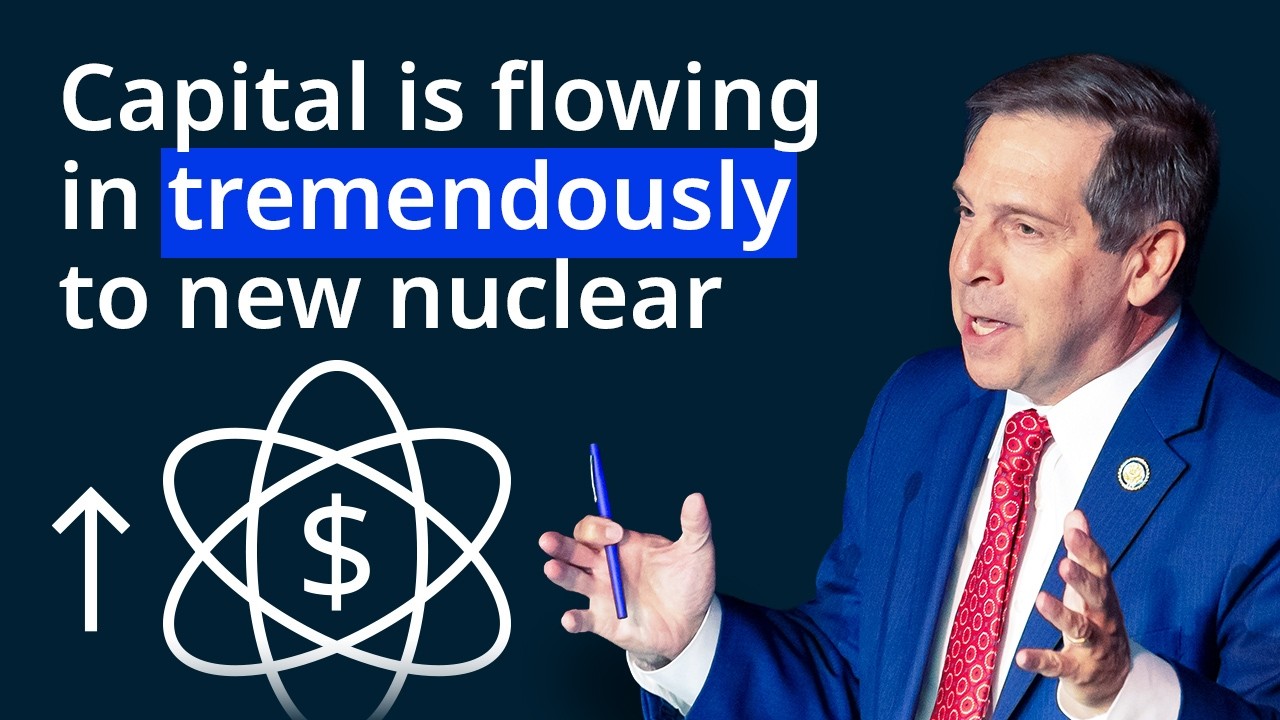
The talk provides valuable insights into the political and funding landscape for nuclear maritime propulsion in the U.S. Fleischmann’s position as an appropriator gives weight to his statements on budget priorities and legislative processes. He argues for a collaborative approach and highlights specific initiatives like the Clinch River site and funding for SMRs. However, the argumentation is largely anecdotal and relies on his authority rather than data or detailed analysis. He makes broad claims about competition and the need for more ships without providing specific evidence. The Q&A section adds practical value, addressing concerns about site approval, reprocessing, and competition, but the responses remain at a high level.
Scientific Rigor, Source Quality, Title Accuracy
The talk is not rigorously scientific; it is a political speech with no citations to studies or reports. The only source mentioned is CORE POWER, the organizer, and the speaker’s own experience. The title accurately reflects the content, focusing on rebuilding the maritime industrial base. The speaker’s credibility as a congressman adds some reliability, but the lack of verifiable data and the promotional tone limit the scientific rigor. No comments were provided for analysis.
197 words
Title / Content Match
The title accurately reflects the content, which focuses on rebuilding the U.S. maritime industrial base through nuclear propulsion and policy support.
Quality & Reliability
6/10
The speaker is a U.S. Congressman and chairman of the Energy and Water Appropriations Subcommittee, providing insider perspective on policy and funding. However, the talk is largely anecdotal and political, with limited technical depth and no citations to specific studies or data.
Key Moments
Markers derived by PSI from the transcript: the creator did not define chapters.
- Introduction and opening remarks
- Speaker's background and role as appropriator
- Discussion on nuclear for maritime and need for more ships
- Emphasis on collaboration and energy security
- Q&A: SMR site approval and regulatory concerns
- Q&A: Prioritizing technology and market for maritime nuclear
- Q&A: Authorizing legislation and appropriations
- Q&A: Reprocessing and spent fuel management
- Q&A: International competition and shipbuilding
- Closing remarks and call to action
Cited Sources
- CORE POWER — Organizer of the summit and promoter of nuclear for maritime.
Concurring Sources
- CORE POWER — The organization's mission aligns with the talk's focus on nuclear for maritime.
Contribution & Novelties
The talk provides an insider perspective on U.S. legislative and funding mechanisms for nuclear maritime propulsion, highlighting specific initiatives like the Clinch River site and recent appropriations. It underscores the bipartisan support and the potential for public-private partnerships. However, it lacks technical depth and novel scientific insights.
Pour aller plus loin :
- Nuclear Propulsion — Overview of nuclear propulsion technologies and applications.
- Small Modular Reactors — Background on SMRs and their potential for maritime use.
- U.S. Maritime Administration — Official agency for U.S. maritime policy and programs.
87 words
Radar Profile
The radar profile shows moderate scores across all dimensions, with slightly higher reliability and information quality compared to technical depth. This reflects a policy-focused talk with limited technical detail but credible political insights.