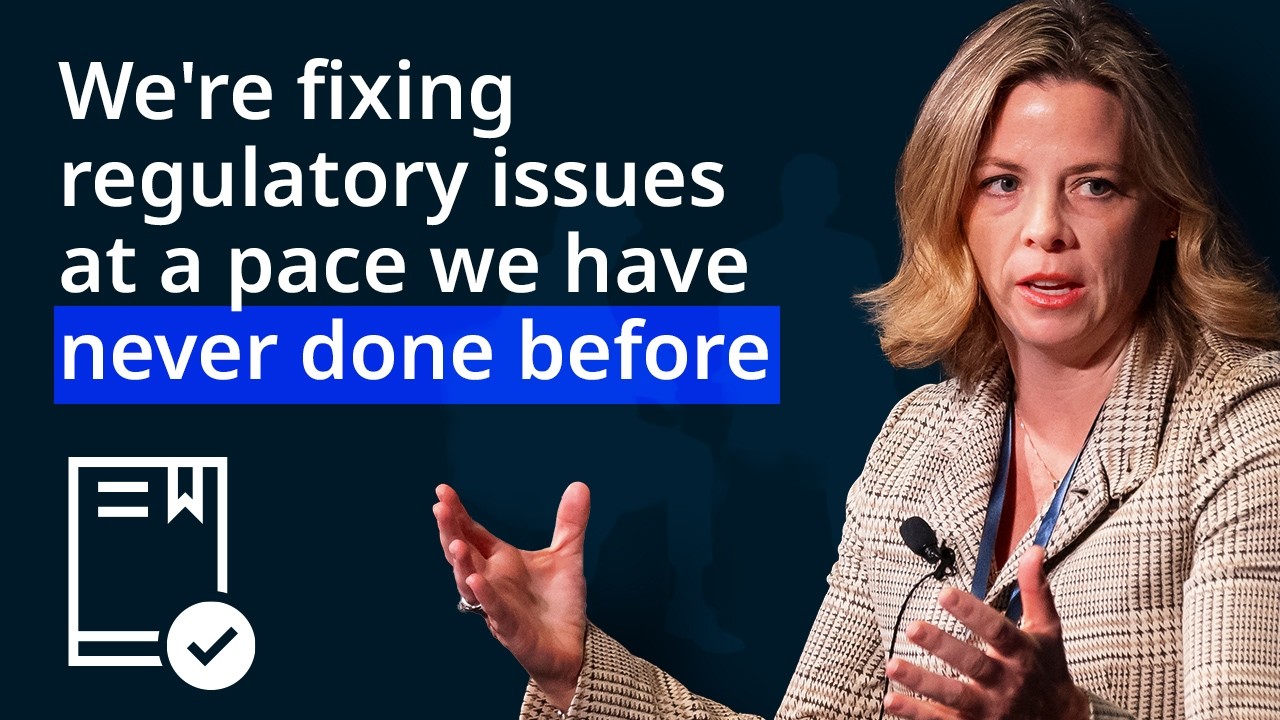
From policy to practice
Keywords
Summary
128 words
Critical Evaluation
Value of the Information & Strength of the Argument
The panel provides valuable insights into the current state and future direction of maritime nuclear regulation. The arguments are well-structured and grounded in the expertise of the panelists, who represent key regulatory bodies (NRC, ABS) and industry organizations (NEMO, Core Power). The discussion effectively highlights the complexities and interdependencies of regulatory, legal, and insurance aspects. The panelists present a coherent case for proactive regulatory development, citing concrete examples such as the IMO’s code revision and the NRC’s new licensing pathways. The argumentation is persuasive, though it relies heavily on expert opinion rather than empirical data.
Scientific Rigor, Source Quality, Title Accuracy
The panel demonstrates a high level of scientific rigor, with panelists referencing specific regulations, historical precedents, and ongoing initiatives. The sources cited include the IMO’s Code of Safety for Nuclear Merchant Ships, the IAEA’s ATLAS program, and the NRC’s Part 53 and Part 57 pathways. The title accurately reflects the content, focusing on the practical implementation of maritime nuclear. The discussion is well-organized and stays on topic, with minimal digressions. The panelists are credible and provide a balanced view of the challenges and opportunities.
194 words
Title / Content Match
The title accurately reflects the content, which focuses on the transition from policy discussions to practical regulatory implementation in maritime nuclear.
Quality & Reliability
8/10
The panel brings together regulators, industry experts, and legal professionals, providing authoritative insights into the regulatory landscape for maritime nuclear. The discussion is grounded in current initiatives and historical context, with a clear focus on practical implementation. However, the content is largely opinion and forward-looking, with limited detailed technical or scientific data.
Key Moments
Markers derived by PSI from the transcript: the creator did not define chapters.
- Introduction to the panel and the regulatory challenges for maritime nuclear.
- Discussion on the current international regulations, including the IMO code from 1981.
- Overview of the NRC's efforts to update licensing frameworks, including Part 53 and Part 57.
- ABS's role in developing classification rules for floating nuclear power plants and nuclear-ready notations.
- Discussion on insurance and liability, highlighting the Price-Anderson Act and international conventions.
- Introduction to NEMO and its role in bridging nuclear and maritime regulations.
- Q&A session: licensing of floating nuclear power plants in state waters.
- Q&A session: licensing pathways for nuclear propulsion, comparing Part 50 and Part 52.
- Discussion on the importance of early stakeholder engagement and the need for international coordination.
- Closing remarks on the urgency of establishing regulatory frameworks to maintain leadership.
Cited Sources
- Code of Safety for Nuclear Merchant Ships — Mentioned as the primary international regulation for nuclear merchant ships, adopted in 1981.
- IAEA ATLAS Program — Mentioned as an IAEA initiative to address licensing for maritime nuclear applications.
- NRC Part 53 — Discussed as a new risk-informed, performance-based, and technology-inclusive licensing pathway.
- NRC Part 57 — Discussed as a new licensing pathway for microreactors and other low-consequence reactors.
- ABS Guide for Floating Nuclear Power Plants — Mentioned as the first class rules for floating nuclear power plants, published in October 2024.
Concurring Sources
- IAEA Safety Standards — The IAEA's safety standards are relevant to the discussion on international regulatory frameworks.
- IMO Code of Safety for Nuclear Merchant Ships — The code is the primary international regulation for nuclear merchant ships, as mentioned in the panel.
Dissenting Sources
- None — No discordant sources were mentioned in the video.
Contribution & Novelties
The panel provides a comprehensive overview of the current regulatory landscape for maritime nuclear, highlighting recent developments such as the IMO’s revision of the Code of Safety, the NRC’s new licensing pathways, and the establishment of NEMO. It offers valuable insights into the practical challenges of licensing, insurance, and international coordination, and emphasizes the need for proactive engagement. The discussion also clarifies the differences between floating nuclear power plants and nuclear propulsion, which is useful for stakeholders.
Pour aller plus loin :
- Price-Anderson Act — Relevant for understanding US nuclear liability insurance.
- International Maritime Organization — Official site for IMO regulations and codes.
- International Atomic Energy Agency — Official site for IAEA programs and safety standards.
116 words
Radar Profile
The radar profile shows high scores in quantity and quality of information, reflecting the panel's comprehensive coverage and expert insights. The technical level is also high, indicating a sophisticated audience. The overall reliability is strong, though the content is largely opinion-based and forward-looking.