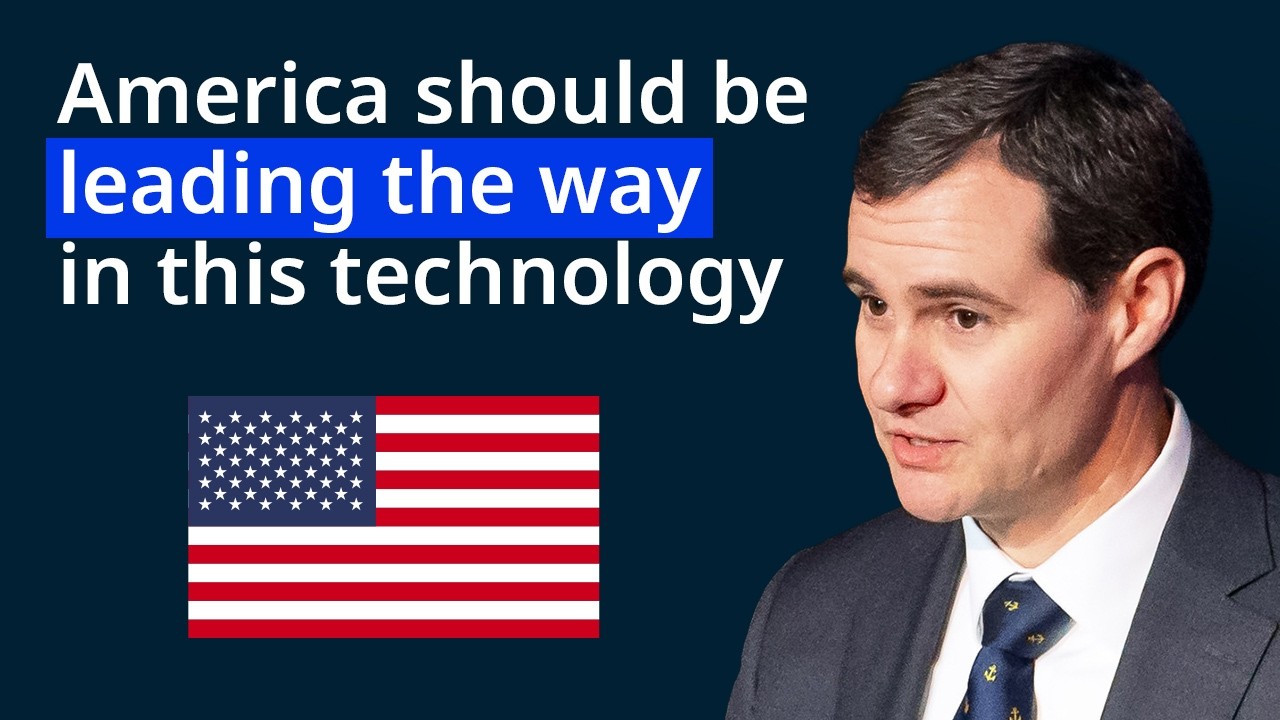
Security, safeguards and strategic leap
Keywords
Summary
159 words
Critical Evaluation
Value of the Information & Strength of the Argument
The value of the information lies in its authoritative perspective from a high-ranking U.S. official directly involved in nuclear nonproliferation and maritime nuclear policy. Napoli provides insights into the strategic thinking behind U.S. efforts, emphasizing the balance between facilitating commerce and ensuring security. The argumentation is coherent, built on his personal experience and the broader geopolitical context. He effectively makes the case for U.S. leadership, citing historical examples like the NS Savannah and MH-1A to show precedent. However, the speech is largely opinion-based, lacking detailed technical analysis or data. The argumentation is persuasive but not deeply substantiated with evidence beyond his professional authority.
Scientific Rigor, Source Quality, Title Accuracy
The speaker’s credibility is high due to his position and background. However, the speech does not cite specific external sources; it relies on his expertise and references to historical programs. The title accurately reflects the content, focusing on security, safeguards, and strategic positioning. The content is consistent with the title, though it is more of a policy statement than a technical analysis. No comments were provided, so public reception cannot be assessed.
190 words
Title / Content Match
The title accurately reflects the content, which focuses on security, safeguards, and strategic positioning in maritime nuclear technology.
Quality & Reliability
7/10
The speaker is a senior official from the U.S. National Nuclear Security Administration with extensive experience in naval nuclear propulsion and nonproliferation. The content is an expert opinion based on his professional background, but it is not peer-reviewed and contains promotional elements for U.S. leadership.
Key Moments
Markers derived by PSI from the transcript: the creator did not define chapters.
- Introduction and recognition of organizers and attendees.
- Mention of historical maritime nuclear projects: MH-1A Sturgis and NS Savannah.
- Background on NNSA's mission and focus on nonproliferation.
- Personal career history in naval nuclear propulsion, including work on Ford-class and Virginia-class submarines.
- Discussion of risk balancing in export controls and the need to facilitate commerce.
- Emphasis on nuclear security and safeguards by design as key to success.
- Call for international cooperation and U.S. leadership in establishing norms.
- Closing remarks on partnership between industry and government.
Cited Sources
- NS Savannah — Mentioned as the first nuclear-powered merchant ship, part of Eisenhower's Atoms for Peace.
- MH-1A Sturgis — Mentioned as the world's first floating nuclear power plant.
- AUKUS — Mentioned as a trilateral security pact involving the US, UK, and Australia.
Concurring Sources
- IAEA Safeguards — The IAEA's role in safeguards is mentioned as a key international cooperation point.
Contribution & Novelties
The speech provides an authoritative perspective on U.S. government strategy for maritime nuclear technology, emphasizing the integration of security and safeguards from the design phase. It highlights the need for balanced risk management to foster commercial growth while maintaining nonproliferation standards. The speaker’s personal experience adds credibility, but the content is largely a policy statement rather than new technical information.
Pour aller plus loin :
- Nuclear safeguards — Relevant to the concept of safeguards by design.
- Nuclear security — Relevant to the concept of security by design.
- Atoms for Peace — Historical context for U.S. civil nuclear initiatives.
98 words
Radar Profile
The radar profile shows high scores in quality and reliability, reflecting the speaker's authority, but lower scores in quantity and technical depth, indicating a concise, policy-oriented talk rather than a detailed technical exposition.