Finance verte : La fin du « moment de la finance verte » ?
Keywords
Summary
139 words
Critical Evaluation
Value of the Information & Strength of the Argument
The talk provides valuable insights into the structural limitations of green finance, supported by concrete examples and references to reports and studies. The argumentation is coherent and well-structured, systematically dismantling the claims of green finance’s effectiveness. However, it is primarily an opinion piece based on the speaker’s expertise, and some claims could benefit from more rigorous citations. The speaker effectively uses the concept of fiduciary duty to explain why financial actors cannot prioritize sustainability over returns, and illustrates this with real-world cases like CalPERS and PGGM.
Scientific Rigor, Source Quality, Title Accuracy
The speaker references several credible sources, including reports from the Cour des comptes, the Banque de France, and academic work. However, many claims are made without direct citations, relying on the speaker’s authority. The title accurately reflects the content, which is a critical analysis of the current state of green finance. The talk is well-structured and the argumentation is rigorous, but the lack of systematic sourcing weakens its scientific rigor.
171 words
Title / Content Match
The title accurately reflects the content, which critically examines the current state and limitations of green finance.
Quality & Reliability
8/10
The speaker demonstrates deep expertise in finance, uses concrete examples (CalPERS, PGGM, Cour des comptes report), and references specific reports and studies. However, the talk is an opinionated critique rather than a systematic review, and some claims lack direct citations.
Key Moments
Markers derived by PSI from the transcript: the creator did not define chapters.
- Introduction to the talk and the consensus on investment needs for decarbonization.
- Definition of green finance and the concession that it is only a subset of finance.
- Discussion of the double discourse of green finance, citing the French report and PGGM.
- Example of CalPERS divestment and its cost, illustrating the limits of divestment.
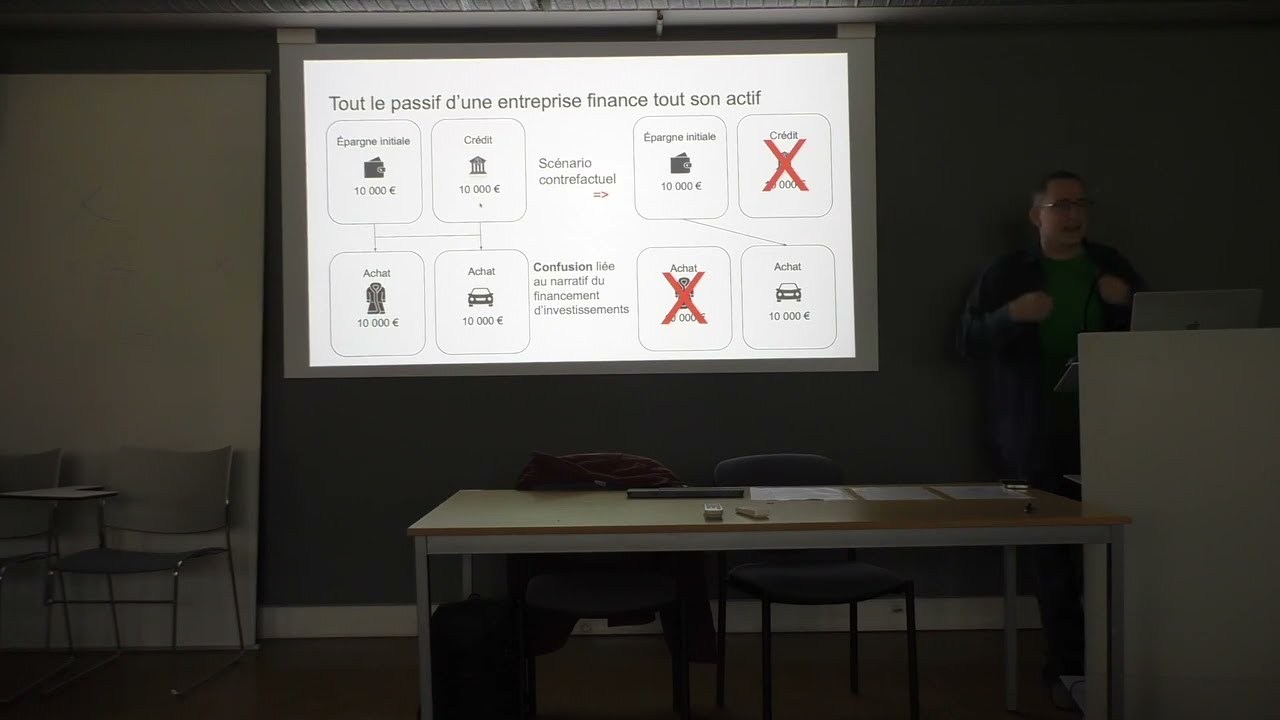
- Explanation of the lack of additionality in green loans and the parable of the mink coat.
- Analysis of green bonds and the confusion between project greenwashing and financial greenwashing.
- Conclusion on the need for a fundamental debate on the role of the financial system.
Cited Sources
- Rapport sur la finance verte (2022) — Mentioned as a report commissioned by the French Minister of Finance to make Paris a reference for green finance.
- PGGM contribution to Banque de France Financial Stability Review — Cited as an example of a major pension fund's stance on sustainable investing.
- Cour des comptes report on green public loans (April 2026) — Cited to show the lack of additionality in green public loans.
- The Price is Wrong by Brett Christophers — Referenced as a book explaining the profitability deficit of renewable energy.
Concurring Sources
- Banque de France definition of sustainable finance — The speaker uses this definition to frame the discussion.
Contribution & Novelties
The talk offers a critical perspective on green finance, highlighting the structural barriers to its effectiveness, particularly the role of fiduciary duty. It provides concrete examples and a clear argumentation that green finance is largely a form of greenwashing. The speaker also introduces the concept of ‘financial greenwashing’ as distinct from project greenwashing.
Pour aller plus loin :
- Fiduciary duty — Essential concept for understanding the constraints on financial actors.
- Green bond — Overview of green bonds and their mechanisms.
- Tragedy of the commons — Relevant to the discussion of collective action problems in finance.
95 words
Radar Profile
The radar profile shows high scores in information quantity and quality, but lower scores in technical level and reliability, reflecting the talk's strong content but reliance on expert opinion rather than systematic evidence.