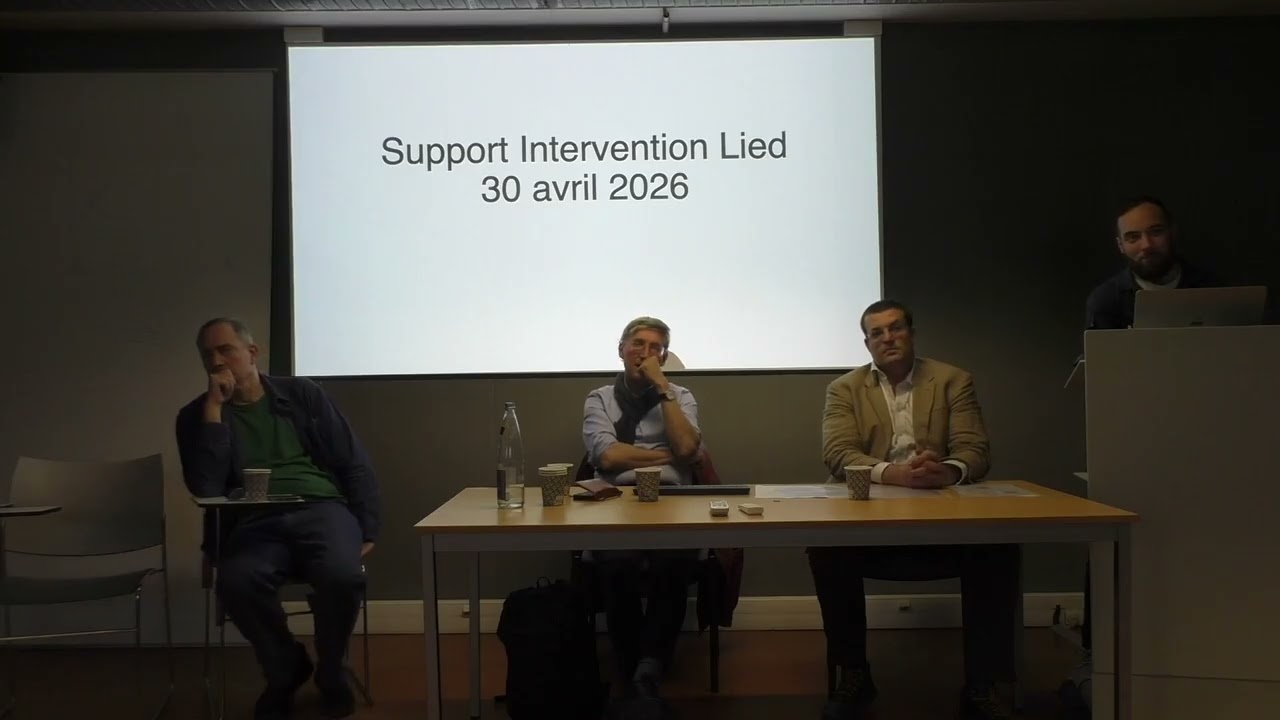
Finance verte : débat final Julien Lefournier, Nicolas Dufrêne, Gaël Giraud
Keywords
Summary
135 words
Critical Evaluation
Value of the Information & Strength of the Argument
The value of the information lies in the expert insights on monetary mechanisms and the comparison between Western and Chinese financial systems. The argumentation is solid, with concrete examples like the French ‘circuit du Trésor’ and China’s handling of bad debts. However, some claims are speculative, such as the potential for a new digital currency, and lack empirical backing.
Scientific Rigor, Source Quality, Title Accuracy
The debate is rigorous in its use of historical and institutional references, but it lacks formal citations. The title accurately reflects the content. The discussion is well-structured, but the lack of verifiable sources and the reliance on personal opinions reduce the overall scientific rigor.
118 words
Title / Content Match
The title accurately reflects the content, which is a final debate on green finance among the three named experts.
Quality & Reliability
7/10
The debate features recognized experts in economics and finance, with references to historical and contemporary monetary systems. However, the discussion is largely opinion-based and lacks formal citations or empirical data, reducing its scientific rigor.
Key Moments
Markers derived by PSI from the transcript: the creator did not define chapters.
- Discussion on the role of public money as the main determinant in financing the transition.
- Comparison of Chinese and Western financial systems, highlighting China's state-directed credit.
- Historical example of the French 'circuit du Trésor' and its parallels with China.
- Discussion on the possibility of a new international monetary order and digital currency.
- Historical perspective on demographic transitions and their implications for the future.
- Debate on the theory of value, criticizing the labor theory and advocating for a common good approach.
- Examples of market failures in green finance, such as the Volkswagen and EDF cases.
- Proposal for creating money to fund public interest projects, linking value to common good.
Cited Sources
- David Graeber, Debt: The First 5,000 Years — Referenced in the debate regarding the relationship between fiat money and tolerance.
- Mark Carney, Value(s) — Mentioned as a book on value and the 'divine coincidence'.
Concurring Sources
- International Monetary Fund, 'Public Banks and Development' — Supports the argument that public banks play a crucial role in financing development.
Dissenting Sources
- Milton Friedman, 'The Role of Monetary Policy' — Contrasts with the idea that monetary creation can be used for public interest without causing inflation.
Contribution & Novelties
The debate provides a nuanced comparison of public and private financing models for the ecological transition, with concrete historical examples and a critique of the theory of value. It offers a fresh perspective on the role of central banks and the potential for new monetary mechanisms.
Pour aller plus loin :
- Modern Monetary Theory — Relevant to the discussion of public money creation and its effects.
- Green New Deal — Related to the proposal of using public finance for environmental projects.
- Digital renminbi — Relevant to the discussion of China’s digital currency initiatives.
93 words
Radar Profile
The radar profile shows high scores in quantity of information and technical level, but lower in reliability and quality of information, reflecting the debate's expert but opinion-driven nature.
💬 No comments were provided for analysis.