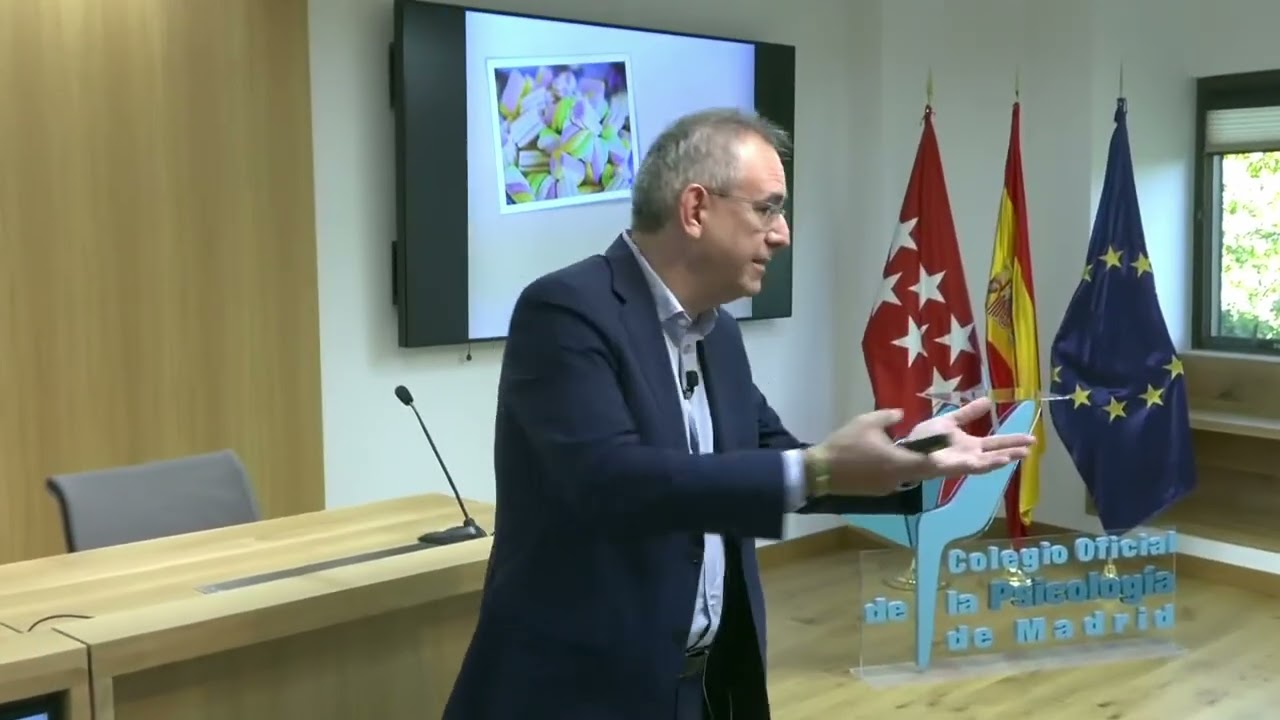
SEMANA DE LA CIENCIA 2025. 4. Conferencia: Cómo activar tu mente: Entrenando la resistencia mental.
Keywords
Summary
196 words
Critical Evaluation
Value of the Information & Strength of the Argument
The talk provides valuable insights into mental resistance, integrating established psychological theories with practical applications. The argumentation is coherent, building from foundational concepts to applied strategies. The speaker uses relatable examples, such as athletes’ injuries and the marshmallow test, to illustrate points. However, the argumentation sometimes lacks depth, and the interactive dialogue with the audience, while engaging, occasionally distracts from the main thread. The speaker effectively argues that mental resistance can be trained and that psychological coaching can facilitate this process, but he does not provide detailed empirical evidence or specific research findings to support all claims.
Scientific Rigor, Source Quality, Title Accuracy
The speaker references several well-known psychological concepts and researchers (Mischel, Gross, Bonanno, Seligman) and mentions the HPA axis, but he does not cite specific studies or provide detailed references. The title accurately reflects the content, focusing on activating the mind through training mental resistance. The talk is scientifically grounded but leans on general knowledge rather than rigorous sourcing. The speaker’s credentials as a psychologist and coach lend credibility, but the lack of specific citations limits the scientific rigor. The title is appropriate and not misleading.
197 words
Title / Content Match
The title accurately reflects the content: the speaker discusses activating the mind through training mental resistance, covering theoretical foundations and practical strategies.
Quality & Reliability
7/10
The talk is grounded in established psychological concepts (Mischel's marshmallow test, Gross's emotional regulation, Bonanno's resilience, Seligman's learned optimism) and references neurobiological mechanisms (HPA axis, dopamine). However, it is primarily a practitioner's perspective with limited depth on empirical evidence and no citations of specific studies beyond general references.
Key Moments
Markers derived by PSI from the transcript: the creator did not define chapters.
- Introduction and quote by Viktor Frankl about the space between stimulus and response.
- Discussion of the marshmallow test by Walter Mischel and its longitudinal findings.
- Introduction of emotional self-regulation and Gross's definition.
- Explanation of the 4 Cs model: control, commitment, challenge, and confidence.
- Use of sports injury examples to illustrate challenge and confidence.
- Discussion of resilience and Bonanno's definition.
- Explanation of the HPA axis and its role in stress response.
- Introduction of learned optimism by Seligman and its effect on dopamine.
- Concept of anticipation and its neural basis in the hippocampus and prefrontal cortex.
- Conclusion emphasizing the role of psychologists in coaching mental resistance.
Contribution & Novelties
The talk offers a practical perspective on training mental resistance, integrating psychological theories with coaching applications. It emphasizes the importance of anticipation and the brain’s ability to encode future scenarios as experiences, which is a valuable insight for coaching practice.
Pour aller plus loin :
- Viktor Frankl’s Man’s Search for Meaning — Foundational work on finding meaning in suffering.
- Walter Mischel’s marshmallow test — Original study on delayed gratification.
- James Gross’s emotional regulation — Key model of emotion regulation processes.
- Seligman’s learned optimism — Theory on optimistic explanatory style.
- Bonanno’s resilience research — Studies on resilience and grief.
98 words
Radar Profile
The radar profile shows balanced scores across information quantity, quality, technical level, and reliability, with a slight emphasis on quality and reliability. This indicates a well-rounded presentation that is both informative and credible, though not highly technical.