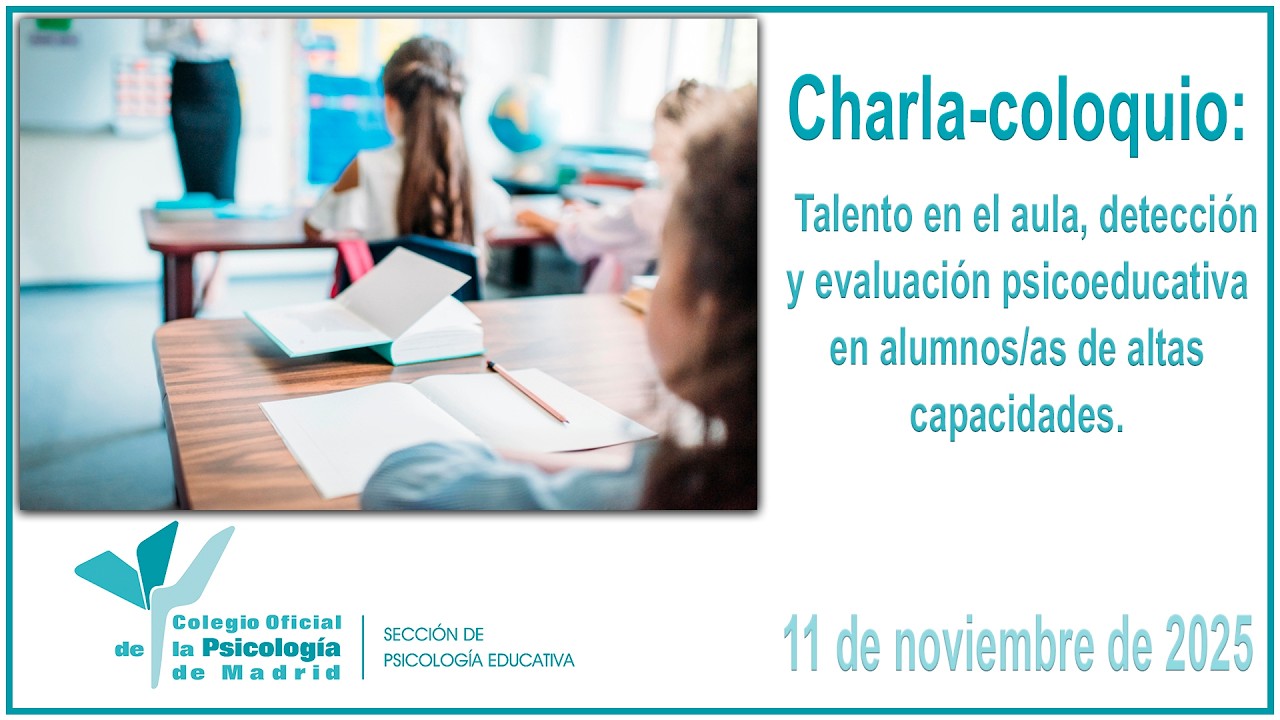
Charla Coloquio Talento en el Aula Detección y Evaluación Psicoeducativa. 11-11-25
Keywords
Summary
181 words
Critical Evaluation
Value of the Information & Strength of the Argument
The video provides valuable insights into the practical challenges of identifying and supporting students with high abilities. The speakers argue convincingly that the current educational system lacks uniform criteria for assessment, leading to inconsistencies across regions. They advocate for a holistic approach that considers cognitive, emotional, and personality factors rather than relying solely on IQ scores. The argumentation is strengthened by their professional experiences and the concrete example of how a gifted student might respond differently to a history question. However, the discussion is largely anecdotal and lacks empirical evidence or references to scientific literature, which limits its scientific rigor. The speakers also promote their book, which may introduce a bias, but the core arguments remain relevant and well-structured.
Scientific Rigor, Source Quality, Title Accuracy
The scientific rigor is moderate: the speakers are qualified professionals, but they do not cite specific studies or official guidelines. The sources mentioned are primarily their own book and general references to diagnostic manuals (DSM, CIE) and assessment tools (e.g., WISC). The title accurately reflects the content, which is a colloquium on talent in the classroom, focusing on detection and evaluation. The adequacy is high, as the discussion directly addresses these topics. No comments were provided for analysis, so no public trends can be assessed.
219 words
Title / Content Match
The title accurately reflects the content: a colloquium on talent in the classroom, focusing on detection and psychoeducational evaluation of high abilities.
Quality & Reliability
7/10
The video features three psychologists with relevant expertise in high abilities, discussing practical issues in assessment and educational intervention. The content is largely based on professional experience and references to a book they co-authored, but lacks systematic citation of empirical studies or official guidelines. The discussion is coherent and addresses real-world challenges, but the lack of formal references and the promotional aspect of the book reduce the overall reliability score.
Key Moments
Markers derived by PSI from the transcript: the creator did not define chapters.
- Introduction by Antonio Labanda, coordinator of the Educational Psychology Section, welcoming attendees and introducing the topic of high abilities.
- Alba de Mingo presents the book, explaining its structure and the collaborative effort behind it, emphasizing the need for practical guidance.
- Alba de Mingo illustrates the difference between typical and gifted thinking using a history classroom example, showing how gifted students analyze problems from multiple angles.
- Alba Villegas discusses the challenges in evaluating high abilities, highlighting the lack of uniform criteria across Spanish regions and the role of clinical psychologists.
- Alba Villegas explains the importance of using multiple assessment tools and the need for a comprehensive profile, moving beyond IQ scores alone.
- Bárbara Díez adds her perspective on the need for proper training for evaluators and the dangers of relying on outdated models of intelligence.
- The panel discusses the importance of communication between psychologists, families, and schools to ensure appropriate support for gifted students.
- The speakers answer questions from the audience, addressing concerns about the acceptance of clinical reports in schools and the need for collaboration.
- The panel concludes by emphasizing the need for ongoing evaluation and adaptation of educational measures as children grow and change.
Cited Sources
- Book on high abilities (title not specified) — The speakers present their book as a practical guide for teachers and psychologists, covering concepts, evaluation, and classroom intervention.
- DSM (Diagnostic and Statistical Manual of Mental Disorders) — Mentioned as a reference for psychologists in diagnosing, though high abilities are not included as a disorder.
- CIE (International Classification of Diseases) — Mentioned as a reference for psychiatrists, similarly not including high abilities.
- WISC (Wechsler Intelligence Scale for Children) — Referenced as an example of a multifactorial assessment tool used in evaluating high abilities.
Concurring Sources
- National Association for Gifted Children (NAGC) — Provides resources and standards for gifted education, aligning with the video's emphasis on appropriate identification and support.
- European Council for High Ability (ECHA) — An organization promoting research and practice in high ability, consistent with the video's call for professional development.
Dissenting Sources
- Some researchers argue that the concept of 'high abilities' is socially constructed and lacks clear scientific basis — The video assumes a clear definition of high abilities, but some scholars question the validity of the construct and its assessment.
Contribution & Novelties
The video offers a practical, experience-based perspective on the assessment and educational support of students with high abilities, emphasizing the need for a holistic and personalized approach. It highlights the lack of uniform criteria across Spanish regions and advocates for better training and collaboration among professionals. The book presented serves as a concrete resource for practitioners.
Pour aller plus loin :
- Gifted education — Provides an overview of educational approaches for gifted students.
- Intelligence quotient — Discusses the history and limitations of IQ testing.
- Differentiated instruction — A pedagogical approach relevant to adapting teaching for diverse learners.
97 words
Radar Profile
The radar profile shows high scores in quantity of information and global reliability, reflecting the rich content and professional credibility. However, the technical level is moderate, as the discussion is accessible but not deeply technical. The quality of information is good but could be enhanced with more empirical references.