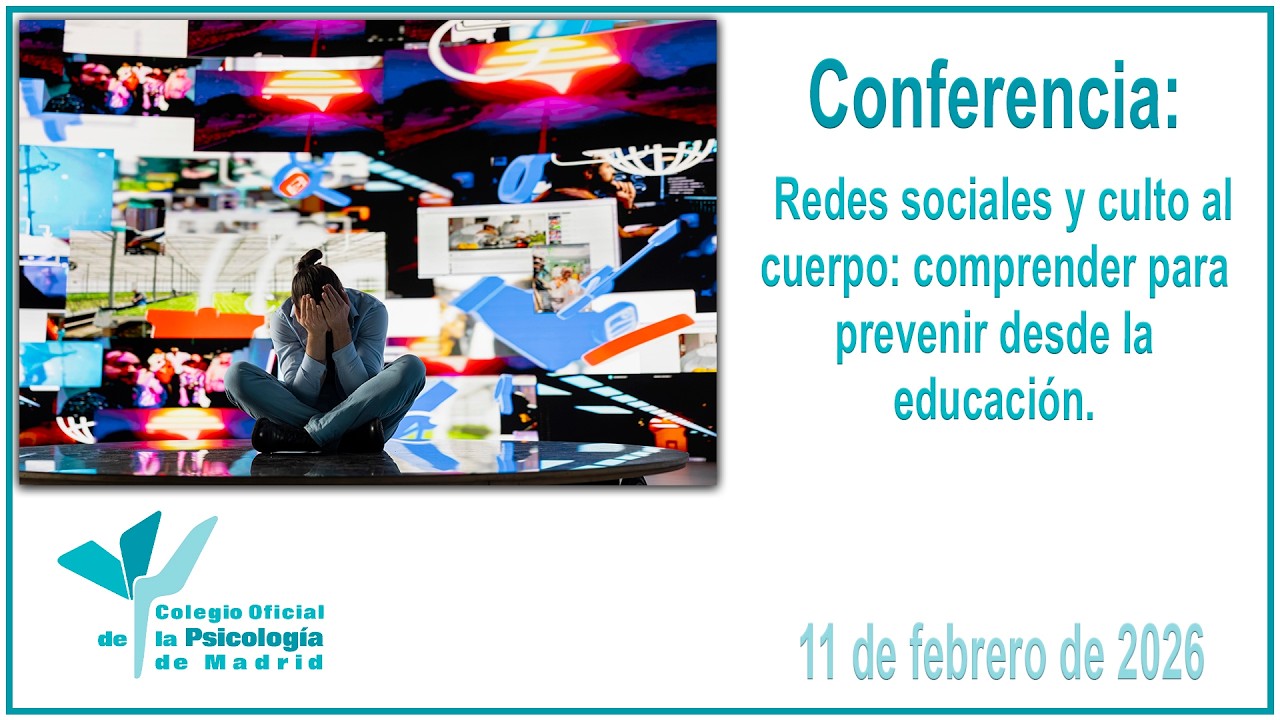
Redes sociales y culto al cuerpo: comprender para prevenir desde la educación
Keywords
Summary
205 words
Critical Evaluation
Value of the Information & Strength of the Argument
The value of the information lies in its practical, experience-based insights from a school psychologist who directly observes the effects of social media on young people. The argumentation is persuasive, using concrete examples, interactive demonstrations, and references to recent studies to support claims. The speaker effectively highlights the discrepancy between online representations and real-world diversity, and critiques the commercial interests behind beauty standards. However, the argumentation is largely anecdotal and lacks systematic data analysis, relying more on professional experience than on rigorous scientific evidence.
Scientific Rigor, Source Quality, Title Accuracy
The speaker demonstrates scientific rigor by referencing specific studies (UNICEF, DigitalFIT) and using interactive observations to ground her points. The sources are credible, though not exhaustively cited. The title accurately reflects the content, which focuses on understanding the phenomenon of body cult in social media and preventing its negative effects through education. The talk is well-structured and aligns with the stated objectives.
161 words
Title / Content Match
The title accurately reflects the content, which focuses on the relationship between social media and body image, with a preventive educational approach.
Quality & Reliability
7/10
The speaker is a practicing school psychologist with 23 years of experience, providing practical insights and citing specific studies (UNICEF, DigitalFIT). The content is largely anecdotal and opinion-based, with limited systematic data presentation, but it is grounded in professional experience and relevant research.
Key Moments
Markers derived by PSI from the transcript: the creator did not define chapters.
- Introduction and historical context of body ideals, from Vitruvian Man to búcaros.
- Interactive exercise: participants analyze their social media feeds for diversity.
- Discussion of AI-generated images and their reinforcement of normative beauty standards.
- Presentation of UNICEF and DigitalFIT studies on adolescent body image and social media.
- Critique of the health discourse as a moral judgment and its link to fatphobia.
- Consequences: rise of cosmetic procedures, skincare routines, and early eating disorders.
- Preventive strategies for parents and educators, including setting boundaries and fostering critical thinking.
Cited Sources
- UNICEF report on childhood, adolescence and digital well-being — Cited as a study of 90,000 adolescents aged 11-16 on digital well-being.
- DigitalFIT study — Cited for data on the impact of physical appearance on social success among adolescents.
Concurring Sources
- UNICEF report on childhood, adolescence and digital well-being — Supports the claim that social media affects adolescent well-being and body image.
- DigitalFIT study — Supports the link between physical appearance and social success among adolescents.
Contribution & Novelties
The talk provides a practical, school-based perspective on the impact of social media on body image, emphasizing preventive education. It highlights the role of AI in perpetuating beauty standards and the commercial exploitation of young consumers. The interactive exercise offers a tangible method for raising awareness about media diversity.
Pour aller plus loin :
- Body image and social media — Overview of body image and its relation to media.
- Eating disorders — National Institute of Mental Health resource on eating disorders.
- Media literacy — Concept of critical engagement with media content.
91 words
Radar Profile
The radar profile shows high scores in information quantity and quality, moderate technical level, and high reliability, indicating a well-informed and credible presentation with practical relevance.