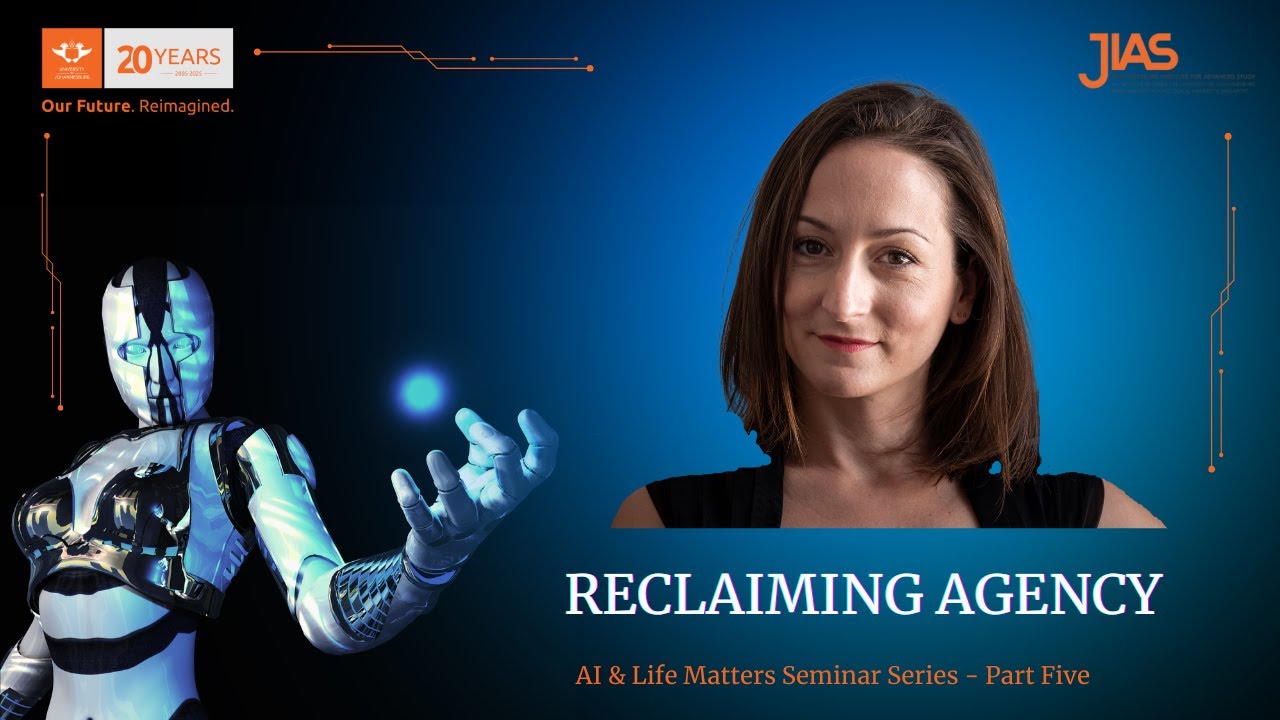
Part 2: Reclaiming Agency: How to Live Well with Technology | Dr. Anaïs Nony
Keywords
Summary
118 words
Critical Evaluation
Value of the Information & Strength of the Argument
The value of the information lies in its practical, experience-based advice for managing technology use, combined with philosophical insights into time, attention, and agency. The argumentation is coherent and persuasive, drawing on concepts like the attention economy, cognitive offloading, and the importance of embodied experience. However, it lacks rigorous empirical evidence and relies heavily on personal anecdotes and general observations. The speaker’s credibility as a researcher adds weight, but the lack of specific citations weakens the scientific rigor.
Scientific Rigor, Source Quality, Title Accuracy
The scientific rigor is moderate: the speaker references concepts like the ‘Google effect’ and research on attention, but does not provide specific sources. The title accurately reflects the content, which is a practical and philosophical discussion on living well with technology. The description mentions the speaker’s website and the JIAS site, which are credible institutional sources, but no direct citations are given in the video. The adequacy between title and content is good, as the video delivers on its promise of offering strategies for reclaiming agency.
179 words
Title / Content Match
The title accurately reflects the content, which focuses on reclaiming agency over technology through practical strategies and philosophical reflection.
Quality & Reliability
7/10
The speaker is a senior researcher with relevant expertise, and the content is grounded in philosophical and psychological concepts, but it relies heavily on personal experience and anecdotal evidence rather than systematic research. Some claims (e.g., 35% of phone activities require touch) lack specific citations.
Key Moments
Markers derived by PSI from the transcript: the creator did not define chapters.
- Introduction and opening remarks on sleep and time.
- Discussion on the importance of touch and social interaction.
- Exploration of physical activity and sedentary behavior.
- Focus on attention and the attention economy.
- Practical tips: grayscale, rubber band, and morning routines.
- Audience testimony on feeling captured by technology and lifestyle audit.
- Discussion on skills, deep reading, and education.
- Call for collective insurrection and value shift.
Cited Sources
- Anaïs Nony's personal website — Speaker's profile and research focus.
- Johannesburg Institute for Advanced Study (JIAS) — Institution hosting the seminar series.
Concurring Sources
- The Shallows: What the Internet Is Doing to Our Brains — Discusses the impact of internet use on cognition, aligning with the video's concerns.
Contribution & Novelties
The video offers a unique blend of philosophical reflection and practical advice for reclaiming agency over technology, emphasizing the body and collective action. It goes beyond typical digital detox tips by addressing deeper issues of time, attention, and skills.
Pour aller plus loin :
- Attention economy — Relevant to the discussion on attention and digital design.
- Cognitive offloading — Explains the tendency to rely on external devices for memory.
- Digital detox — Contextualizes the practical strategies mentioned.
77 words
Radar Profile
The radar profile shows high scores in quantity and quality of information, moderate technical level, and lower reliability, reflecting the video's strength in providing rich, thoughtful content but weakness in empirical grounding.
💬 No comments were provided for analysis.