The quiet engine of development: how banking quality shapes economic transformation | LSE III Event
Keywords
Summary
160 words
Critical Evaluation
Value of the Information & Strength of the Argument
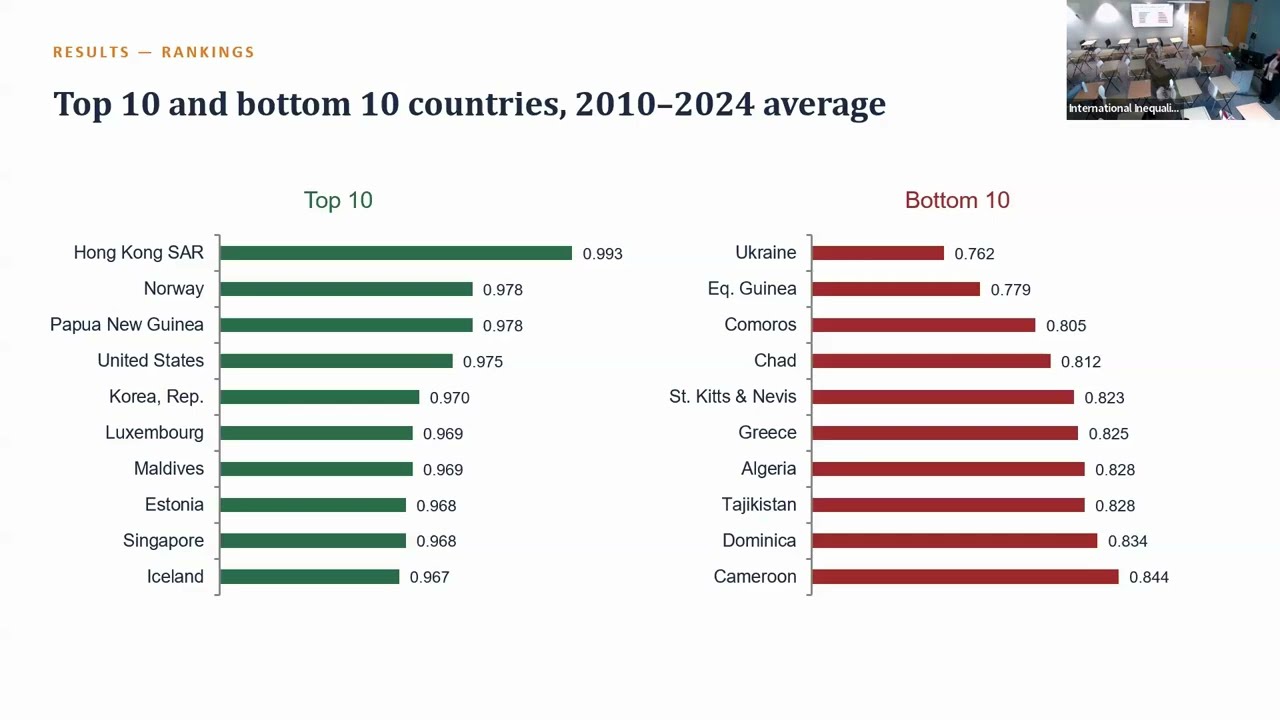
The value of the information lies in the novel composite index that attempts to measure banking quality comprehensively, moving beyond traditional scale-based measures. The argumentation is structured and logical, with clear research questions and objectives. The speaker provides a rationale for each pillar and discusses the weighting methodology. However, the presentation is limited by time, and some technical details are glossed over. The robustness checks are mentioned but not fully explained, and the discussion of the PNG anomaly suggests potential data issues. Overall, the argument is persuasive but could benefit from more rigorous validation and transparency.
Scientific Rigor, Source Quality, Title Accuracy
The speaker uses data from IMF and World Bank, which are reputable sources, and the methodology is transparent and replicable. The index construction is detailed, and robustness checks are performed. However, the presentation does not cite specific academic papers or external sources beyond the data providers. The title is somewhat broad but accurately reflects the content. The adéquation between title and content is good, as the seminar indeed focuses on banking quality and economic transformation.
186 words
Title / Content Match
The title accurately reflects the seminar's focus on banking quality as a driver of economic transformation, though it is somewhat broad.
Quality & Reliability
7/10
The presentation introduces a novel composite index (BSQI) based on IMF and World Bank data, with transparent methodology and robustness checks. However, the index construction and validation are not fully detailed, and some data issues (e.g., PNG ranking) raise questions. The speaker is a post-doctoral fellow with relevant expertise.
Key Moments
Markers derived by PSI from the transcript: the creator did not define chapters.
- Introduction by chair, Dr. Lakmuri, introducing speaker Dr. Meghna Chotaliya.
- Speaker begins presentation, outlining three parts: global, South Asian, and Indian state-level banking quality.
- Introduction of the Banking System Quality Index (BSQI) and its four pillars.
- Discussion of data sources and sample selection, including exclusions.
- Explanation of benefit-of-the-doubt weighting method and constraints.
- Presentation of global rankings, with Hong Kong, Norway, and Japan at the top.
- Discussion of crisis windows and validation of the index against banking crises.
- Robustness checks: reweighting, outlier removal, and country dropping.
- South Asian analysis, with Maldives ranking highest.
- Focus on Indian states, showing variation in banking quality despite common regulator.
Cited Sources
- IMF Financial Soundness Indicators — Data source for capital strength, asset quality, and profitability pillars.
- World Bank World Development Indicators — Data source for financial intermediation pillar (domestic credit to private sector).
Concurring Sources
- IMF Financial Soundness Indicators — Data source for capital strength, asset quality, and profitability pillars.
- World Bank World Development Indicators — Data source for financial intermediation pillar (domestic credit to private sector).
Contribution & Novelties
The main contribution is the development of a comprehensive, transparent, and replicable Banking System Quality Index (BSQI) that measures banking quality across 120 countries over 15 years. Unlike existing measures that focus on scale or individual indicators, BSQI combines four pillars using a benefit-of-the-doubt weighting method, providing a holistic view. The index is validated against crisis episodes and robustness checks, making it a useful tool for researchers and policymakers.
Pour aller plus loin :
- Financial Development and Growth — Provides background on the relationship between financial development and economic growth.
- Non-performing loan — Explains the concept of non-performing loans, a key pillar of the index.
- Benefit of the doubt (weighting) — Discusses the weighting method used in composite indicators.
119 words
Radar Profile
The radar profile shows high scores in quantity of information and technical level, reflecting the detailed index construction and data analysis. Quality of information and global reliability are slightly lower due to some methodological concerns and data issues. Overall, the profile indicates a technically strong but not flawless presentation.
💬 No comments were provided for analysis.