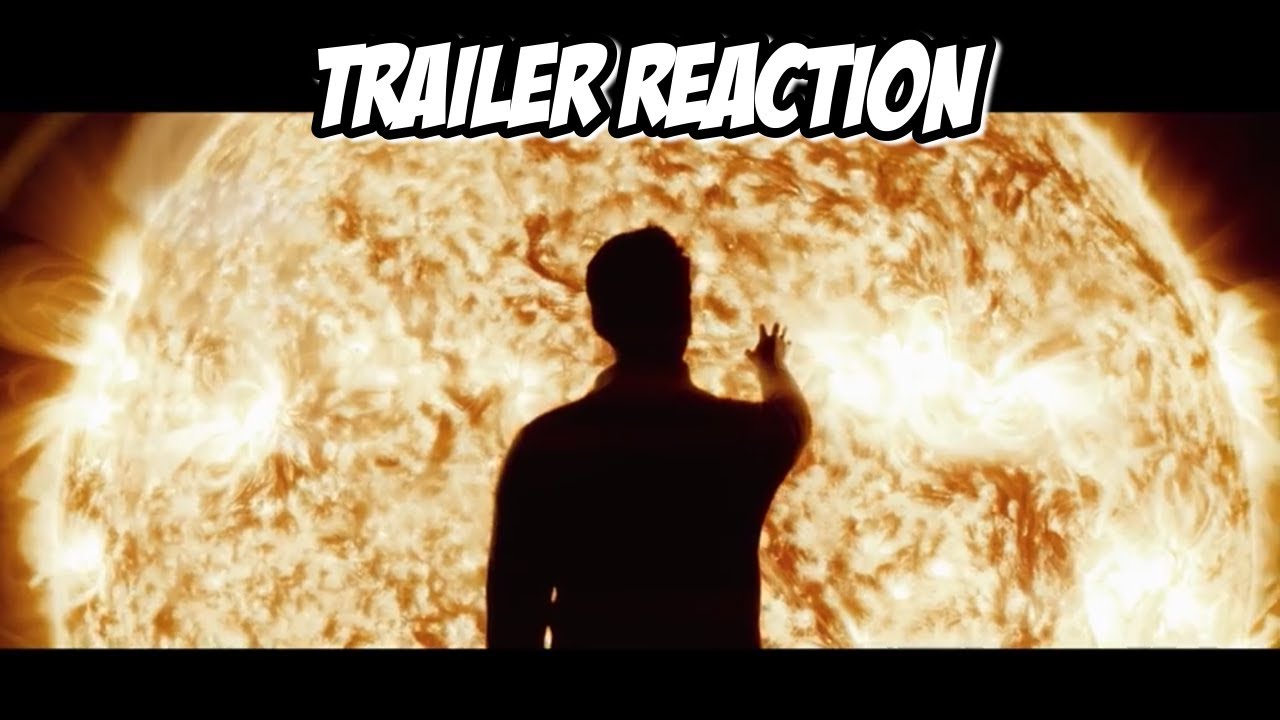
"CLARA" Trailer Reaction
Keywords
Summary
159 words
Critical Evaluation
Value of the Information & Strength of the Argument
The video provides valuable insights from a professional astronomer, offering a balanced critique of the trailer’s scientific accuracy. Kipping’s arguments are well-reasoned and grounded in his expertise, covering both the positive aspects (visuals, attention to detail) and the negative (unrealistic hiring, relationship dynamics, lone genius trope). He effectively communicates complex concepts like transits and technosignatures in an accessible manner.
Scientific Rigor, Source Quality, Title Accuracy
The video demonstrates scientific rigor by referencing relevant research papers (Gaidos 2017, Moores & Welch 2018) and providing links in the description. The title accurately reflects the content. The commentary is based on professional knowledge and avoids speculation. The video does not claim to be a comprehensive review but rather a reaction, which is clearly stated.
130 words
Title / Content Match
The title accurately reflects the content: a reaction to the 'CLARA' trailer with scientific commentary.
Quality & Reliability
8/10
The video is an expert reaction by an astrophysicist, providing informed commentary on the scientific plausibility of a movie trailer. The content is based on professional knowledge and references specific scientific papers, but it is not a peer-reviewed analysis.
Key Moments
Markers derived by PSI from the transcript: the creator did not define chapters.
- Introduction and context about the movie 'CLARA'.
- First reactions to the trailer's opening visuals.
- Discussion of the scientific accuracy of the transit visualization.
- Commentary on the depiction of data analysis and NASA press briefing.
- Critique of the unrealistic hiring process and relationship dynamics.
- Analysis of the 'lone genius' stereotype and collaboration in science.
- Final thoughts and recommendation of the film.
Cited Sources
- Gaidos (2017), "Transit Detection of a 'Starshade' at the Inner Lagrange Point of an Exoplanet" — Referenced as a real scientific concept related to the film's premise.
- Moores & Welch (2018), "Simulating Transits of Large Objects at the L1 Lagrange Point for the 2018 Feature Film Clara" — Referenced as a paper that actually simulated the transit scenario depicted in the film.
- James Davenport Vlog — Recommended as a realistic look at an astronomer's daily life.
- Columbia University Department of Astronomy — Mentioned as the host institution of the Cool Worlds Lab.
- Cool Worlds Lab website — Mentioned as the lab's website.
- "CLARA" Official Trailer #1 — The trailer being reacted to.
Concurring Sources
- Gaidos (2017), "Transit Detection of a 'Starshade' at the Inner Lagrange Point of an Exoplanet" — Supports the plausibility of the film's central idea.
- Moores & Welch (2018), "Simulating Transits of Large Objects at the L1 Lagrange Point for the 2018 Feature Film Clara" — Directly simulates the film's scenario, indicating scientific interest.
Contribution & Novelties
The video offers a unique perspective by having an active researcher in the field react to a movie trailer, providing real-world context to the depicted science. It bridges the gap between science fiction and actual astronomical research, particularly regarding technosignatures.
Pour aller plus loin :
- Technosignatures — Wikipedia overview of the concept.
- Transit method — Wikipedia article on the transit method for detecting exoplanets.
- Gaidos (2017) paper — The paper referenced in the video, discussing a starshade at the Lagrange point.
81 words
Radar Profile
The radar profile shows high scores in quality and reliability, reflecting the expert nature of the content. The lower score in quantity and technical level indicates that the video is not a deep dive but rather a concise reaction, which is appropriate for the format.
💬 Positif. Sur les 30 commentaires analysés, la majorité exprime un intérêt pour le film et apprécie la critique scientifique, bien que certains expriment des réserves sur l'aspect romance.