Galactic Colonization
Keywords
Summary
136 words
Critical Evaluation
Value of the Information & Strength of the Argument
The video provides substantial value by presenting a cutting-edge scientific model that addresses a long-standing paradox. The argumentation is solid, as it clearly explains the assumptions and parameters of the simulation, and uses the results to constrain plausible scenarios. The discussion is balanced, acknowledging both the possibility of a ’lonely universe’ and the existence of civilizations that simply don’t spread. The interview format allows for expert insight, and the host’s synthesis at the end effectively ties the findings back to the central question.
Scientific Rigor, Source Quality, Title Accuracy
The video is scientifically rigorous, citing the primary research paper (Carroll-Nellenback et al. 2019) and the foundational work by Hart (1975). The sources are directly relevant and properly referenced in the description. The title accurately reflects the content, which is a detailed analysis of galactic colonization scenarios. The video maintains a high standard of scientific accuracy, with clear explanations of the model’s methodology and limitations.
163 words
Title / Content Match
The title accurately reflects the content, which focuses on the feasibility and implications of galactic colonization, particularly in the context of the Fermi Paradox.
Quality & Reliability
9/10
The video presents a rigorous scientific discussion based on a peer-reviewed paper (Carroll-Nellenback et al. 2019) and classic literature (Hart 1975). The host is a professor and the guest is a leading SETI researcher. The content is well-structured, with clear explanations of the model assumptions and results. The video is produced by a reputable academic channel (Cool Worlds, Columbia University).
Key Moments
Markers derived by PSI from the transcript: the creator did not define chapters.
- Introduction: The story of galactic colonization and the Fermi Paradox.
- Introduction of 'Fact A' and its significance.
- Discussion of Occam's razor and the simplest explanation for Fact A.
- Introduction of Prof. Jason Wright and the new simulation.
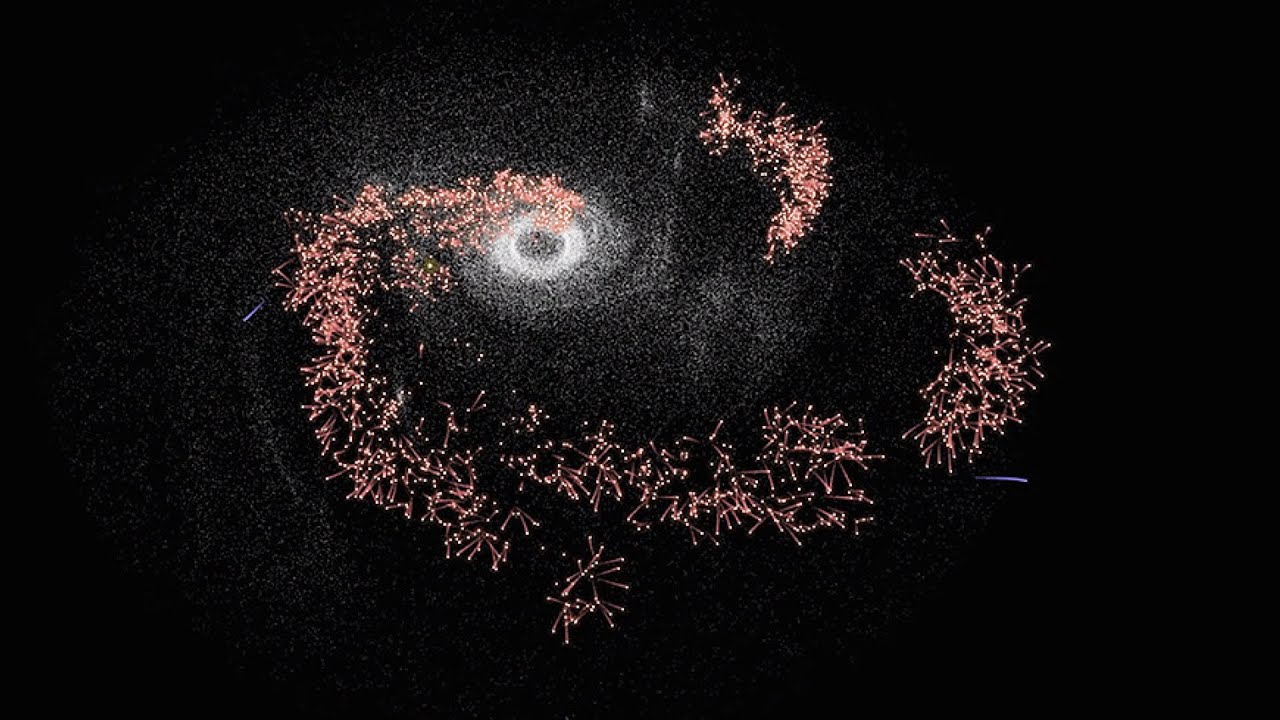
- Explanation of the simulation's key innovation: stellar motions.
- Discussion of the 'Aurora effect' and the fraction of settleable stars.
- Presentation of the key diagram: probability of Fact A as a function of parameters.
- Interpretation of the diagram: exclusion of a galaxy full of civilizations.
- Discussion of the 'finely tuned' transitional zone and its implications.
- Conclusion: The search for extraterrestrial intelligence and the value of looking.
Cited Sources
- The Fermi Paradox and the Aurora Effect: Exo-civilization Settlement, Expansion, and Steady States — The primary research paper discussed in the video, co-authored by Jason Wright.
- Explanation for the Absence of Extraterrestrials on Earth — Michael Hart's 1975 paper that formalized the Fermi Paradox and introduced 'Fact A'.
- Cool Worlds Lab — The research lab of the host, David Kipping, at Columbia University.
- Columbia University Department of Astronomy — The academic department hosting the Cool Worlds Lab.
Concurring Sources
- The Fermi Paradox and the Aurora Effect: Exo-civilization Settlement, Expansion, and Steady States — The paper's findings are directly presented and discussed in the video.
- Explanation for the Absence of Extraterrestrials on Earth — Hart's paper provides the foundational 'Fact A' that the video builds upon.
External References
Contribution & Novelties
The video provides an accessible yet detailed explanation of a novel simulation that incorporates stellar motions into models of galactic colonization, a factor often ignored in earlier work. It highlights how stellar dynamics can actually accelerate the spread of civilizations, sharpening the Fermi Paradox. The discussion of the ‘Aurora effect’—the idea that civilizations might avoid settling inhabited planets—offers a fresh perspective on potential solutions to the paradox.
Pour aller plus loin :
- Fermi paradox — Overview of the paradox and its proposed resolutions.
- Drake equation — A probabilistic framework for estimating the number of communicative civilizations.
- Search for extraterrestrial intelligence (SETI) — The scientific effort to detect signals from other civilizations.
111 words
Radar Profile
The radar profile shows high scores in information quantity, quality, and reliability, with a slightly lower but still solid technical level. This indicates a video that is both informative and scientifically sound, while remaining accessible to a general audience.
💬 Très positif. Sur les 30 commentaires analysés, les spectateurs expriment une admiration profonde pour la clarté, la rigueur et la beauté du contenu, le comparant souvent à Carl Sagan et le qualifiant d'inspirant et de captivant.