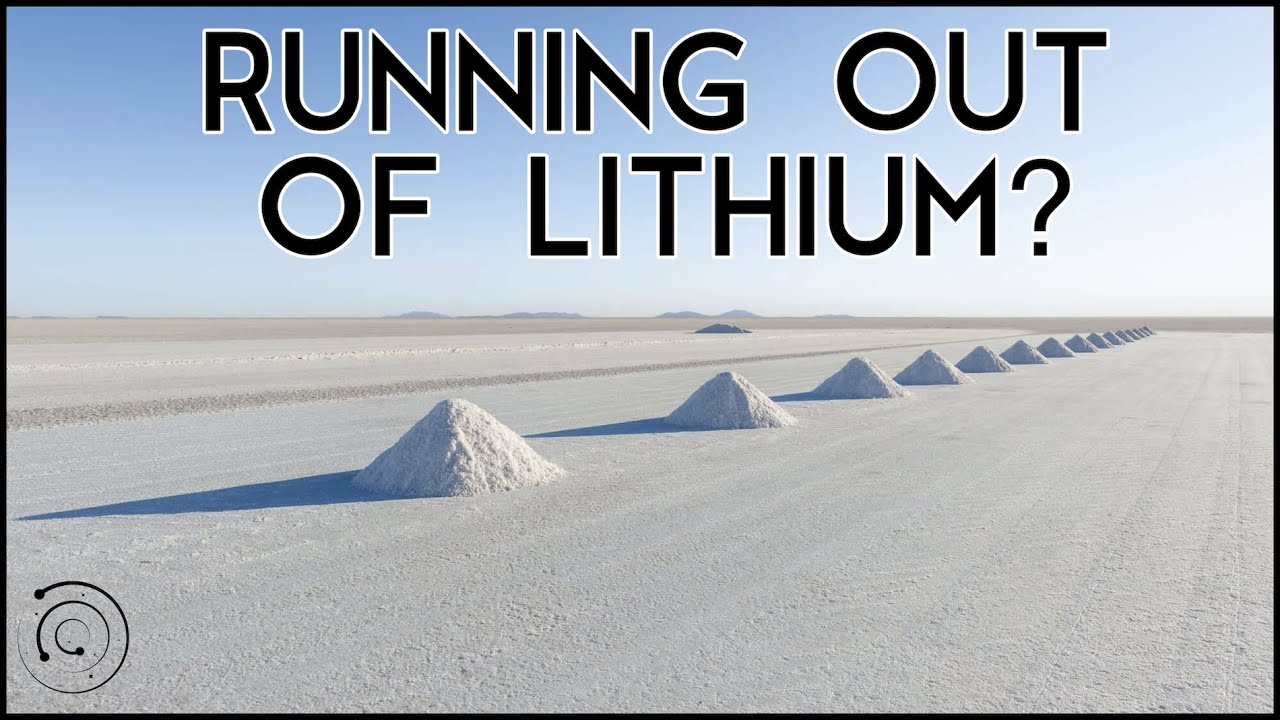
Will We Run Out Of Lithium?
Keywords
Summary
204 words
Critical Evaluation
Value of the Information & Strength of the Argument
The video provides valuable insights by breaking down complex supply-demand dynamics into accessible calculations. It uses multiple data sources and clearly explains assumptions, such as lithium content per EV and conversion factors. The argumentation is solid, systematically building from historical data to future projections, and it acknowledges uncertainties by presenting multiple scenarios. The presenter’s caution in extrapolating and his effort to lowball estimates strengthen the credibility of the analysis. However, the analysis is primarily from a resource perspective, and the economic and geopolitical complexities of lithium markets are not deeply explored.
Scientific Rigor, Source Quality, Title Accuracy
The video demonstrates strong scientific rigor by relying on USGS data and citing specific projections from multiple sources. The methodology is transparent, with clear explanations of calculations and conversions. The title accurately reflects the content, which directly addresses the question of lithium scarcity. The presenter also acknowledges his lack of formal economic expertise, which adds honesty but also limits the depth of economic analysis. The inclusion of fact-checking and links to sources in the description enhances credibility.
183 words
Title / Content Match
The title accurately reflects the content, which directly addresses the question of lithium scarcity through supply-demand analysis and reserve estimates.
Quality & Reliability
8/10
The video presents a well-structured analysis based on USGS data and multiple projections, with transparent methodology and fact-checking. However, it relies on extrapolations and simplified assumptions, and the presenter is an astrophysicist, not an economist, which limits the depth of economic analysis.
Key Moments
Markers derived by PSI from the transcript: the creator did not define chapters.
- Introduction to lithium's role in the energy transition and the question of running out.
- Explanation of why lithium is ideal for batteries (lightest alkali metal, electron configuration).
- Overview of lithium extraction methods: hard rock mining and brine evaporation.
- Historical lithium production data from USGS, showing exponential growth.
- Projections of lithium demand outstripping supply, with multiple sources.
- Analysis of government mandates for EV adoption and their impact on demand.
- Calculation of enhanced demand scenario leading to a lithium deficit by 2035.
- Discussion of absolute lithium reserves and the number of EVs they could support.
- Importance of lithium recycling to avoid depleting reserves within a century.
- Conclusion: we won't run out absolutely, but face a supply-demand challenge requiring action.
Cited Sources
- USGS Lithium Statistics and Information — Primary source for historical production and reserve data.
- LCE Conversion factors — Used for converting lithium weight to lithium carbonate equivalent.
- Li per kWh calculation by Paul Martin — Reference for the amount of lithium per kilowatt-hour in EV batteries.
Concurring Sources
- USGS Lithium Statistics and Information — Provides the production and reserve data used in the video.
- IEA Global EV Outlook — Supports the projection of rapid EV growth and lithium demand.
Dissenting Sources
- Benchmark Mineral Intelligence — Some industry analysts project more optimistic supply growth due to new extraction technologies and recycling, potentially reducing the deficit.
External References
Contribution & Novelties
The video provides a clear, quantitative analysis of lithium supply and demand, highlighting the potential for a significant deficit in the 2030s if government mandates are met. It uniquely combines historical production data with policy-driven demand scenarios, offering a more urgent perspective than typical industry projections. The emphasis on recycling as a critical near-term solution is a valuable contribution.
Pour aller plus loin :
- Lithium-ion battery — Overview of the technology and its evolution.
- Electric vehicle — Context on EV adoption and market trends.
- USGS Mineral Commodity Summaries — Official data on lithium and other minerals.
- Redwood Materials — Company focused on battery recycling, mentioned in comments.
- Sodium-ion battery — Potential alternative to lithium for stationary storage.
117 words
Radar Profile
The radar profile shows high scores in information quantity, quality, and reliability, with a slightly lower technical level due to the accessible presentation. This indicates a well-researched and credible analysis that is still understandable to a general audience.
💬 Très positif. Sur les 30 commentaires analysés, les spectateurs expriment une admiration unanime pour la rigueur de l'analyse, la clarté de l'explication et l'approche rationnelle, tout en suggérant des sujets connexes comme le recyclage et les technologies alternatives.