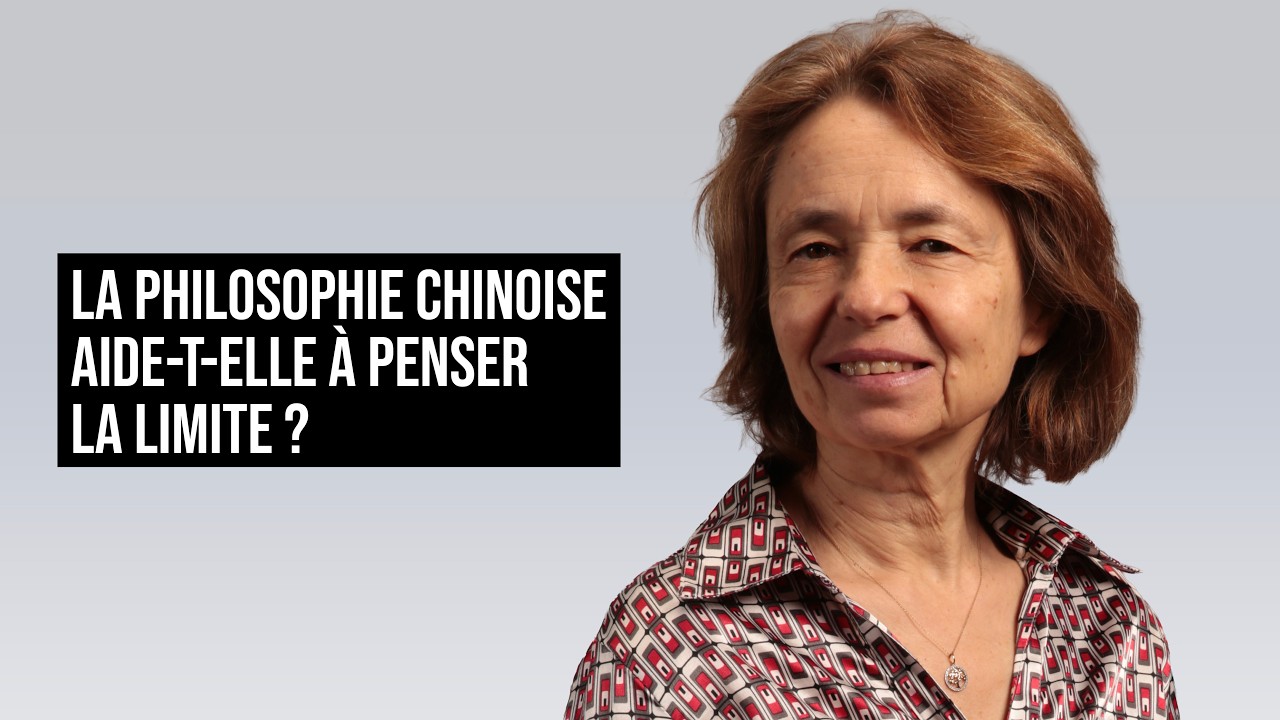
LA PHILOSOPHIE CHINOISE AIDE-T-ELLE À PENSER LA LIMITE ENTRE L’ART ET LE NON ART ? | PASCALE ELBAZ
Keywords
Summary
250 words
Critical Evaluation
The conference provides a valuable and nuanced perspective on the question of art’s boundaries, drawing on Chinese philosophical traditions that are often overlooked in Western discourse. Pascale Elbaz demonstrates deep expertise, as evidenced by her academic credentials and her direct involvement in translating the key text she references. The argument is well-structured: she begins with historical context, moves through theoretical frameworks, and applies them to contemporary art, making the material accessible without oversimplifying. The use of primary sources, such as Confucius and Liu Xizai, adds authenticity, and the discussion of translation challenges for terms like ‘yijing’ highlights the cultural specificity of aesthetic concepts. However, the talk is primarily an expert opinion rather than a systematic review or empirical study, and it relies heavily on a single book, which may limit the breadth of perspectives. The speaker does not critically engage with potential counterarguments or limitations of the Chinese philosophical approach, such as its applicability to non-Chinese art or its potential for essentialism. The adéquation between title and content is strong, as the talk directly addresses the question posed. The presence of a brief sponsorship segment (approximately 30 seconds) does not detract from the content. Overall, the talk is intellectually stimulating and offers a fresh framework for thinking about art, but it could benefit from a more critical examination of the proposed concepts and their limitations.
225 words
Title / Content Match
The title accurately reflects the content, which directly addresses the question of whether Chinese philosophy can help delineate the boundary between art and non-art.
Quality & Reliability
8/10
The speaker is a doctor in Chinese language and civilization, researcher and translator, providing a well-structured argument based on a recent translation of a scholarly work. The presentation is grounded in historical and philosophical references, though it remains an expert opinion rather than a systematic review.
Key Moments
Markers derived by PSI from the transcript: the creator did not define chapters.
- Introduction and presentation of the book 'The Cultural Logic of Art Theory'
- Discussion of the six arts in ancient China and their evolution
- Liu Xizai's definition of art as 'the visible form of the Dao'
- Historical example of Chinese critique of Western painting
- Introduction of the concept of 'yijing' and its translation challenges
- Explanation of the five modalities of 'two-in-one' from François Jullien
- Application of Chinese philosophical concepts to contemporary art
Cited Sources
- TimeWorld Event — Official website of the conference where this talk was given.
Concurring Sources
- TimeWorld Event — The conference's official website, which aligns with the talk's context.
Contribution & Novelties
The talk offers a novel perspective by applying Chinese philosophical concepts, particularly non-dualism and relational thinking, to the question of art’s boundaries, which is typically addressed through Western binary frameworks. It introduces the concept of ‘yijing’ and the five modalities of ’two-in-one’ as tools for analyzing contemporary art, providing a fresh lens for both scholars and practitioners.
Pour aller plus loin :
- Yijing (Chinese aesthetics) — Wikipedia article on the concept of yijing, which is central to the talk.
- François Jullien — Wikipedia page on the philosopher whose work on Chinese thought is referenced.
- Chinese aesthetics — Wikipedia overview of Chinese aesthetic traditions, providing broader context.
106 words
Radar Profile
The radar profile shows high scores in quantity and quality of information, with a moderate technical level, indicating a well-informed but accessible presentation. The fiabilité is high, reflecting the speaker's expertise and the use of scholarly sources.
💬 No comments were provided for analysis.