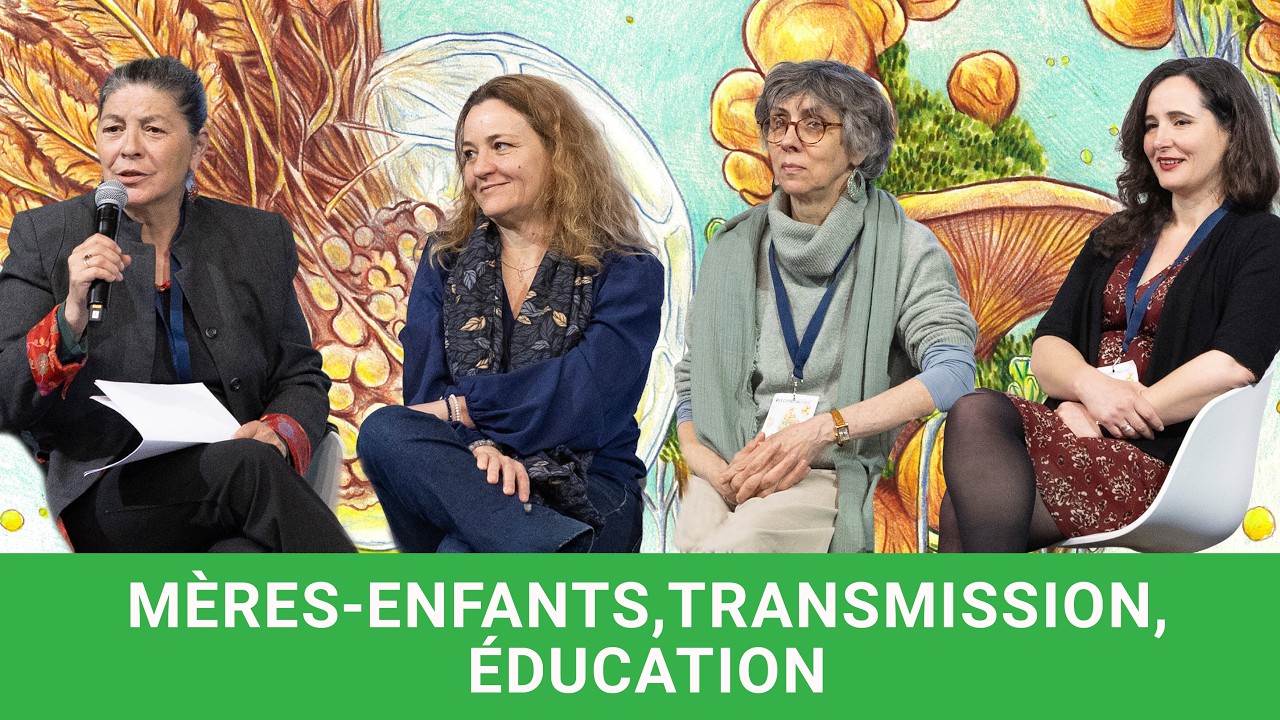
MÈRES-ENFANTS, TRANSMISSION, ÉDUCATION
Keywords
Summary
184 words
Critical Evaluation
The roundtable offers a rich interdisciplinary dialogue, successfully bridging hard sciences, clinical practice, and speculative fiction. The presence of an immunologist (Belghith) and a child psychiatrist (Garnier) grounds the discussion in empirical knowledge, while the science fiction authors (Pleynet and Debats) provide imaginative frameworks that challenge conventional assumptions. The conversation is engaging and accessible, but it lacks rigorous scientific depth: specific studies are mentioned only vaguely (e.g., microchimerism, epigenetics) without precise references or data. The argumentation is more exploratory than systematic, and the panelists often share personal anecdotes and literary preferences rather than evidence-based analysis. The quality of sources is moderate: the only external links provided are to the Ideas in Science website and a playlist, not to scientific literature. The title accurately reflects the content, and the discussion does not overpromise. The main strength is the diversity of perspectives, which stimulates critical thinking about motherhood and transmission. However, for a viewer seeking a scientifically rigorous treatment, the lack of citations and the conversational tone may be a limitation. The public comments (if any) are not provided, so no analysis of audience reception is possible. Overall, the video is valuable for its interdisciplinary approach and thought-provoking ideas, but it falls short of a high scientific standard.
206 words
Title / Content Match
The title accurately reflects the main themes discussed: mother-child relationships, transmission, and education.
Quality & Reliability
7/10
The roundtable brings together experts from different fields (immunology, child psychiatry, science fiction authors) providing a multidisciplinary perspective. The discussion is based on scientific concepts (microchimerism, epigenetics) and literary references, but lacks detailed citations or verifiable data. The tone is exploratory and conversational, not strictly scientific.
Key Moments
Markers derived by PSI from the transcript: the creator did not define chapters.
- Introduction of the roundtable and participants.
- Discussion on favorite fictional mothers, including references to Dune and other works.
- Definition of motherhood, emphasizing biological and relational aspects.
- Explanation of microchimerism and the bidirectional exchange of cells between mother and fetus.
- Exploration of the long dependency of human infants and the role of attachment.
- Discussion on societal expectations and guilt placed on mothers.
- Science fiction perspectives on alternative parenting and reproduction.
- Debate on the potential benefits of deconstructing the mother-child bond.
- Consideration of public policies and their impact on mother-child relationships.
- Concluding remarks on the importance of understanding and supporting this bond.
Cited Sources
- Ideas in Science — Main website of the channel, providing access to the video library and additional resources.
- Support Ideas in Science — Donation page to support the channel.
- ReCombinaisons Playlist — Playlist containing videos from the ReCombinaisons event, including this roundtable.
Concurring Sources
- Ideas in Science — The channel's mission aligns with the scientific dissemination seen in the video.
Contribution & Novelties
The video provides a unique interdisciplinary perspective on motherhood, combining insights from immunology, child psychiatry, and science fiction. It highlights the concept of microchimerism, which is not widely known, and uses speculative fiction to question societal norms. The discussion encourages viewers to think beyond traditional biological and social frameworks.
Pour aller plus loin :
- Microchimerism — Overview of the phenomenon of fetal cells in the mother.
- Epigenetics — Study of heritable changes in gene expression, relevant to transmission.
- Attachment theory — Psychological framework for understanding mother-child bonds.
87 words
Radar Profile
The radar profile shows moderate scores across all dimensions, with a slight emphasis on quantity and quality of information, reflecting the multidisciplinary but not deeply technical nature of the discussion.