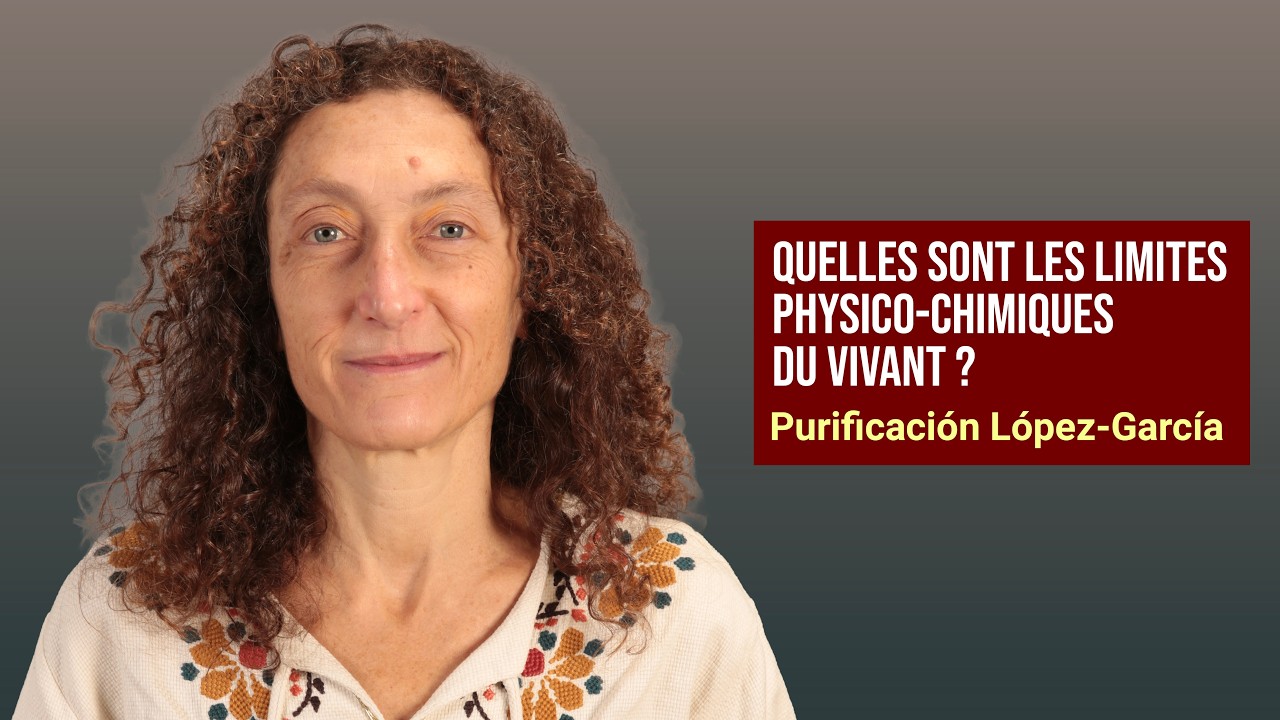
QUELLES SONT LES LIMITES PHYSICO-CHIMIQUES DU VIVANT ?
Keywords
Summary
157 words
Critical Evaluation
The conference provides a comprehensive and scientifically sound overview of the physicochemical limits of life, grounded in the speaker’s expertise. López-García effectively communicates complex concepts such as phylogenetics, metagenomics, and extremophile adaptations to a general audience without oversimplifying. The argumentation is solid, building from fundamental methods to specific examples, culminating in the Dallol case study, which illustrates the challenges of defining life’s boundaries. The scientific rigor is high, with references to established techniques and specific organisms, though the talk is not a detailed literature review and lacks explicit citations. The sources cited are limited to the channel’s own resources, but the speaker’s authority and the plausibility of the content compensate. The title accurately reflects the content, and the talk’s structure is logical. The public’s comments, if any, were not provided, so no analysis is possible. Overall, the conference is valuable for its clarity and depth, making it a reliable introduction to the topic.
153 words
Title / Content Match
The title accurately reflects the content, which explores the physicochemical limits of life on Earth, with a focus on extremophiles and the Dallol site.
Quality & Reliability
8/10
The speaker is a CNRS research director and member of the French Academy of Sciences, providing high credibility. The content is based on established scientific methods (phylogenetics, metagenomics) and specific case studies (Dallol). However, the talk is a general overview without detailed citations or peer-reviewed references, and some statements are simplified for a general audience.
Key Moments
Markers derived by PSI from the transcript: the creator did not define chapters.
- Introduction to the question of physicochemical limits of life and the concept of biotope.
- Discussion on the importance of microbial biodiversity and methods to study it (microscopy, culture, molecular tools).
- Explanation of phylogenetic trees and the three domains of life, with emphasis on archaea.
- Introduction to extremophiles and their classification based on temperature optima.
- Examples of extremophiles: hyperthermophiles, acidophiles, and halophiles, with specific organisms.
- Focus on the Dallol site in Ethiopia as a case study for polyextreme environments.
- Discussion of adaptive strategies of halophilic archaea, including potassium accumulation and acidic proteins.
- Conclusion linking Earth's limits to astrobiology and the search for life elsewhere.
Cited Sources
- Ideas in Science website — General resource for scientific conferences.
- Ideas in Science donation page — Support page for the channel.
- Playlist Exobiologie — Related playlist on exobiology.
- Conférence sur l'origine de la vie (2019) — Previous conference by Purificación López-García on the origin of life.
Concurring Sources
- Extremophile on Wikipedia — General information on extremophiles, consistent with the talk's content.
- Dallol (hydrothermal system) on Wikipedia — Details on Dallol's extreme conditions, supporting the case study.
Contribution & Novelties
The talk provides an accessible synthesis of current knowledge on extremophiles and the physicochemical limits of life, with a specific focus on the Dallol site, which is a recent and active area of research. It highlights the importance of considering chaotropic agents and polyextreme conditions, which are often overlooked. The speaker’s expertise adds authority, and the discussion of adaptive strategies (e.g., potassium accumulation, acidic proteins) offers insights into the mechanisms of survival.
Pour aller plus loin :
- Extremophile on Wikipedia — General overview of extremophiles and their categories.
- Dallol (hydrothermal system) on Wikipedia — Details on the Dallol site and its extreme conditions.
- Archaea on Wikipedia — Information on the domain Archaea, including extremophilic members.
- Astrobiology on Wikipedia — Overview of the field connecting life’s limits to other worlds.
129 words
Radar Profile
The radar profile shows high scores in quantity and quality of information, with a slightly lower technical level, indicating a well-balanced presentation that is both informative and accessible. The reliability is high, reflecting the speaker's expertise and the sound scientific basis.