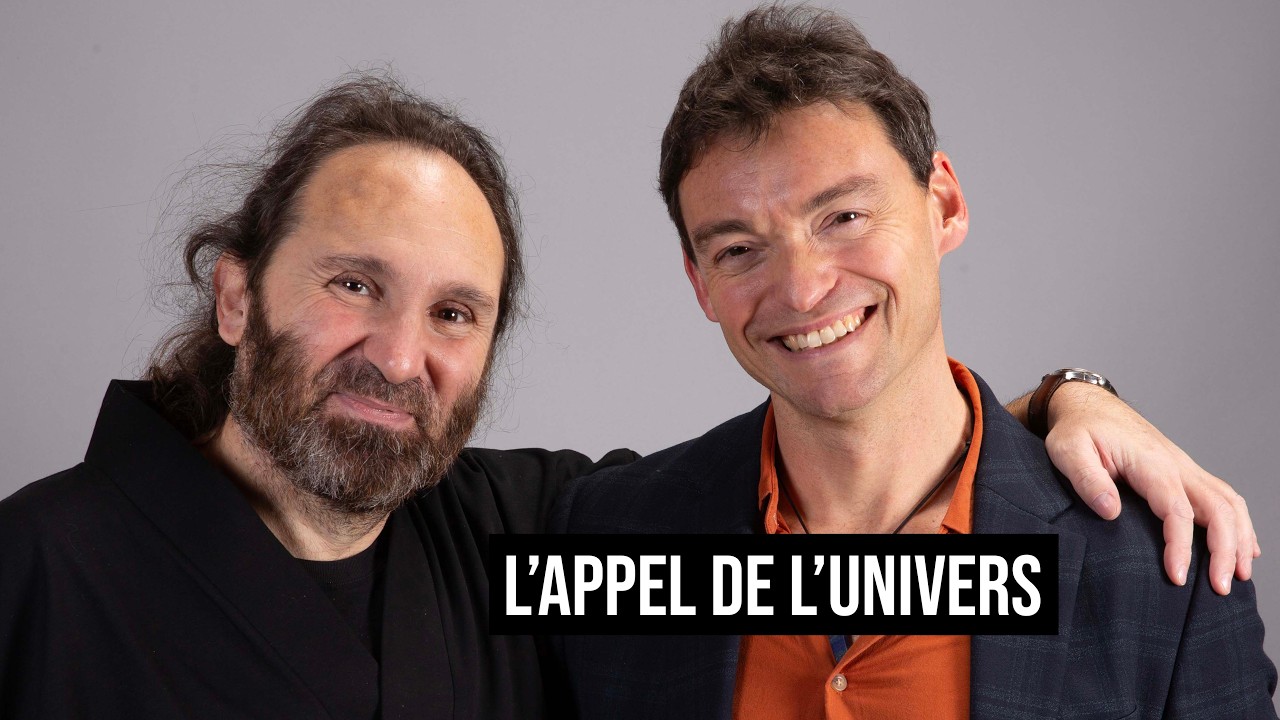
L'APPEL DE L'UNIVERS | FABIEN WAKSMAN ET JEAN-PHILIPPE UZAN
Keywords
Summary
167 words
Critical Evaluation
The video presents a unique and engaging approach to science communication, combining a scientifically accurate narrative with musical performance. The collaboration between a cosmologist and a composer results in a rich, interdisciplinary experience that effectively conveys complex astrophysical concepts to a broad audience. The scientific content is solid: the description of the early universe as a hot, dense plasma of photons and other particles is accurate, as is the explanation of cosmic expansion. The personification of photons allows for a relatable perspective, and the dialogue between Or and Nour helps to explain concepts such as the speed of light and the indistinguishability of photons. The introduction of gravity as a force that pulls matter together is simplified but correct, and the formation of stars from collapsing gas clouds is well illustrated. The explanation of stellar nucleosynthesis, including the role of fusion and the production of heavier elements, is accurate, and the mention of red giants and supernovae is appropriate. The warning about black holes, emphasizing their ability to trap light, is scientifically sound. The narrative also touches on galaxies, describing their variety and the Milky Way’s name origin, which adds cultural context. The performance is well-structured, with a clear progression from the Big Bang to the present universe. However, the video is not a formal lecture, so some details are omitted or simplified, which is appropriate for the intended audience. The musical interludes, while enhancing the artistic value, may distract from the scientific content for some viewers. The sources cited are minimal, but the content is based on established scientific knowledge, and the involvement of a professional astrophysicist ensures reliability. The title accurately reflects the poetic and exploratory nature of the narrative. Overall, this is an excellent example of science communication that balances accuracy with creativity, making it valuable for educational purposes and public engagement.
305 words
Title / Content Match
The title 'L'APPEL DE L'UNIVERS' (The Call of the Universe) aptly reflects the poetic and exploratory nature of the narrative, which invites the audience to discover the universe through the eyes of two photons.
Quality & Reliability
8/10
The content is a scientific storytelling performance by a cosmologist and a composer, based on established astrophysical concepts. The scientific accuracy is high, with clear explanations of photons, cosmic expansion, star formation, nucleosynthesis, supernovae, black holes, and galaxies. The presentation is engaging and accessible, but it is not a formal scientific lecture, so some simplifications are present. The source is a conference organized by TimeWorld, a reputable scientific event.
Key Moments
Markers derived by PSI from the transcript: the creator did not define chapters.
- Introduction by Jean-Philippe Uzan and Fabien Waksman, setting the stage for a scientific story for children.
- The story begins: two photons, Or and Nour, exist in the early universe, which is hot and dense.
- The photons discuss the expansion of space, noticing they have more room to move.
- They encounter clouds of hydrogen and helium, and learn about gravity and the formation of stars.
- The first star is born, and they meet PP Star, who explains stellar nucleosynthesis.
- They meet a red giant and learn about the later stages of stellar evolution.
- A supernova explosion occurs, and they learn about the fate of massive stars, including black holes.
- The photons travel through galaxies, admiring their beauty and learning about the Milky Way.
- One photon is drawn into a black hole, illustrating the danger of these objects.
- The story concludes with reflections on the universe and the journey of the photons.
Cited Sources
- TimeWorld Event — The conference was part of the TimeWorld congress, and this link provides information about the event.
Concurring Sources
- TimeWorld Event — The conference is part of the TimeWorld congress, which aims to promote scientific knowledge.
Contribution & Novelties
This video offers a novel approach to science communication by combining a scientifically accurate narrative with live musical performance, making complex astrophysical concepts accessible to children and the general public. The collaboration between a cosmologist and a composer brings a unique artistic dimension to the explanation of the universe’s history.
Pour aller plus loin :
- Big Bang - Wikipedia — Provides a comprehensive overview of the Big Bang theory, which is the foundation of the story.
- Stellar nucleosynthesis - Wikipedia — Explains the process by which stars create heavier elements, as described in the video.
- Black hole - Wikipedia — Offers detailed information about black holes, including their ability to trap light.
112 words
Radar Profile
The radar profile shows high scores in quality of information and reliability, reflecting the scientific accuracy and expertise of the speakers. The quantity of information is moderate, as the video focuses on a narrative rather than exhaustive detail. The technical level is moderate, suitable for a general audience, while the overall quality is strong, making it an excellent educational resource.