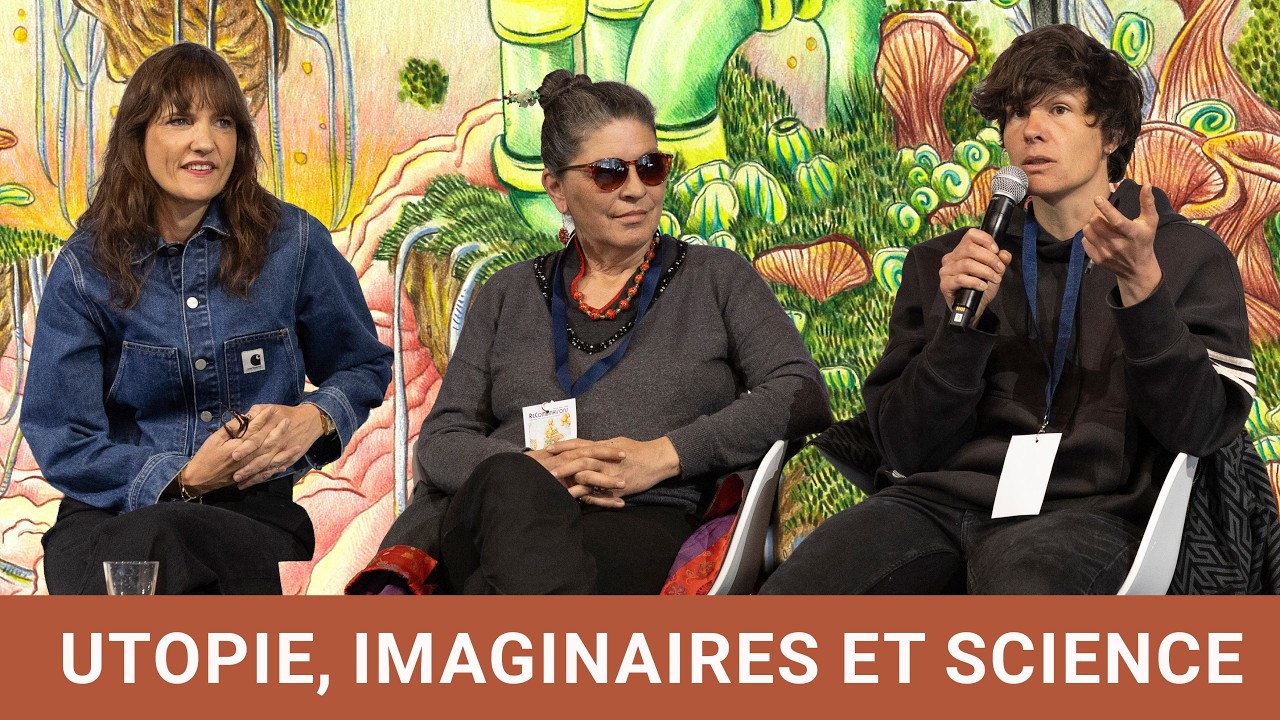
UTOPIE, IMAGINAIRES ET SCIENCE
Keywords
Summary
187 words
Critical Evaluation
The roundtable offers a thoughtful and nuanced exploration of utopia, drawing on a diverse range of perspectives from philosophy, literature, and sociology. The speakers are well-versed in their fields and bring a depth of knowledge that elevates the discussion beyond superficial treatments of the topic. Alice Carabédian’s concept of ‘radical utopia’ provides a strong theoretical framework, distinguishing it from totalizing or globalizing visions. Her reference to Iain M. Banks’s Culture series is particularly insightful, as it illustrates a utopian society that is not static but constantly evolving. Jeanne-A Debats’s choice of John Brunner’s ‘The Shockwave Rider’ is intriguing, as it highlights the idea of a utopian enclave within a dystopian world, emphasizing the importance of resilience and community. Her analysis of the ‘Pavilion of Stash’ as a listening organ is a compelling metaphor for mental health and social support. Fanny Forgeau’s perspective as a sociologist and biotech COO adds a practical dimension, stressing the need for utopias that are actionable and grounded in real-world constraints. The discussion effectively challenges the notion that dystopia is inevitable, arguing that utopian thinking is essential for social change. However, the conversation remains largely at a conceptual level, with limited concrete examples of how utopian ideas can be implemented. The moderator’s virtual presence is a minor distraction, but it does not detract significantly from the content. The video is well-structured, with clear segments and a coherent flow. The sources cited are primarily literary and philosophical, which is appropriate for the topic. Overall, this is a high-quality discussion that will appeal to those interested in utopian studies, science fiction, and social theory.
266 words
Title / Content Match
The title accurately reflects the content: a roundtable discussion on utopia, imaginaries, and science, with a focus on how utopian thinking intersects with scientific and societal issues.
Quality & Reliability
7/10
The roundtable features recognized experts in philosophy, science fiction, and sociology, providing a well-informed discussion. The content is primarily opinion and analysis rather than empirical research, but the speakers demonstrate deep knowledge of utopian literature and concepts. The video is part of a reputable scientific video library, and the discussion is intellectually rigorous, though not peer-reviewed.
Key Moments
Markers derived by PSI from the transcript: the creator did not define chapters.
- Introduction of the roundtable and participants by the virtual moderator Hugo.
- Alice Carabédian shares her definition of utopia as a state of mind and cites Thomas More and Iain M. Banks's Culture series.
- Jeanne-A Debats discusses her favorite utopia hidden within John Brunner's 'The Shockwave Rider', focusing on the community of Precipice.
- Fanny Forgeau emphasizes the importance of actionable utopias and the role of science in defining possibilities.
- Discussion on the relationship between science and utopia, and the need to move beyond innovation discourse.
- Exploration of how utopias can challenge the status quo and open up alternative futures.
- Debate on the role of imagination in shaping societal change and the importance of speculative fiction.
- Conclusion with reflections on the necessity of utopian thinking in contemporary society.
Cited Sources
- Ideas in Science — The video library hosting this roundtable discussion.
- Ideas in Science - Donate — Support page for the video library.
- ReCombinaisons Playlist — Playlist containing this and other videos from the ReCombinaisons event.
Concurring Sources
- Utopie radicale by Alice Carabédian — The essay by Alice Carabédian, which is central to her perspective.
- La résistible ascension d'Arturo Ui by Bertolt Brecht — Referenced by the moderator as a counter-example of dystopia.
Dissenting Sources
- No discordant sources found — The discussion is consistent with the views expressed by the participants and the cited literature.
Contribution & Novelties
The roundtable provides a rich interdisciplinary perspective on utopia, bridging philosophy, science fiction, and sociology. It offers a nuanced understanding of utopia as a dynamic and radical concept, challenging common misconceptions. The discussion highlights the importance of imagination in shaping scientific and social futures, and emphasizes the need for actionable utopias that consider real-world constraints.
Pour aller plus loin :
- Utopia (Wikipedia) — Overview of the concept of utopia and its history.
- Iain M. Banks - Culture series (Wikipedia) — Background on the Culture series, a key reference in the discussion.
- Fredric Jameson - Archaeologies of the Future (Wikipedia) — Jameson’s influential work on utopia and science fiction.
- Kim Stanley Robinson - The Ministry for the Future (Wikipedia) — A contemporary utopian novel mentioned in the description.
- John Brunner - The Shockwave Rider (Wikipedia) — The novel discussed by Jeanne-A Debats.
141 words
Radar Profile
The radar profile shows high scores in quantity and quality of information, reflecting the depth and richness of the discussion. The technical level is moderate, as the content is accessible but intellectually engaging. The overall reliability is good, given the expertise of the speakers and the reputable platform.
💬 No comments were provided for analysis.