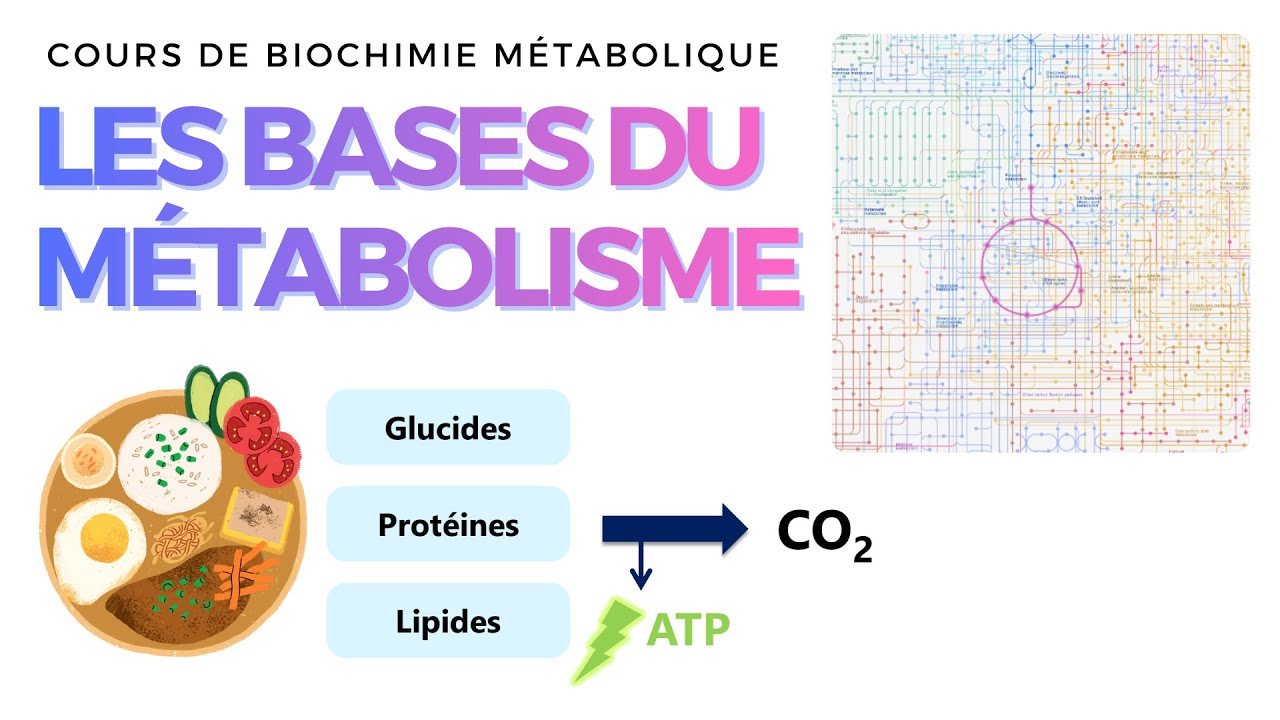
Les Bases du Métabolisme | Cours de Biochimie Métabolique | L1, PASS, Diététique
Keywords
Summary
126 words
Critical Evaluation
Value of the Information & Strength of the Argument
The video provides a clear and accurate introduction to metabolic biochemistry, effectively explaining complex concepts such as ATP hydrolysis and redox reactions. The argumentation is logical and well-structured, progressing from definitions to specific examples. The use of diagrams and examples, such as the coupling of glucose phosphorylation with ATP hydrolysis, helps illustrate the principles. However, the video does not delve into advanced details or address potential controversies, limiting its depth for advanced learners.
Scientific Rigor, Source Quality, Title Accuracy
The scientific rigor is adequate for an introductory video. The content aligns with established biochemistry knowledge, and the reference to Voet et al. is appropriate. The video cites a single external source (KEGG pathway map) in the description, which is relevant. The title accurately reflects the content, and there is no misleading information. The video does not include any advertising or sponsorship.
150 words
Title / Content Match
The title accurately reflects the content, which covers fundamental metabolic concepts for students.
Quality & Reliability
7/10
The video provides a solid overview of metabolic basics, correctly explaining key concepts such as catabolism, anabolism, ATP, and redox coenzymes. The content aligns with standard biochemistry textbooks, and the reference to Voet et al. adds credibility. However, the video lacks in-depth explanations and does not cite specific studies or recent research, limiting its scientific depth.
Key Moments
Markers derived by PSI from the transcript: the creator did not define chapters.
- Introduction to the video and channel
- Definition of metabolism and metabolic pathways
- Explanation of catabolism and anabolism
- Overview of catabolic pathways: glycolysis, citric acid cycle, oxidative phosphorylation
- Structure and role of ATP as energy currency
- Explanation of why ATP hydrolysis is exergonic
- Coupling of ATP hydrolysis with endergonic reactions
- Role of NAD+/NADH and FAD/FADH2 in redox reactions
- Summary and conclusion
Cited Sources
- KEGG Pathway Map 01100 — Referenced in the video description as an interactive resource for metabolic pathways.
Concurring Sources
- Fundamentals of Biochemistry: Life at the Molecular Level — The video references this textbook by Voet et al., which is a standard biochemistry resource.
Contribution & Novelties
The video provides a concise and accessible introduction to metabolic biochemistry, making it a useful starting point for students. It effectively explains the core concepts of energy production and utilization. However, it does not offer novel insights beyond standard textbook material.
Pour aller plus loin :
- Metabolism - Wikipedia — Provides a comprehensive overview of metabolic pathways and regulation.
- ATP - Wikipedia — Detailed information on ATP structure and function.
- Citric acid cycle - Wikipedia — Explains the central role of the TCA cycle in metabolism.
86 words
Radar Profile
The radar profile shows a balanced performance across all dimensions, with slightly higher scores in information quantity and quality, indicating a solid educational resource. The technical level is moderate, suitable for beginners, and the reliability is good, though not exceptional.