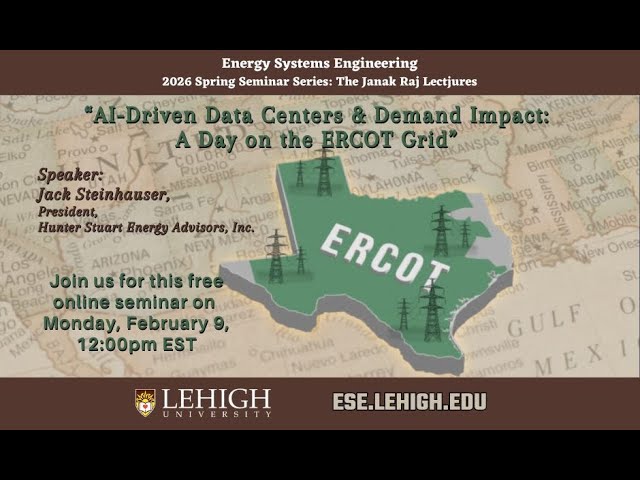
AI-Driven Data Centers & Demand Impact: A Day on the ERCOT Grid
Keywords
Summary
153 words
Critical Evaluation
Value of the Information & Strength of the Argument
The presentation offers valuable insights into the intersection of AI, data centers, and energy demand, drawing on the speaker’s extensive industry experience. Steinhauser provides concrete examples and data, such as the 89% of new U.S. generation capacity from renewables in 2025 and the cost reduction of solar PV. His argumentation is coherent, logically progressing from the broader energy context to specific challenges and solutions. However, some claims lack rigorous citations, and his advocacy for behind-the-meter gas plants may be seen as biased given his background. The argument for the ’electrotech’ revolution is compelling, but the discussion of policy shifts is somewhat superficial.
Scientific Rigor, Source Quality, Title Accuracy
The presentation demonstrates a reasonable level of scientific rigor, with references to organizations like Ember Energy and data on CO2 levels. However, many specific data points are not formally cited, and the speaker relies heavily on personal experience. The title accurately reflects the content, and the talk is well-structured. The speaker’s credentials add credibility, but the lack of peer-reviewed sources limits the overall rigor. The presentation does not include a formal literature review, and some claims, such as the catastrophic impact of doubling oil production, are presented without detailed evidence.
207 words
Title / Content Match
The title accurately reflects the content, focusing on AI-driven data center demand and its impact on the ERCOT grid.
Quality & Reliability
7/10
The speaker is an experienced energy executive with 40 years in the industry, providing practical insights and data. However, the presentation is largely an opinion piece with some data points lacking citations, and the speaker's advocacy for behind-the-meter gas plants may reflect a bias.
Key Moments
Markers derived by PSI from the transcript: the creator did not define chapters.
- Introduction to the importance of energy for human quality of life and the hidden cost of fossil fuels.
- Discussion of the energy transition and the rise of renewables, with data on U.S. capacity additions.
- Explanation of the 'electrotech' revolution and the efficiency advantages of electrification.
- Comparison of U.S. and China energy policies, highlighting China's massive renewable buildout.
- Overview of the ERCOT grid and its operations, including a day in the life of the grid.
- Challenges faced by data center developers, including interconnection queue bottlenecks.
- Introduction to behind-the-meter power facilities as a solution, with the example of the 7.65 GW Ranch project.
- Discussion of the future of energy infrastructure and the role of AI in driving demand.
- Conclusion and call to action for students to participate in the energy transition.
Cited Sources
- Ember Energy — Referenced for the concept of the 'electrotech' revolution.
Concurring Sources
- IEA Electricity 2024 — Supports the claim of increasing electricity demand from data centers and AI.
Dissenting Sources
- Scientific American: AI's Environmental Costs — Raises concerns about the environmental impact of AI, which contrasts with the speaker's optimistic view.
Contribution & Novelties
The presentation provides a practitioner’s perspective on the energy challenges posed by AI data centers, specifically within the ERCOT grid. It offers a unique focus on behind-the-meter solutions as a practical approach to bypass interconnection bottlenecks. The talk synthesizes existing knowledge on energy transition and AI demand, but does not present novel research.
Pour aller plus loin :
- ERCOT — Official site for the Electric Reliability Council of Texas, providing grid data and reports.
- Behind-the-meter storage — Overview of behind-the-meter energy storage concepts.
- AI and energy demand — IEA report on electricity demand, including AI-related growth.
- Data center energy use — NREL study on data center energy consumption.
108 words
Radar Profile
The radar profile shows high scores in quantity of information and technical level, indicating a data-rich presentation. The quality of information and reliability are moderate, reflecting the speaker's expertise but lack of formal citations. The overall balance suggests a practical, industry-focused talk rather than a rigorous academic analysis.
💬 No comments were provided for analysis.