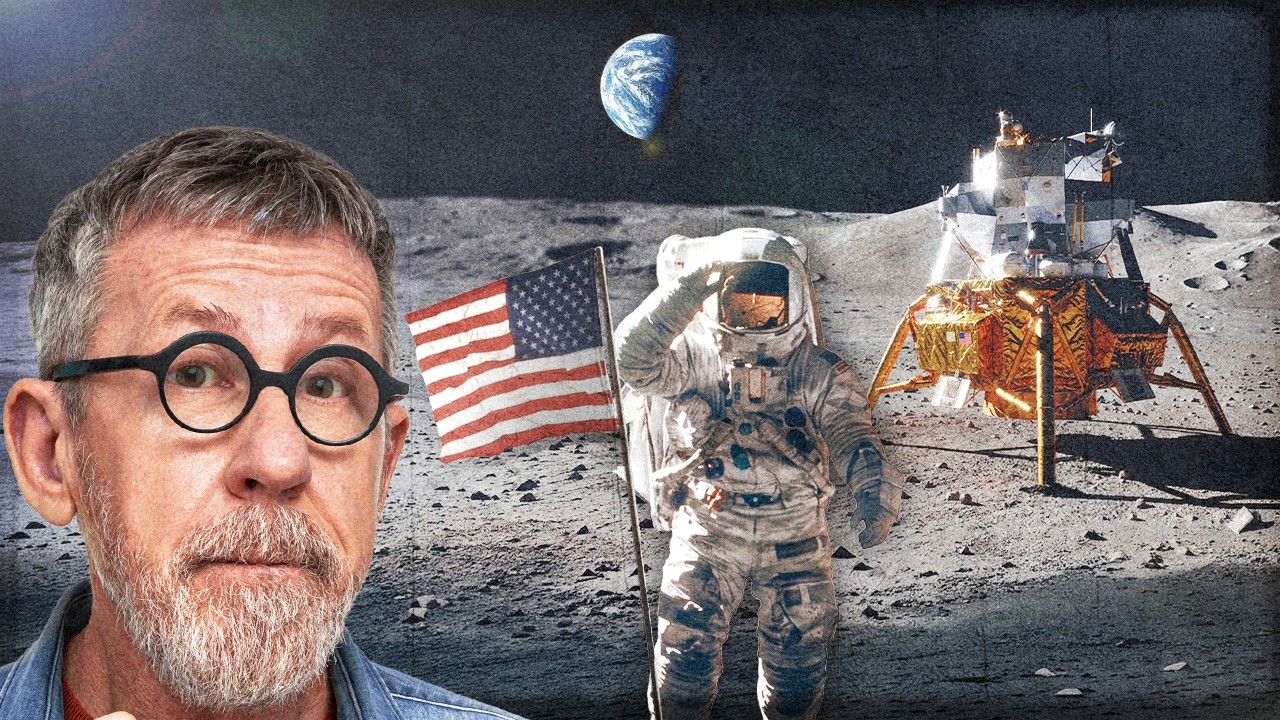
Pourquoi on est bien allés sur la Lune ?
Keywords
Summary
132 words
Critical Evaluation
The video provides a clear and engaging debunking of moon landing conspiracy theories, effectively addressing the most common claims with scientifically sound explanations. The arguments are well-structured, starting with historical context and then systematically dismantling each myth. The explanations are accurate: the flag’s appearance is due to its design, shadows are explained by the presence of other objects, boot prints are from overshoes, and the lack of stars is a photographic effect. The video also delves into the psychology of conspiracy beliefs, discussing confirmation bias and the influence of social media algorithms, which adds depth. However, the video does not cite specific sources or studies, which could be seen as a limitation for a more rigorous audience. The tone is accessible and engaging, typical of science communication, but it does not delve into the technical details of the Apollo missions’ engineering. The adéquation between title and content is excellent. The video’s strength lies in its ability to simplify complex concepts without oversimplifying the science. It also touches on the broader issue of trust in institutions, which is relevant. Overall, it is a valuable resource for the general public to understand why the moon landings are real.
196 words
Title / Content Match
The title accurately reflects the content, which explains why the moon landings are real and addresses common conspiracy arguments.
Quality & Reliability
8/10
The video presents scientifically accurate explanations for common moon landing conspiracy claims, referencing known facts about the Apollo missions, lunar environment, and photography. It cites no specific sources but relies on established scientific knowledge. The presentation is clear and well-structured, with a balanced tone.
Key Moments
Markers derived by PSI from the transcript: the creator did not define chapters.
- Introduction: The moon landing conspiracy theory is introduced.
- Buzz Aldrin punches a conspiracy theorist in 2002.
- Origin of the moon hoax theory with Bill Kaysing's book in 1976.
- The flag waving argument is debunked with the horizontal rod and aluminum.
- The shadow argument is explained by the solar wind collector.
- Boot prints are explained by overshoes with ribbed soles.
- The absence of stars is explained by short exposure times.
- Psychological mechanisms: confirmation bias and social media algorithms.
- Conclusion: Artemis II mission and final thoughts.
Cited Sources
- Jamy - Epicurieux YouTube Channel — The video's official channel, where viewers can subscribe for more content.
Concurring Sources
- NASA Apollo 11 Mission Page — Official NASA information about the Apollo 11 mission, supporting the video's claims.
Dissenting Sources
- We Never Went to the Moon: America's Thirty Billion Dollar Swindle — Bill Kaysing's book that originated the moon hoax theory, which the video debunks.
Contribution & Novelties
The video provides a comprehensive and accessible debunking of moon landing conspiracy theories, synthesizing common arguments and their scientific rebuttals. It also explains the psychological and social factors that contribute to belief in such theories, offering a holistic view.
Pour aller plus loin :
- Confirmation bias — This cognitive bias is central to the video’s explanation of why people believe in conspiracy theories.
- Apollo 11 — The mission that landed humans on the Moon, providing context for the claims.
- Lunar regolith — The fine dust on the Moon’s surface, relevant to the boot print discussion.
95 words
Radar Profile
The radar profile shows high scores in quantity and quality of information, with moderate technical level and high reliability, indicating a well-balanced educational video.
💬 Positive: The comments are overwhelmingly positive, with viewers expressing appreciation for Jamy's educational content and the clear debunking of conspiracy theories. Many share personal memories and praise the video's clarity, while a few humorous comments reference conspiracy tropes.