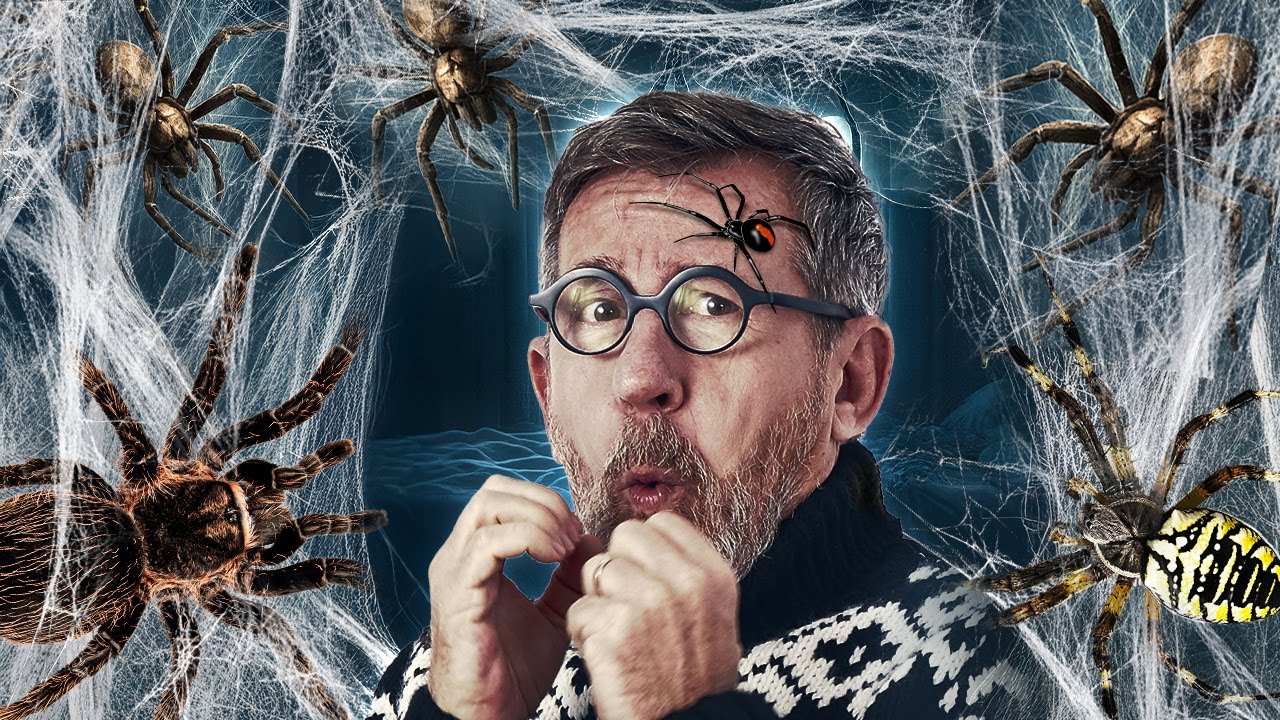
Pourquoi les araignées nous font si peur ?
Keywords
Summary
191 words
Critical Evaluation
The video provides a comprehensive and engaging overview of spiders and the psychology of fear. Scientifically, the information is accurate and up-to-date, covering key biological facts such as spider classification, anatomy, silk properties, and venom risks. The explanation of spider silk’s strength and potential applications is well-presented, and the mention of genetic engineering in silkworms reflects current research. The discussion of arachnophobia is nuanced, integrating evolutionary and cultural perspectives, which aligns with scientific understanding. However, the video lacks explicit citations to scientific studies, which would enhance its credibility for a more critical audience. The argumentation is solid, with logical progression from basic biology to the origins of fear, and the tone is reassuring without being dismissive. The production quality is high, with clear visuals and engaging narration. The title accurately reflects the content, and the video successfully achieves its goal of educating and reducing fear. Overall, it is a valuable resource for science communication, though it could benefit from referencing specific studies to support its claims.
166 words
Title / Content Match
The title accurately reflects the content, which explores the reasons behind human fear of spiders, combining biology, psychology, and culture.
Quality & Reliability
8/10
The video provides accurate biological information about spiders, including their classification, anatomy, silk properties, and venom risks, supported by scientific consensus. It also discusses psychological and cultural aspects of fear, referencing evolutionary and cultural factors. The content is well-structured and presented by a known science communicator, but lacks explicit citations to primary sources.
Chapters
Cited Sources
- Jamy Epicurieux YouTube Channel — Channel subscription link provided in the video description, used as a source for further content.
Concurring Sources
- National Geographic - Spiders — General information on spider biology and behavior, consistent with the video's content.
Contribution & Novelties
The video synthesizes biological, psychological, and cultural perspectives on arachnophobia, offering a holistic explanation. It also highlights recent scientific advancements in spider silk production, such as genetically modified silkworms, which is a novel angle for a general audience.
Pour aller plus loin :
- Arachnophobia - Wikipedia — Provides background on the phobia and its prevalence.
- Spider silk - Wikipedia — Details the properties and potential applications of spider silk.
- Evolutionary psychology of fear - Wikipedia — Explains the evolutionary basis of fear responses.
83 words
Radar Profile
The radar profile shows high scores in information quantity, quality, and reliability, with a slightly lower technical level, indicating a well-balanced and accessible science communication piece.
💬 Très positif. Sur les 30 commentaires analysés, la majorité exprime de l'appréciation pour la vidéo et partage des expériences personnelles avec les araignées, souvent en les personnifiant ou en les acceptant comme alliées.