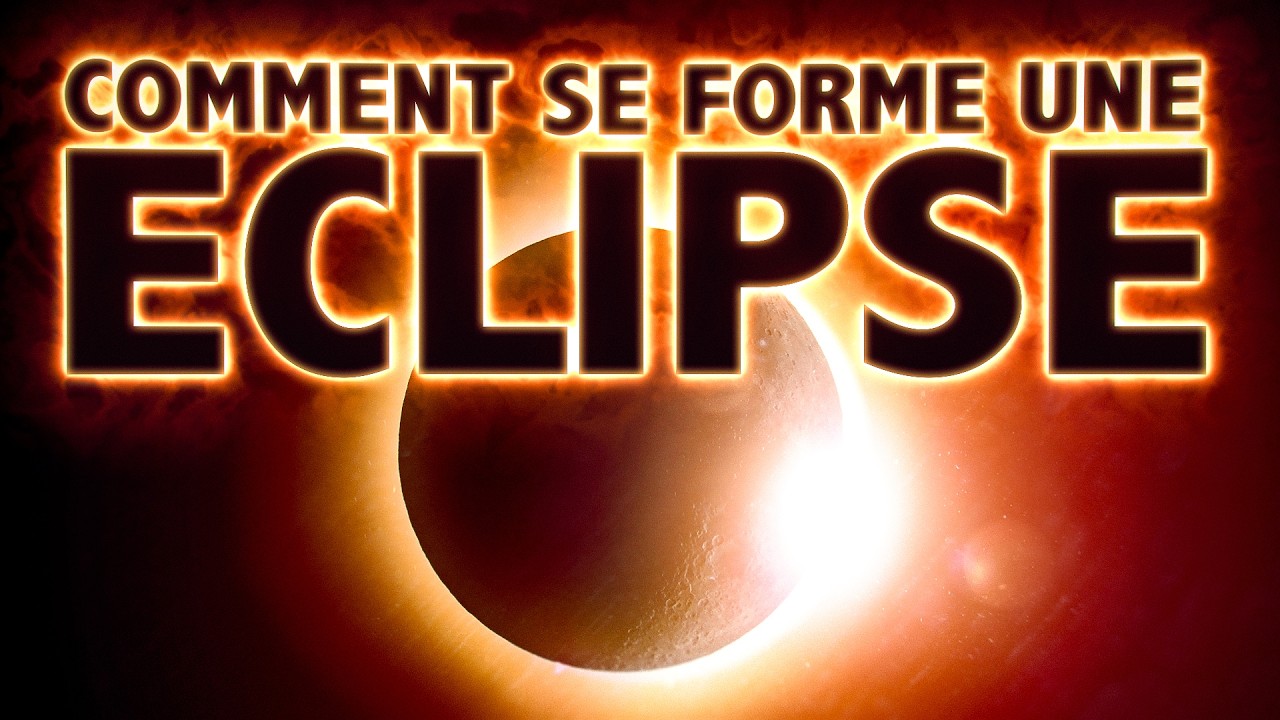
Eclipse du 12 Août : Regarder une éclipse est-il dangereux pour les yeux ?
Keywords
Summary
224 words
Critical Evaluation
The video is a well-structured and engaging science communication piece that successfully balances educational content with practical safety advice. The scientific explanations are accurate and accessible, covering the geometry of eclipses, the Saros cycle, and the historical significance of the 1919 eclipse in confirming general relativity. The inclusion of an astrophysicist (Éric Lagadec) adds credibility, and the historical anecdotes are presented with appropriate nuance, such as the caveat about Thales’ prediction. The safety advice is clear and aligns with standard recommendations, emphasizing the use of certified eclipse glasses. The video’s strength lies in its ability to convey complex concepts (e.g., why the Moon can cover the Sun) through simple analogies and visual aids. However, as a popular science video, it does not delve into the mathematical details of orbital mechanics or the physics of the corona, which might be expected by more advanced viewers. The historical sections, while fascinating, are somewhat simplified and could benefit from more rigorous sourcing. The title’s focus on eye safety is addressed, but the video also covers much more, which is a positive aspect. Overall, the video is reliable and informative, with minor limitations in depth and sourcing.
193 words
Title / Content Match
The title accurately reflects the content, which covers the dangers of looking at an eclipse and provides safety guidelines, while also explaining the phenomenon.
Quality & Reliability
8/10
The video provides accurate scientific explanations of solar eclipses, including the Saros cycle, the role of perspective, and the historical verification of general relativity. It features an astrophysicist (Éric Lagadec) and references historical events. However, some historical details (e.g., Thales' prediction) are presented with appropriate caveats. The safety advice is clear and standard. Overall, the content is reliable and well-researched, though it is a popular science presentation rather than a peer-reviewed source.
Key Moments
Markers derived by PSI from the transcript: the creator did not define chapters.
- Introduction to the solar eclipse of August 12 and its visibility in Europe.
- Interview with astrophysicist Éric Lagadec about the partial eclipse in France.
- Historical beliefs about eclipses as omens, including the Chinese dragon myth and Assyrian substitute king ritual.
- Explanation of the Saros cycle and Thales' prediction of an eclipse.
- Types of eclipses: lunar, partial solar, annular, and total solar.
- Why the Moon can cover the Sun: size and distance coincidence.
- Phenomena visible during totality: corona, prominences, and diamond ring effect.
- The 1919 eclipse and confirmation of Einstein's general relativity.
- Safety advice: using certified eclipse glasses to avoid eye damage.
Cited Sources
- Jamy Epicurieux YouTube Channel — Channel subscription link provided in the video description.
Concurring Sources
- NASA - Solar Eclipses — NASA provides authoritative information on solar eclipses, including safety and science.
- American Astronomical Society - Eye Safety — AAS guidelines on safe eclipse viewing, aligning with the video's advice.
Contribution & Novelties
The video provides a comprehensive and engaging overview of solar eclipses, combining historical context, scientific explanation, and practical safety advice. Its unique contribution lies in its accessible presentation of the 1919 eclipse’s role in confirming general relativity and the invention of the coronagraph, making these topics understandable to a general audience.
Pour aller plus loin :
- Solar eclipse - Wikipedia — For a detailed overview of solar eclipses, types, and science.
- Saros cycle - Wikipedia — To understand the periodicity of eclipses.
- Solar corona - Wikipedia — For more on the Sun’s corona and its observation.
- General relativity - Wikipedia — To explore the theory confirmed by the 1919 eclipse.
- Coronagraph - Wikipedia — For details on the instrument invented by Bernard Lyot.
123 words
Radar Profile
The radar profile shows high scores in quantity and quality of information, with a moderate technical level, indicating a well-balanced popular science video. The reliability is strong, reflecting accurate scientific content and credible sources.