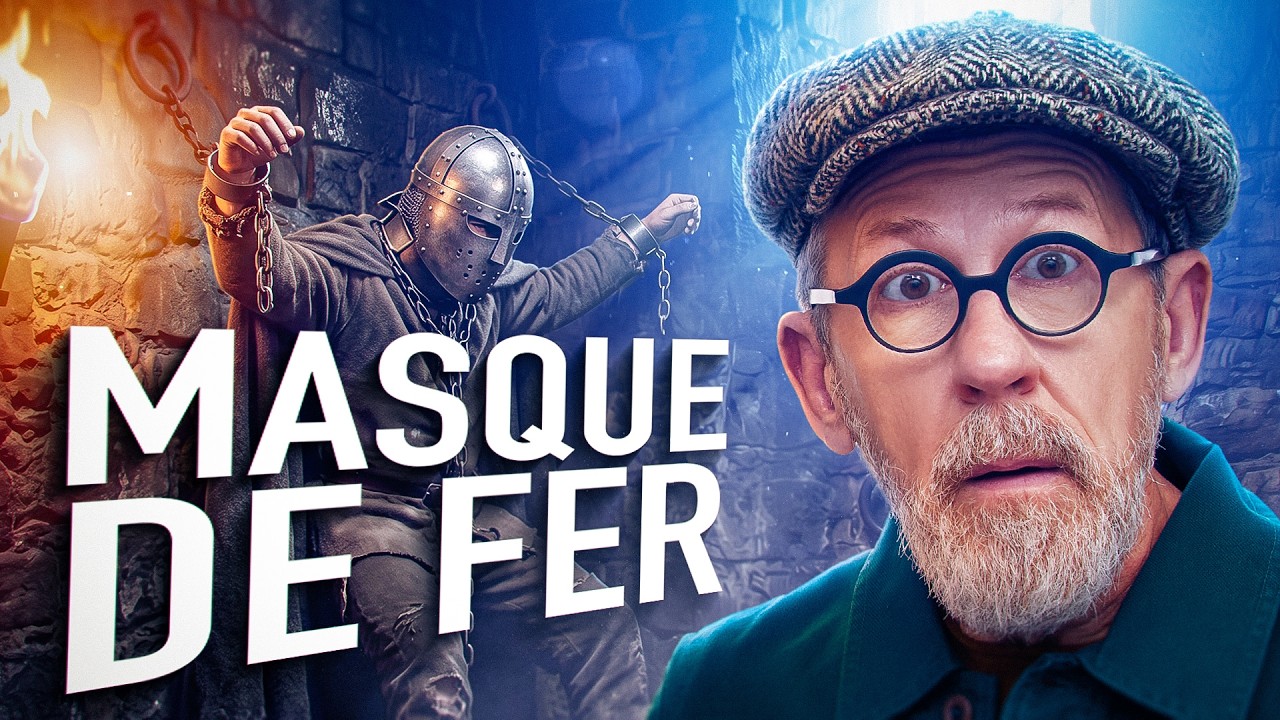
L'histoire vraie derrière l'énigme du masque de fer
Keywords
Summary
152 words
Critical Evaluation
Value of the Information & Strength of the Argument
The video provides a comprehensive overview of the historical facts and legends surrounding the Man in the Iron Mask. It presents a balanced argument, weighing the evidence for various theories and ultimately supporting the most plausible historical explanation. The narrative is engaging and well-structured, making complex historical information accessible. The argumentation is solid, relying on documented correspondence and scholarly consensus, while acknowledging the uncertainties inherent in historical research.
Scientific Rigor, Source Quality, Title Accuracy
The video demonstrates scientific rigor by distinguishing between established facts and speculative theories. It references primary sources such as official correspondence between Louvois and Saint-Mars, and mentions the works of Voltaire and Dumas as sources of the legend. The title accurately reflects the content, which aims to uncover the true story behind the mystery. The video does not provide direct citations or links to sources, but the information aligns with mainstream historical scholarship.
156 words
Title / Content Match
The title accurately reflects the content, which explores the true story behind the Man in the Iron Mask.
Quality & Reliability
8/10
The video presents a well-researched historical narrative, relying on official correspondence and scholarly consensus. It clearly distinguishes between historical facts and legends, and cites primary sources indirectly. The presenter is a well-known science communicator, adding credibility.
Key Moments
Markers derived by PSI from the transcript: the creator did not define chapters.
- Introduction to the mystery of the Man in the Iron Mask.
- The death and burial of the prisoner in 1703.
- The arrest of the prisoner in 1669 and his transfer to Pignerol.
- Theories about the prisoner's identity: Fouquet, illegitimate son, twin brother.
- Voltaire's claims and the origin of the twin brother theory.
- Alexandre Dumas and the popularization of the legend.
- The historical consensus: Eustache Danger as the prisoner.
- Saint-Mars's role in creating the myth and the prisoner's death.
Cited Sources
- Jamy - Epicurieux YouTube Channel — Channel subscription link mentioned in the video description.
Concurring Sources
- Man in the Iron Mask - Wikipedia — Wikipedia article supporting the historical consensus that the prisoner was likely Eustache Dauger.
Dissenting Sources
- The Man in the Iron Mask (1998 film) — The film presents the fictional twin brother theory, which is not supported by historical evidence.
Contribution & Novelties
The video provides a clear and engaging synthesis of the historical research on the Man in the Iron Mask, debunking popular myths and presenting the most likely explanation. It adds value by explaining how the legend was constructed, particularly through the actions of jailer Saint-Mars. The video is a good starting point for those interested in the topic.
Pour aller plus loin :
- Man in the Iron Mask - Wikipedia — Provides a comprehensive overview of the historical evidence and theories.
- Eustache Dauger - Wikipedia — Details the life of the man believed to be the prisoner.
- The Iron Mask (1929 film) - Wikipedia — Information on the early film adaptation.
111 words
Radar Profile
The radar profile shows high scores in information quantity, quality, and reliability, with a moderate technical level. This indicates a well-researched and informative video that is accessible to a general audience.
💬 Sur les 0 commentaires analysés, aucune tendance n'a pu être identifiée.