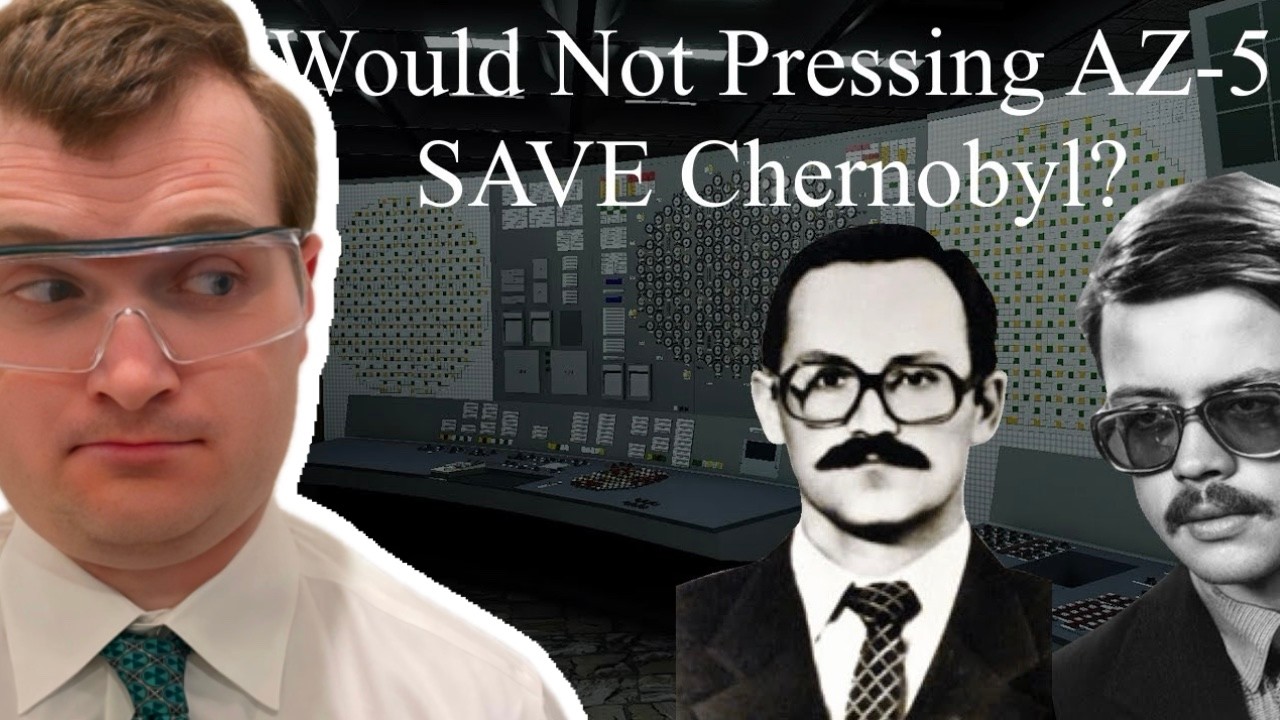
No, Not Pressing AZ-5 Would Not Save Chernobyl - Nuclear Engineer Reacts to That Chernobyl Guy
Keywords
Summary
149 words
Critical Evaluation
Value of the Information & Strength of the Argument
The video provides valuable insights into nuclear reactor physics and the Chernobyl accident, correcting common misconceptions. The argumentation is solid, based on the engineer’s professional experience and technical knowledge. He systematically deconstructs the hypothetical scenario, explaining why the reactor was already in an unstable state and why the AZ-5 press was not the root cause. He uses clear analogies and references to reactor safety principles, making the technical content accessible. The analysis is well-structured, addressing both the immediate cause and the deeper systemic issues.
Scientific Rigor, Source Quality, Title Accuracy
The video demonstrates scientific rigor by referencing reactor physics concepts, safety principles, and historical data. The engineer cites his own experience and mentions a scientific paper from 1988, but does not provide specific citations. The title accurately reflects the content, and the video stays on topic. The reaction format allows for expert commentary, but the reliance on the original video’s model may introduce uncertainties. Overall, the sources are credible, but the lack of explicit references limits verifiability.
176 words
Title / Content Match
The title accurately reflects the content: the engineer refutes the claim that not pressing AZ-5 would have saved Chernobyl, providing a detailed technical analysis.
Quality & Reliability
8/10
The video is presented by a nuclear engineer with over 10 years of commercial nuclear power experience, providing expert analysis. The content is technically accurate, referencing reactor physics principles and historical data. However, it is a reaction video, and the analysis is based on the original creator's model, which may have limitations. The engineer's expertise lends credibility, but the format limits depth.
Key Moments
Markers derived by PSI from the transcript: the creator did not define chapters.
- Introduction and context of the video
- Discussion of the AZ-5 button and its role in the accident
- Explanation of the reactor's unstable state and forbidden operating zones
- Analysis of the positive void coefficient and its effects
- Review of the two hypothetical scenarios and their outcomes
- Discussion of the 1988 Canadian paper and its findings
- Conclusion: why not pressing AZ-5 would not have saved Chernobyl
Cited Sources
- Original Video by That Chernobyl Guy — The video being reacted to, which presents the hypothetical scenario.
Concurring Sources
- INSAG-7: The Chernobyl Accident — IAEA report confirming the role of design flaws and operator errors.
Dissenting Sources
Contribution & Novelties
The video provides a unique expert perspective on the Chernobyl disaster, debunking the myth that not pressing AZ-5 would have saved the reactor. It offers a detailed technical analysis of the reactor’s instability and the role of design flaws. The engineer’s professional experience adds credibility and practical insights.
Pour aller plus loin :
- RBMK reactor — Overview of the RBMK reactor design and its flaws.
- Chernobyl disaster — Comprehensive account of the accident.
- Void coefficient — Explanation of the void coefficient and its role in reactor safety.
87 words
Radar Profile
The radar profile shows high scores in quality of information and technical level, reflecting the expert analysis. The quantity of information is also high, but the overall reliability is slightly lower due to the reaction format and reliance on the original video's model.
💬 Très positif. Sur les 30 commentaires analysés, les spectateurs expriment un fort enthousiasme pour la collaboration entre les deux chaînes et saluent la qualité de l'analyse technique, avec des commentaires comme 'Finally! He's finally doing one the That Chernobyl Guy videos' et 'This is thrilling to watch'.