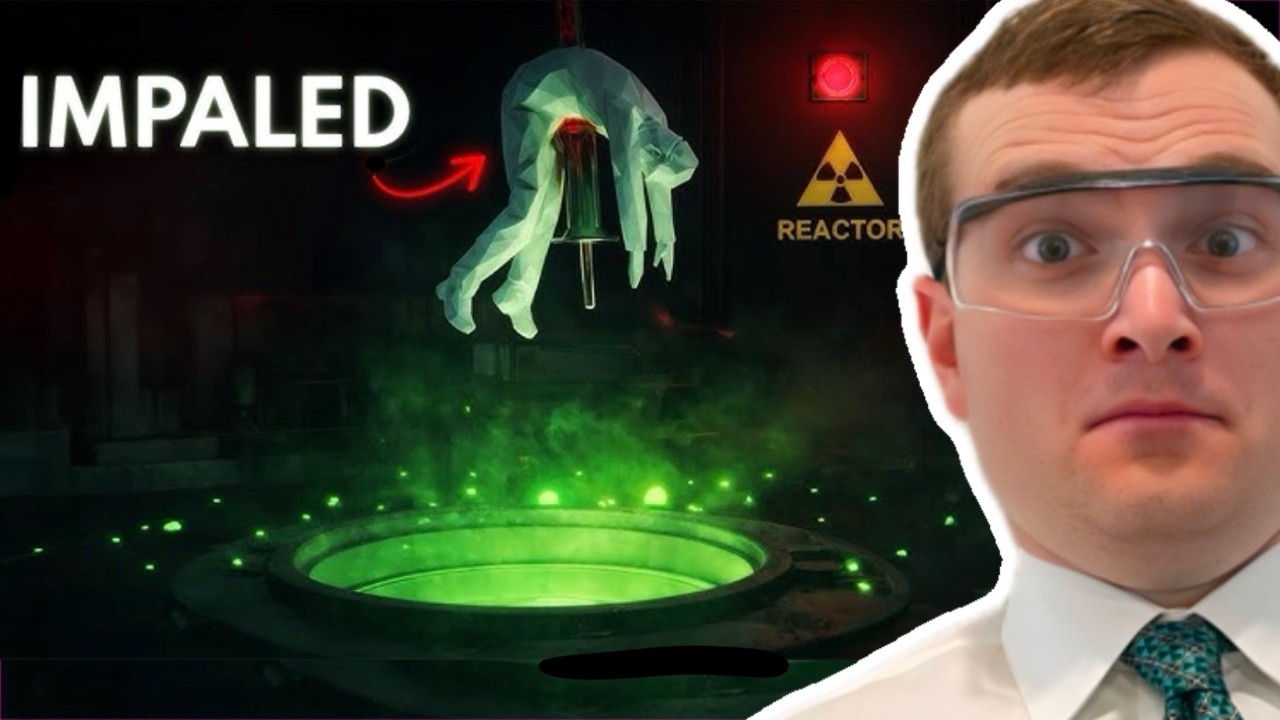
Accident in 4 milliseconds - Nuclear Engineer Reacts to Storified
Keywords
Summary
178 words
Critical Evaluation
Value of the Information & Strength of the Argument
The video provides high value by offering expert analysis of a historical nuclear accident, correcting misconceptions and adding technical depth. Folse’s argumentation is solid, based on his professional experience and knowledge of nuclear reactor design. He effectively explains complex concepts like prompt criticality and shutdown margin, making them accessible to a general audience. His corrections of the original video are well-reasoned and supported by his expertise, enhancing the overall credibility of the content.
Scientific Rigor, Source Quality, Title Accuracy
The video demonstrates scientific rigor through the reactor’s detailed explanations and corrections. He references his own experience and knowledge, and the original video is linked in the description. The title accurately reflects the content, focusing on the accident and the reactor’s reaction. The reactor’s commentary is well-informed and aligns with established nuclear safety principles, though the original video is not peer-reviewed. The video’s quality is high, with clear explanations and professional insight.
160 words
Title / Content Match
The title accurately reflects the content, focusing on the SL-1 accident and the reactor's reaction to the Storified video.
Quality & Reliability
8/10
The reactor is an expert in nuclear engineering with over 10 years of experience, providing accurate technical explanations and corrections. The video is a reaction to a documentary, adding valuable context and professional insight. The original video is not peer-reviewed, but the reactor's commentary is well-informed and aligns with established nuclear safety principles.
Key Moments
Markers derived by PSI from the transcript: the creator did not define chapters.
- Introduction to the video and the SL-1 accident.
- Discussion of the SL-1 reactor design and its purpose.
- Explanation of the control rod sensitivity and design flaws.
- Details of the accident sequence and the prompt criticality event.
- Analysis of the radiation exposure and responder challenges.
- Discussion of the recovery of the victims and the aftermath.
- Comparison with modern reactor safety and lessons learned.
Cited Sources
- Storified - Original Video — The original video that Tyler Folse is reacting to, which covers the SL-1 accident.
Concurring Sources
- SL-1 Accident - Wikipedia — Provides a comprehensive account of the SL-1 accident, consistent with the reactor's analysis.
Dissenting Sources
- None — No discordant sources identified.
Contribution & Novelties
The video adds significant value by providing expert analysis and corrections to the original Storified video. Tyler Folse, a nuclear engineer, offers insights into the technical aspects of the SL-1 accident, explaining design flaws and safety principles. He clarifies misconceptions and provides context that enhances understanding. The video is particularly useful for those interested in nuclear engineering and safety.
Pour aller plus loin :
- SL-1 Accident - Wikipedia — Provides a detailed overview of the accident, including background, causes, and aftermath.
- Nuclear Reactor Safety - IAEA — Official IAEA page on nuclear safety, offering resources and guidelines.
- Prompt Criticality - Nuclear Regulatory Commission — NRC glossary definition of prompt criticality, explaining the concept in detail.
115 words
Radar Profile
The radar profile shows high scores in information quality and reliability, with slightly lower scores in quantity and technical level. This indicates a video that is well-informed and credible, but may not cover all aspects in exhaustive detail or require advanced technical knowledge to fully appreciate.
💬 Très positif. Sur les 30 commentaires analysés, les spectateurs expriment une forte appréciation pour la précision et la valeur éducative des réactions de Tyler Folse, soulignant son expertise et sa capacité à ajouter du contexte sans corrections majeures.