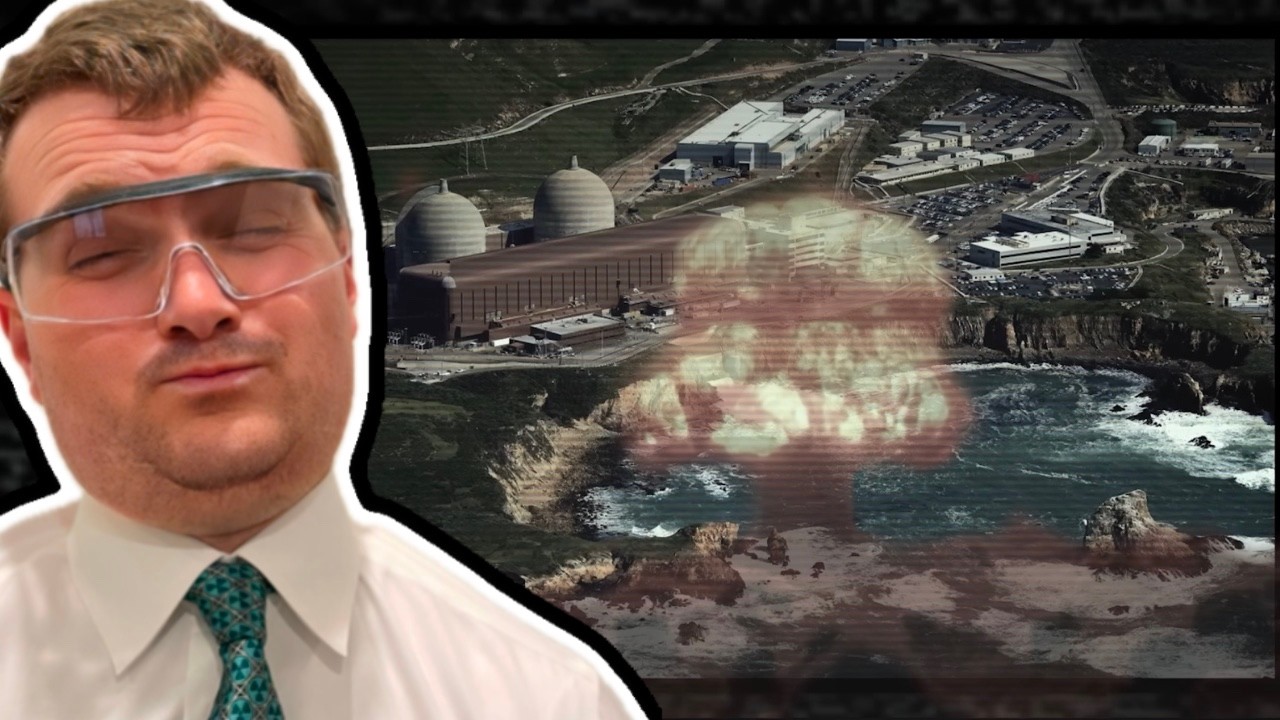
What if A Nuclear Bomb Strikes a Nuclear Plant? - Nuclear Engineer Reacts to Flashback History
Keywords
Summary
149 words
Critical Evaluation
Value of the Information & Strength of the Argument
The video provides substantial value by offering expert insights into nuclear engineering and emergency response, correcting common misconceptions. The argumentation is solid, grounded in the engineer’s professional experience and technical knowledge. He systematically addresses each claim, explaining why certain scenarios are unrealistic or exaggerated. For instance, he clarifies that nuclear power plants are not militarily decisive targets and that a nuclear weapon’s energy release vastly exceeds any potential reactor explosion. He also highlights the importance of rehearsed procedures and the lack of panic in trained personnel. The reasoning is logical and evidence-based, though some specific data points (e.g., interceptor success rates) are presented without sources, which slightly weakens the argumentation.
Scientific Rigor, Source Quality, Title Accuracy
The video demonstrates high scientific rigor in its technical explanations, but it relies on the engineer’s expertise rather than citing external sources. The original video by Flashback History is referenced, but no academic or official sources are provided. The title accurately reflects the content, focusing on the specific scenario of a nuclear bomb striking a nuclear plant. The engineer’s corrections are well-founded, and he acknowledges uncertainties where appropriate. However, the lack of cited sources for some claims (e.g., the 45% interceptor success rate) reduces the overall rigor. The video does not engage with peer-reviewed literature, but it effectively uses practical knowledge to debunk myths.
229 words
Title / Content Match
The title accurately reflects the content, which focuses on the consequences of a nuclear bomb striking a nuclear power plant, with the engineer's expert reaction.
Quality & Reliability
8/10
The video is a reaction by a nuclear engineer, providing expert analysis and corrections to a speculative scenario. The engineer demonstrates deep knowledge of nuclear physics, engineering, and emergency procedures, and effectively debunks exaggerated claims. However, the format is a reaction video, not a peer-reviewed study, and some specific figures (e.g., interceptor success rates) are not sourced.
Key Moments
Markers derived by PSI from the transcript: the creator did not define chapters.
- Introduction and recap of part one; setting the scenario.
- Discussion on early surveillance and decision-making timelines.
- Explanation of the 'blue clock' and mutual assured destruction.
- Analysis of the president's 6-minute decision window and training.
- Critique of missile defense success rates and interceptor failures.
- Discussion on targeting doctrine and why nuclear power plants are not primary targets.
- Reaction to the second missile targeting Diablo Canyon.
- Debunking the claim that a reactor would become a 'poisonous storm front'.
- Comparison with Fukushima and Chernobyl; dilution and localized fallout.
- Conclusion: nuclear weapon hitting a plant is bad but not uniquely apocalyptic.
Cited Sources
- Original Video: How a Nuclear War Would Actually Go Down (Part 2) — The video being reacted to, which presents the speculative scenario.
Concurring Sources
- Ground-Based Midcourse Defense (GMD) — Provides context on the missile defense system mentioned in the video, including its success rates and limitations.
Dissenting Sources
- Annie Jacobsen's book 'Nuclear War: A Scenario' — The original video appears to be based on this book, which the engineer criticizes for exaggerations and inaccuracies.
Contribution & Novelties
The video provides a unique contribution by having a nuclear engineer react in real-time to a speculative nuclear war scenario, offering expert corrections and insights that are often missing in popular media. It effectively debunks exaggerated claims about nuclear power plants being catastrophic targets, explaining the physics and engineering realities. The engineer’s practical experience adds credibility and depth.
Pour aller plus loin :
- Nuclear weapon yield — Understanding the energy release of nuclear weapons.
- Nuclear reactor safety — Overview of safety systems and accident scenarios.
- Chernobyl exclusion zone — Evidence of ecological recovery in contaminated areas.
- Fukushima nuclear accident — Real-world case study of radiological release and its impacts.
109 words
Radar Profile
The radar profile shows high scores in information quality, technical level, and reliability, reflecting the engineer's expertise and clear explanations. The quantity of information is also high, but the overall score is slightly lower due to the reaction format and lack of cited sources.
💬 Très positif : Sur les 30 commentaires analysés, la grande majorité exprime un soutien enthousiaste et des félicitations pour l'expertise et la clarté des explications, avec quelques commentaires humoristiques sur le scénario.