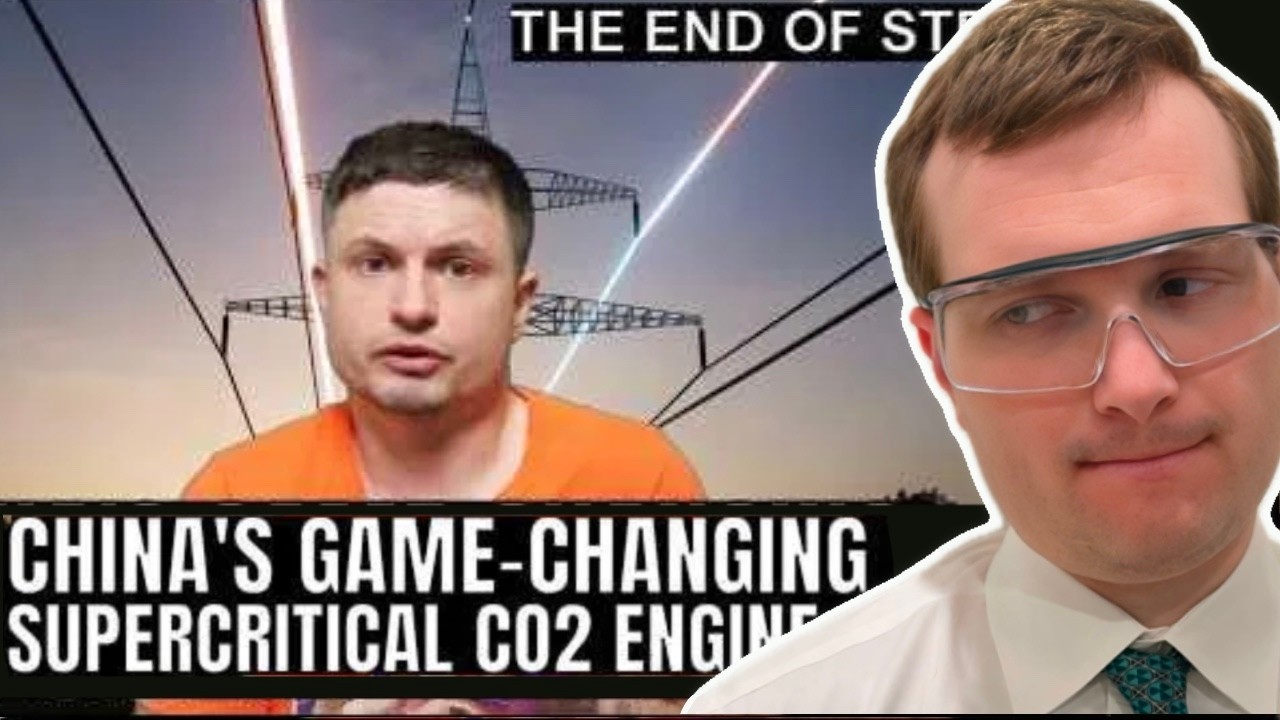
The End of Steam? Supercritical CO2 + Nuclear Reactors - Nuclear Engineer Reacts to Anton Petrov
Keywords
Summary
137 words
Critical Evaluation
Value of the Information & Strength of the Argument
The video provides valuable insights from an experienced nuclear engineer, offering a practical perspective on the feasibility of supercritical CO2 in nuclear power. The argumentation is solid, as Folse systematically addresses the technical aspects, including thermodynamics, materials, and safety. He effectively counters the hype by pointing out that commercial operation does not equate to utility-scale baseload power and that the Chinese project is a waste heat recovery unit. He also highlights the need for long-term data on material performance and the lengthy licensing process. The reasoning is clear and well-structured, making it a valuable resource for understanding the technology’s potential and limitations.
Scientific Rigor, Source Quality, Title Accuracy
The video demonstrates scientific rigor by referencing specific studies and projects, such as the Sandia National Laboratory prototype and the STEP Demo in Texas. The quality of sources is good, as they are based on real research and developments. The title accurately reflects the content, which discusses the potential of supercritical CO2 to replace steam. The analysis is grounded in the original video by Anton Petrov and the engineer’s own expertise. The video does not overstate claims and provides a balanced view, which enhances its credibility.
203 words
Title / Content Match
The title accurately reflects the content, which discusses the potential of supercritical CO2 to replace steam in power generation, particularly in nuclear reactors.
Quality & Reliability
8/10
The video is an expert reaction by a nuclear engineer with over 10 years of experience. It provides a balanced analysis of supercritical CO2 technology, acknowledging both potential benefits and challenges. The content is based on the original video by Anton Petrov and references specific studies and projects. However, it is an opinion piece and not a peer-reviewed source.
Key Moments
Markers derived by PSI from the transcript: the creator did not define chapters.
- Introduction to the topic and the Chinese commercial supercritical CO2 generator.
- Explanation of supercritical CO2 and its properties.
- Discussion on efficiency gains and comparison with steam cycles.
- Challenges: corrosion, materials, and licensing.
- US research projects and the STEP Demo.
- China's Chaotan 1 and its significance.
- Potential applications in nuclear reactors and future outlook.
Cited Sources
- Original video by Anton Petrov — The video being reacted to, which discusses the Chinese supercritical CO2 generator.
Concurring Sources
- Sandia National Laboratory supercritical CO2 research — Mentioned in the video as a key US research effort.
- STEP Demo project — Referenced as a successful demonstration of supercritical CO2 power generation.
Contribution & Novelties
The video provides an expert engineering perspective on the potential of supercritical CO2 in nuclear power, offering a balanced analysis of its benefits and challenges. It clarifies misconceptions about the technology and highlights the differences between research projects and commercial deployment.
Pour aller plus loin :
- Supercritical carbon dioxide — Overview of the properties and applications of supercritical CO2.
- Brayton cycle — The thermodynamic cycle relevant to supercritical CO2 turbines.
- Small modular reactor — Context for the potential integration of supercritical CO2 in SMRs.
84 words
Radar Profile
The radar chart shows high scores in information quantity, quality, and reliability, with a slightly lower technical level. This indicates a well-balanced and informative video that is accessible to a broad audience while maintaining scientific rigor.
💬 Très positif. Sur les 30 commentaires analysés, la grande majorité exprime un enthousiasme marqué pour la collaboration entre les deux chaînes, saluant la complémentarité des perspectives et la qualité de l'analyse.