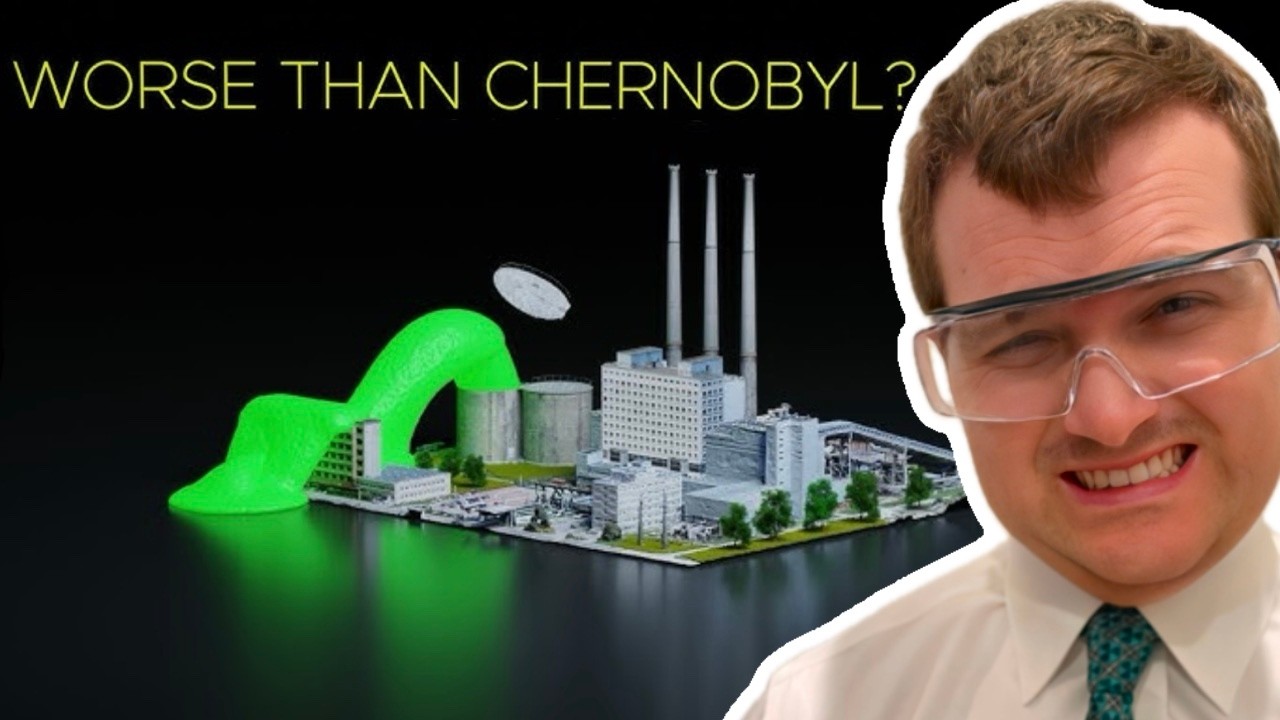
The Mayak/Kyshtym Disaster is Worse Than You Think - Nuclear Engineer Reacts to Solve
Keywords
Summary
158 words
Critical Evaluation
Value of the Information & Strength of the Argument
The video provides valuable insights from a nuclear engineer, offering technical corrections and clarifications that enhance understanding of the Mayak disaster. The argumentation is solid, based on professional expertise and logical reasoning. Folse effectively debunks myths, such as the explosion being equivalent to a nuclear bomb, and explains the actual causes and consequences. He also contextualizes the disaster within the broader history of nuclear safety, comparing it to other incidents. The value lies in the expert perspective that adds depth and accuracy to the narrative.
Scientific Rigor, Source Quality, Title Accuracy
The video demonstrates scientific rigor by relying on the engineer’s professional knowledge and referencing the original documentary. However, specific sources are not cited, and the analysis is based on the information presented in the original video. The title accurately reflects the content, as the video indeed argues that the Mayak disaster is worse than commonly perceived. The adequacy between title and content is strong, as the video directly addresses this claim.
171 words
Title / Content Match
The title accurately reflects the content, as the video focuses on the Mayak/Kyshtym disaster and argues it is worse than commonly perceived.
Quality & Reliability
8/10
The video provides a detailed and technically accurate analysis of the Mayak disaster, correcting misconceptions and offering expert insights from a nuclear engineer. The information is well-structured and based on professional knowledge, though some historical details rely on the original video's narrative.
Key Moments
Markers derived by PSI from the transcript: the creator did not define chapters.
- Introduction to the Mayak disaster and the video's purpose.
- Discussion of the number of people affected and clarification on radiation exposure.
- Historical background of the Soviet nuclear program and construction of Mayak.
- Explanation of the open-loop cooling system and contamination of Lake Kyzyltash.
- Description of the 1957 explosion and its causes.
- Correction of the misconception about the explosion's yield and discussion of contamination.
- Impact on local population and evacuation delays.
- Legacy of the disaster, including Lake Karachay and ongoing contamination.
Cited Sources
- Original Video: The Mayak/Kyshtym Disaster — The video being reacted to, which provides the narrative and visuals for the analysis.
Concurring Sources
- Kyshtym disaster - Wikipedia — Provides factual information that aligns with the video's narrative.
Dissenting Sources
- IAEA classification of the Kyshtym disaster — The video mentions that the IAEA classified the disaster as less severe than Chernobyl, but the exact source is not cited.
Contribution & Novelties
The video adds value by providing expert corrections and clarifications to common misconceptions about the Mayak disaster. It highlights the role of safety culture and institutional failures, offering a nuanced perspective on the event’s severity. The engineer’s insights help viewers understand the technical aspects and the human impact more accurately.
Pour aller plus loin :
- Kyshtym disaster - Wikipedia — Provides a comprehensive overview of the event, including causes and consequences.
- Mayak Production Association - Wikipedia — Details the history and operations of the Mayak plant.
- Lake Karachay - Wikipedia — Information on the highly contaminated lake and its cleanup.
100 words
Radar Profile
The radar profile shows high scores in information quantity, quality, and reliability, with a slightly lower technical level. This indicates a well-balanced video that is both informative and accessible, with strong expert input.
💬 Très positif. Sur les 30 commentaires analysés, les spectateurs expriment une appréciation générale pour le contenu, soulignant la qualité des explications et la valeur éducative de la vidéo, avec des remerciements et des demandes de sujets similaires.