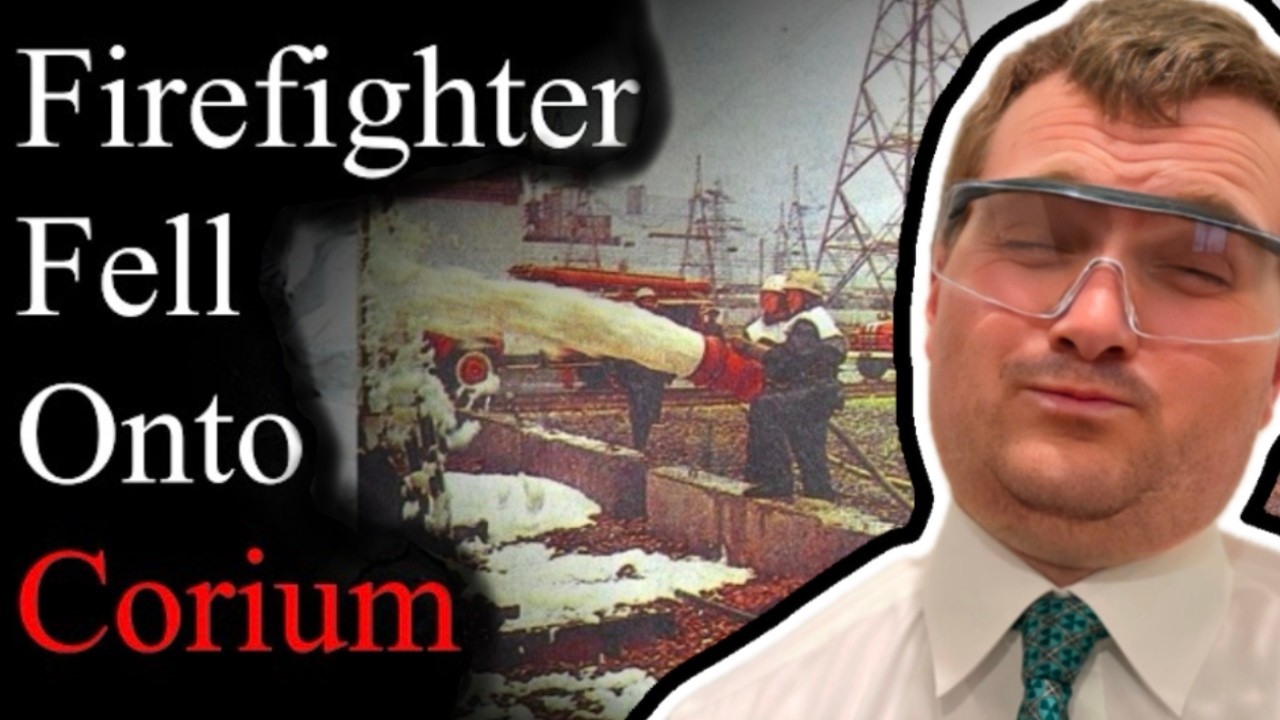
The Firefighter Who Fell Into Chernobyl - Nuclear Engineer Reacts to That Chernobyl Guy
Keywords
Summary
190 words
Critical Evaluation
Value of the Information & Strength of the Argument
The video provides valuable insights from a nuclear engineer’s perspective, clarifying technical details such as the difference between roentgen and rem, the concept of decay heat, and the practical aspects of radiation protection (time, distance, shielding). The argumentation is solid, as Folse supports his points with his professional experience and references to NRC regulations. He also critically evaluates the original video’s narrative, correcting or expanding on technical points. The discussion of dose limits and the historical context adds depth, making the video informative for both laypeople and those with technical background.
Scientific Rigor, Source Quality, Title Accuracy
The video demonstrates scientific rigor by accurately explaining radiation units and dose limits, and by referencing specific historical figures and events. The primary source is the original video by ‘That Chernobyl Guy’, which is linked in the description. Folse does not cite additional external sources, but his expertise lends credibility. The title accurately reflects the content, and the video stays focused on the incident and its technical aspects. The analysis of the original video’s claims is thorough, and Folse is careful to distinguish between established facts and his own interpretations.
196 words
Title / Content Match
The title accurately reflects the content: a nuclear engineer reacts to a video about a firefighter who fell onto corium at Chernobyl.
Quality & Reliability
8/10
The video is a reaction/analysis by a nuclear engineer with over 10 years of experience. It provides technical explanations of radiation units, dose limits, and reactor physics, and references specific historical events and individuals. The information is generally accurate and well-contextualized, though it is based on the original video's narrative and the reactor's own expertise, not on primary sources.
Key Moments
Markers derived by PSI from the transcript: the creator did not define chapters.
- Introduction and context of the video
- Discussion of the firefighter falling onto corium
- Explanation of decay heat and radiation levels
- Analysis of dose limits and emergency worker thresholds
- Discussion of the firefighting tactics and radiation protection
- Description of the firefighter's fall and rescue
- Analysis of the corium temperature and heat sources
- Discussion of the scientists' exploration and measurements
- Explanation of the fuel location and the empty core
- Conclusion and reflections on the incident
Cited Sources
- Original video: The Firefighter Who Fell Into Chernobyl — The video being reacted to, which tells the story of the firefighter incident.
Concurring Sources
- Chernobyl disaster - Wikipedia — Provides general information on the accident, including the firefighter incident.
Contribution & Novelties
The video adds value by providing expert commentary from a nuclear engineer, clarifying technical aspects of the Chernobyl incident that are often misunderstood. It offers a professional perspective on radiation dose limits, firefighting tactics, and the physical conditions inside the sarcophagus. The engineer’s explanations of roentgen vs rem, decay heat, and the smell of ozone provide educational content beyond the original narrative.
Pour aller plus loin :
- Chernobyl disaster — Overview of the accident and its aftermath.
- Corium (nuclear reactor) — Explanation of the molten fuel material.
- Radiation dose — Details on radiation units and health effects.
97 words
Radar Profile
The radar profile shows high scores in all dimensions, indicating a well-rounded video with strong technical content, good information quality, and high reliability. The video excels in providing expert analysis and clear explanations, making it a valuable resource for understanding the Chernobyl incident from a nuclear engineering perspective.
💬 Very positive. The comments are overwhelmingly supportive, with viewers praising the engineer's expertise, humor, and clear explanations. Many highlight specific moments and express appreciation for the educational value.