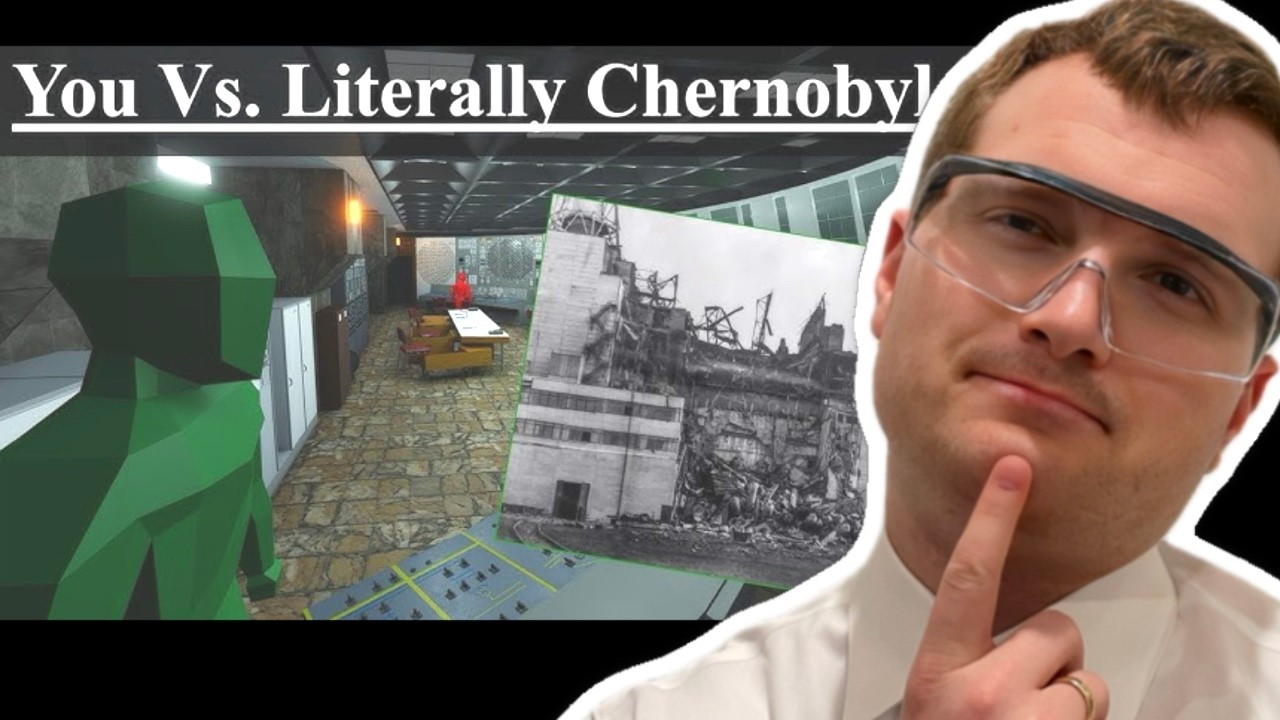
What if I Was In Charge at Chernobyl? - Nuclear Engineer Reacts to That Chernobyl Guy
Keywords
Summary
195 words
Critical Evaluation
Value of the Information & Strength of the Argument
The video provides substantial value by offering a professional nuclear engineer’s perspective on the Chernobyl disaster, which is often lacking in popular media. Folse’s arguments are well-supported by his expertise and he systematically explains the technical and procedural aspects of each decision. He effectively argues that modern safety standards would have prevented the disaster, but also acknowledges the historical context and the limitations faced by the operators. The argumentation is solid, as he consistently applies modern nuclear safety principles to the hypothetical scenario, making a compelling case for the importance of safety culture and transparent information. He also addresses potential counterarguments, such as the possibility that the ECCS would not have prevented the accident, by providing nuanced context. Overall, the video is highly informative and presents a coherent, expert-driven analysis.
Scientific Rigor, Source Quality, Title Accuracy
The video demonstrates scientific rigor by relying on the engineer’s professional knowledge and experience. He references specific concepts like shutdown margin, positive void coefficient, and safety culture, which are well-established in nuclear engineering. The quality of sources is primarily based on his expertise, as he does not cite external references, but the original video’s content is used as a basis for discussion. The title accurately reflects the content, as it is a reaction to a hypothetical scenario. The video does not claim to present new research but rather provides expert commentary. The engineer’s credibility adds to the reliability of the information, though the lack of external citations limits the verifiability. Overall, the video is scientifically sound and the title is appropriate.
266 words
Title / Content Match
The title accurately reflects the content: the nuclear engineer reacts to a hypothetical scenario of being in charge at Chernobyl, providing expert commentary and decisions.
Quality & Reliability
8/10
The video is presented by a nuclear engineer with over 10 years of experience, including as a licensed senior reactor operator. He provides detailed technical explanations and contrasts modern safety standards with those of the Chernobyl era. The content is well-structured and references specific operational procedures and safety concepts. However, the video is a reaction/opinion piece, and the original video's claims are not independently verified. The engineer's expertise lends credibility, but the analysis is subjective and based on his professional perspective.
Key Moments
Markers derived by PSI from the transcript: the creator did not define chapters.
- Introduction: Tyler Folse introduces himself and the video's premise.
- Discussion of the shift supervisor role and safety culture differences.
- First decision: lowering power to 50% - Folse approves.
- Second decision: operating reactivity margin below 15 - Folse chooses to shut down.
- Third decision: disabling ECCS - Folse chooses to keep it active.
- Fourth decision: lowering power to 700 MW - Folse approves.
- Fifth decision: lowering to 200 MW vs 700 MW - Folse chooses to shut down.
- Sixth decision: power drop to 30 MW - Folse chooses to trip the reactor.
- Seventh decision: blocking AZ-5 signal - Folse chooses to shut down.
- Eighth decision: activating additional pumps - Folse chooses to shut down.
Cited Sources
- Original video: What if I Was In Charge at Chernobyl? — The video being reacted to, by That Chernobyl Guy.
Concurring Sources
- INSAG-7: The Chernobyl Accident: Updating of INSAG-1 — IAEA report providing analysis of the accident, consistent with the video's emphasis on safety culture and design flaws.
Contribution & Novelties
The video provides a unique expert perspective on the Chernobyl disaster by applying modern nuclear safety standards to the historical events. It offers a detailed analysis of the decisions made by the operators and highlights the importance of safety culture and transparent information. The engineer’s personal experience as a senior reactor operator adds credibility and depth to the analysis.
Pour aller plus loin :
- Chernobyl disaster — Provides comprehensive background on the accident.
- RBMK — Technical details on the reactor type involved.
- Nuclear safety culture — Concept central to the video’s argument.
- Shutdown margin — Key safety parameter discussed.
- Positive void coefficient — Reactor physics concept relevant to the accident.
110 words
Radar Profile
The radar profile shows high scores in information quality and technical level, indicating a deeply informative and expert-driven video. The lower score in quantity of information reflects the focused scope of the reaction format. Overall, the video is highly reliable and valuable for understanding nuclear safety.
💬 Très positif. Sur les 30 commentaires analysés, les spectateurs expriment une forte appréciation pour l'expertise et la clarté des explications, saluant la valeur éducative de la vidéo et la qualité de la réaction.