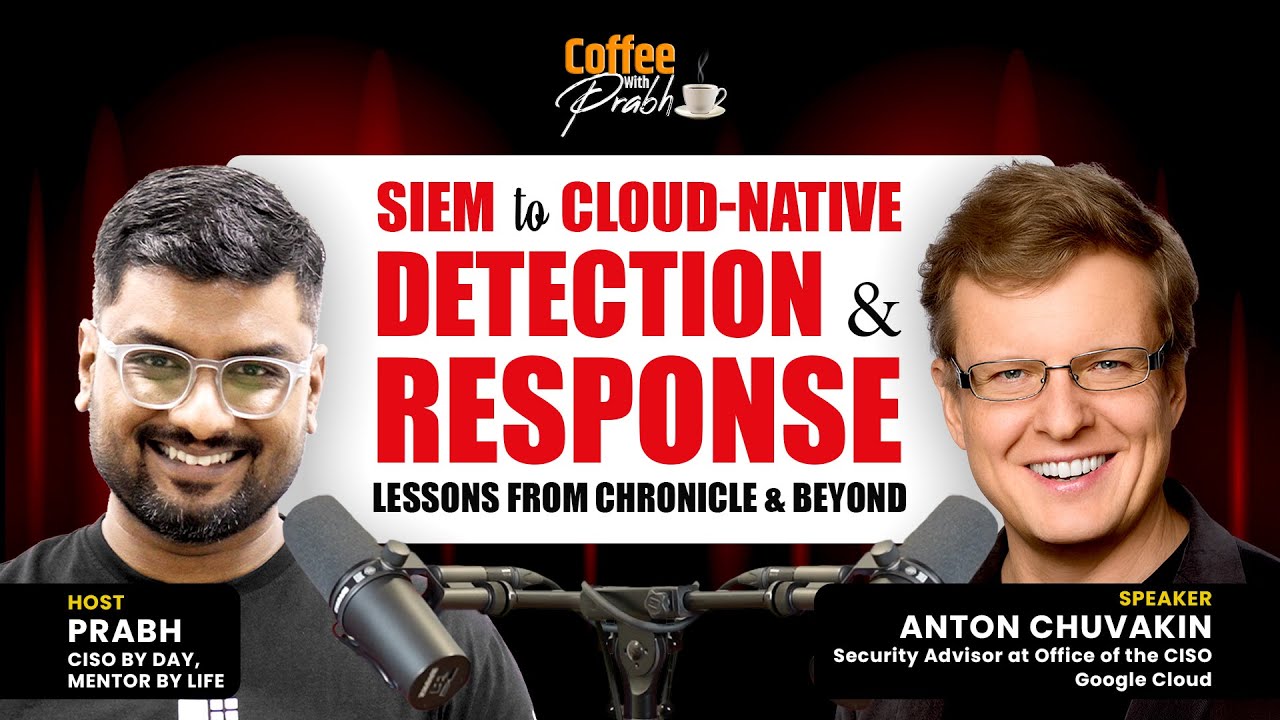
Cloud-Native Detection & Modern Threat Defense with Dr. Anton
Keywords
Summary
162 words
Critical Evaluation
Value of the Information & Strength of the Argument
The value of the information lies in the practical insights from Dr. Anton’s extensive experience in threat detection. He provides a clear distinction between true cloud-native platforms and those merely hosted in the cloud, using analogies like ‘cloud tourists’ and ‘fake cloud’. The argumentation is coherent, emphasizing that modern detection requires a combination of rules, ML, and threat intelligence, and that AI will not replace human analysts in the near term due to legacy environments. He supports his points with real-world examples and personal anecdotes, making the discussion relatable and actionable for security professionals.
Scientific Rigor, Source Quality, Title Accuracy
The scientific rigor is moderate; the discussion is based on expert opinion rather than peer-reviewed research. Dr. Anton references his own blog posts and past experiences at Gartner, but no specific external sources are cited. The title accurately reflects the content, focusing on cloud-native detection and modern threat defense. The description provides links to related playlists and resources, but these are not directly referenced in the conversation. Overall, the content is credible due to the speaker’s expertise, but lacks formal citations.
190 words
Title / Content Match
The title accurately reflects the content, focusing on cloud-native detection and modern threat defense.
Quality & Reliability
7/10
The discussion features Dr. Anton, a recognized expert in threat detection, providing practical insights. However, it is largely opinion-based with limited concrete data or references, and some claims are anecdotal.
Chapters
- 02:00 - Introduction and Dr. Anton's Background
- 09:46 - Cloud Native Detection
- 11:42 – Detection and Response
- 16:22 - Real examples where a good detection can save the day
- 19:46 - The Role of AI in Security and Job Impact
- 20:50 - Humans as the last line of defense
- 27:50 - Legacy SIM Thinking
- 30:42 -Integrating SIM with modern, microservices-based architectures
- 33:33 - EDR companies acquiring log management solutions
- 39:00 - Principles of Good Logging in Cloud/Hybrid Workloads
- 41:26 -Practical First Steps for Cloud-Native Threat Detection
- 45:30 - Choosing a Single Solution with a Limited Budget
- 49:30 - Platform vs. Best-of-Breed Security
- 51:08 – End of the conversation by thanking Dr. Anton, expressing his gratitude for the
Cited Sources
- Telegram Group - Infosec Learning — Mentioned in the description as a community for security learning.
- CISO Talks Playlist — Related podcast episodes on CISO topics.
- NIST Series Playlist — Videos on NIST frameworks.
- GRC Series Playlist — Videos on Governance, Risk, and Compliance.
- ISO 27001 Video — Tutorial on ISO 27001 implementation.
- ISO 27001 Implementation Guide — Guide for ISO 27001 implementation.
- GRC Practical Series Playlist — Practical GRC content.
- GRC Interview Playlist — Interviews on GRC topics.
- Internal Audit Playlist — Videos on internal audit.
Concurring Sources
- Google Cloud Security Podcast — Dr. Anton has appeared on this podcast, discussing similar topics.
Contribution & Novelties
The episode provides a nuanced perspective on cloud-native detection, distinguishing it from traditional SIEM solutions. Dr. Anton’s emphasis on ‘output-driven SIEM’ and the evolution towards ADR offers fresh insights for security practitioners. The discussion on AI’s role and the importance of human oversight in legacy environments adds practical value.
Pour aller plus loin :
- Cloud-native computing — Foundational concept for understanding cloud-native architectures.
- SIEM — Background on traditional SIEM systems.
- Endpoint detection and response — Overview of EDR and its evolution.
- Application detection and response — Gartner’s definition of ADR (note: URL may require subscription).
95 words
Radar Profile
The radar profile shows a balanced performance across all dimensions, with slightly higher scores in information quantity and quality, reflecting the expert's depth of knowledge. The lower technical level score indicates the content is accessible to a broad audience, while the reliability score is moderate due to the lack of formal citations.
💬 No comments were provided for analysis.