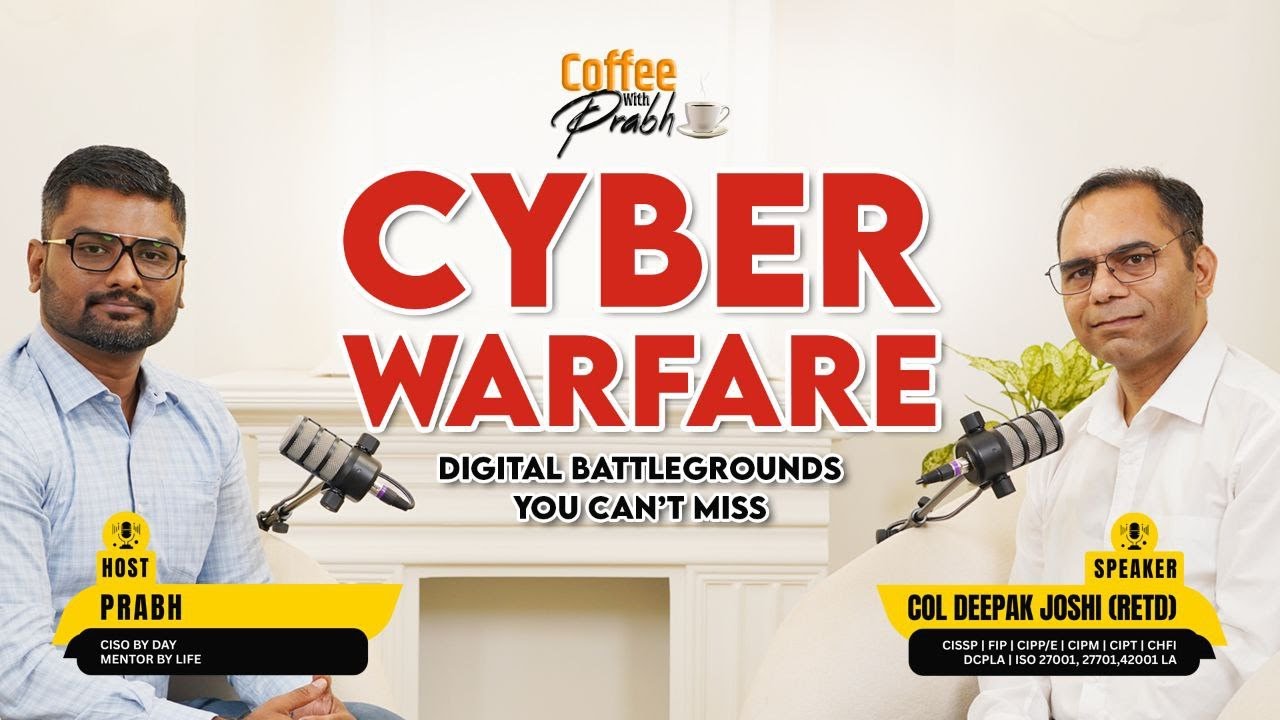
Cyberwarfare Strategies That Actually WORK in 2025
Keywords
Summary
216 words
Critical Evaluation
Value of the Information & Strength of the Argument
The video provides valuable insights into cyberwarfare from a practitioner’s perspective, offering concrete examples and strategic frameworks. The argumentation is solid, grounded in real-world cases like the Russia-Ukraine conflict and Stuxnet, which lend credibility. However, some claims are presented without empirical evidence, and the discussion is more qualitative than quantitative. The value lies in the expert’s practical experience and the clarity of explanations, making complex topics accessible.
Scientific Rigor, Source Quality, Title Accuracy
The scientific rigor is moderate; the speaker is an expert, but the video lacks formal citations or references to academic literature. The sources mentioned are anecdotal or well-known public incidents, but no specific URLs or documents are provided. The title accurately reflects the content, which focuses on strategies and their effectiveness. The discussion is well-structured, but the lack of verifiable sources limits its scientific robustness.
147 words
Title / Content Match
The title accurately reflects the content, which focuses on cyberwarfare strategies and their effectiveness, though it is more of an expert discussion than a prescriptive guide.
Quality & Reliability
7/10
The video features a retired Indian Army Colonel with 30 years of experience in cybersecurity, providing expert insights grounded in real-world examples (Russia-Ukraine, Stuxnet). However, it is a podcast-style discussion without formal citations or peer-reviewed sources, and some claims lack verifiable evidence.
Chapters
- 01:02 – Highlights
- 02:24 – Introduction
- 04:40 - What is Cyberwarfare
- 07:08 - Concern for a common citizen
- 09:38 - Why is this called as a fifth domain
- 12:55 - Future possible threat
- 16:18 - How are two countries prepared for cyber warfare?
- 20:15 - History of the cyber warfare
- 24:43 - APT's/hacktivists roles now in cyber warfare
- 28:10 - Story about the Stuxnet
- 32:50 - Smaller actors impose national level cost
- 38:05 - Cyber fencing and how to create cyber fence?
- 38:55 - Challenges in implementing cyber fencing
- 41:34 - Prioritization of critical infrastructure
- 42:38 - Targeting machines like MRI remotely will be the easy task?
- 47:10 - How important is the concept of making in country when 90% relies on third-party solutions
- 49:08 - Role of AI in cyber warfare
- 51:30 - Role of geopolitical with cyber warfare
- 54:37 - Strategic opportunities used by states
- 59:27 - Biggest challenge today with example
- 01:05:40 - The threat of deep fakes and narrative warfare, including necessary citizen checks.
- 01:09:30 - Anticipated future technological convergences (Cloud, Satellite, Quantum, AI) that will change cyber security doctrines
- End of the conversation by thanking Col Deepak Joshi (Retd) and looking forward to doing more Podcast.
Cited Sources
Concurring Sources
- Cyberwarfare — Provides general information on cyberwarfare, aligning with the video's definitions and examples.
- Stuxnet — Corroborates the details of the Stuxnet attack mentioned in the video.
Contribution & Novelties
The video offers a comprehensive overview of cyberwarfare from a military perspective, emphasizing the integration of cyber and kinetic operations. It provides a structured playbook of nation-state attacks and highlights the importance of prioritizing critical infrastructure. The discussion on cyber fencing and the challenges of distinguishing malicious traffic from legitimate data is particularly insightful.
Pour aller plus loin :
- Cyberwarfare — Overview of cyberwarfare concepts and examples.
- Advanced persistent threat — Detailed explanation of APTs and their characteristics.
- Zero-day vulnerability — Understanding the market and impact of zero-day exploits.
89 words
Radar Profile
The radar profile shows high scores in quantity of information and technical level, indicating a content-rich discussion. The moderate scores in quality and reliability suggest that while the information is valuable, it lacks formal verification. Overall, the video is a strong educational resource for understanding cyberwarfare strategies.
💬 Très positif. Sur les 30 commentaires analysés, tous expriment une admiration unanime pour l'expertise et la clarté de l'intervenant, soulignant la valeur éducative du contenu.